

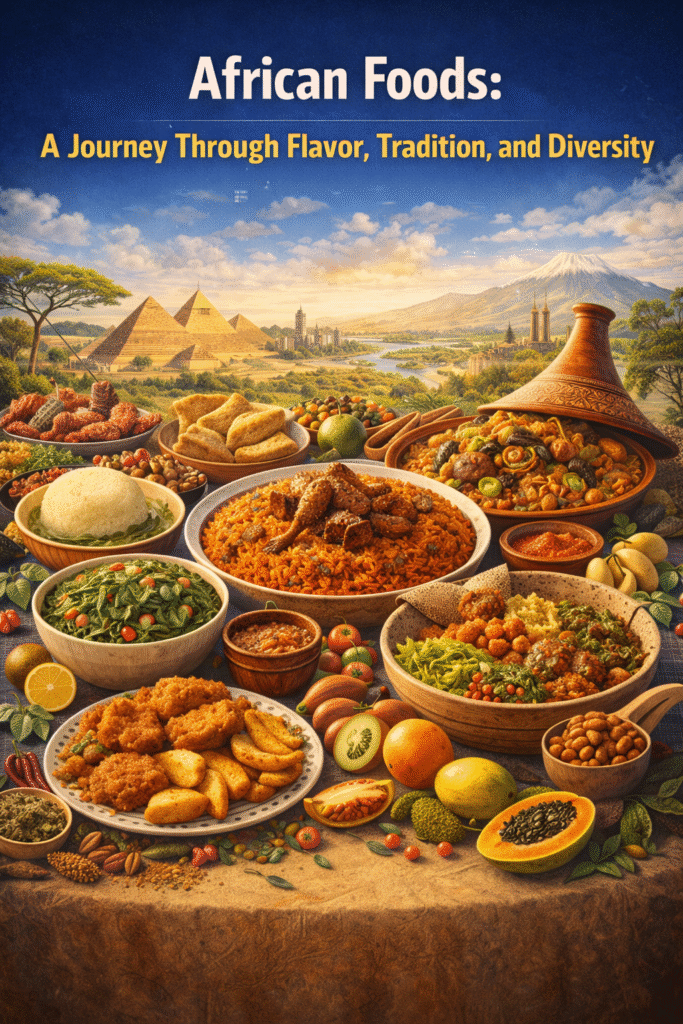
Africa’s culinary landscape is as rich and diverse as the continent itself. From the lush rainforests of Central Africa to the arid deserts of the Sahel, and the coastal regions of the Mediterranean and Indian Ocean, Africa’s foods reflect a blend of history, culture, and geography. Traditional ingredients, unique cooking techniques, and vibrant flavors make African cuisine a treasure trove of tastes waiting to be explored.
Staples and Traditional Foods
Across Africa, staple foods form the backbone of diets, varying by region:
- West Africa: Yam, cassava, plantain, rice, and millet are commonly used. Popular dishes include Jollof rice, a one-pot rice dish cooked with tomatoes, onions, and spices, and Fufu, a dough-like staple made from cassava or yam, often served with soups or stews.
- East Africa: Maize, sorghum, and bananas are key staples. Ugali, a maize flour porridge, and Injera, a sourdough flatbread from Ethiopia, are widely enjoyed. Spiced stews like Nyama Choma (grilled meat) accompany these staples.
- North Africa: Wheat, couscous, and lentils dominate. Moroccan tagines, Egyptian koshari (a mix of rice, lentils, and pasta), and hearty stews flavored with cumin, coriander, and saffron reflect Mediterranean and Arab influences.
- Southern Africa: Maize, sorghum, and root vegetables are common. Dishes like Sadza or Pap (maize porridge) and Bobotie (a Cape Malay-style meat dish) are staples in everyday meals.
Spices and Flavors
African cuisine is known for its bold and aromatic flavors. Chili peppers, ginger, garlic, and turmeric are widely used, while herbs like coriander, basil, and mint enhance the taste of stews and sauces. Many regions also incorporate peanuts, coconut milk, and tamarind to add depth and richness to dishes.
Street Food Culture
Street food is a vibrant part of African culinary culture. Popular items include:
- Samosas and Mandazi in East Africa
- Bunny Chow in South Africa (hollowed-out bread filled with curry)
- Akara in West Africa (deep-fried bean cakes)
These foods are quick, flavorful, and a reflection of local tastes and traditions.
Fruits, Vegetables, and Snacks
Africa is home to a variety of indigenous fruits and vegetables, such as baobab fruit, mangoes, guavas, yams, okra, and bitterleaf. Nuts like groundnuts (peanuts) and seeds such as sesame are widely used. Fresh fruits are often eaten raw, juiced, or incorporated into sauces and desserts.
Modern Influence and Global Recognition
African cuisine is increasingly gaining international attention. Chefs across the continent are innovating traditional recipes, merging local flavors with global culinary techniques. Restaurants in major cities around the world now serve dishes like Ethiopian injera wraps, Nigerian Jollof rice, and Moroccan tagines to international diners.
Conclusion
African foods tell the story of the continent’s history, geography, and cultural diversity. From hearty stews and flavorful rice dishes to vibrant street snacks and tropical fruits, the continent offers a culinary adventure that is both traditional and evolving. Exploring African cuisine is not just about tasting food—it’s about experiencing a continent’s soul, one bite at a time.