

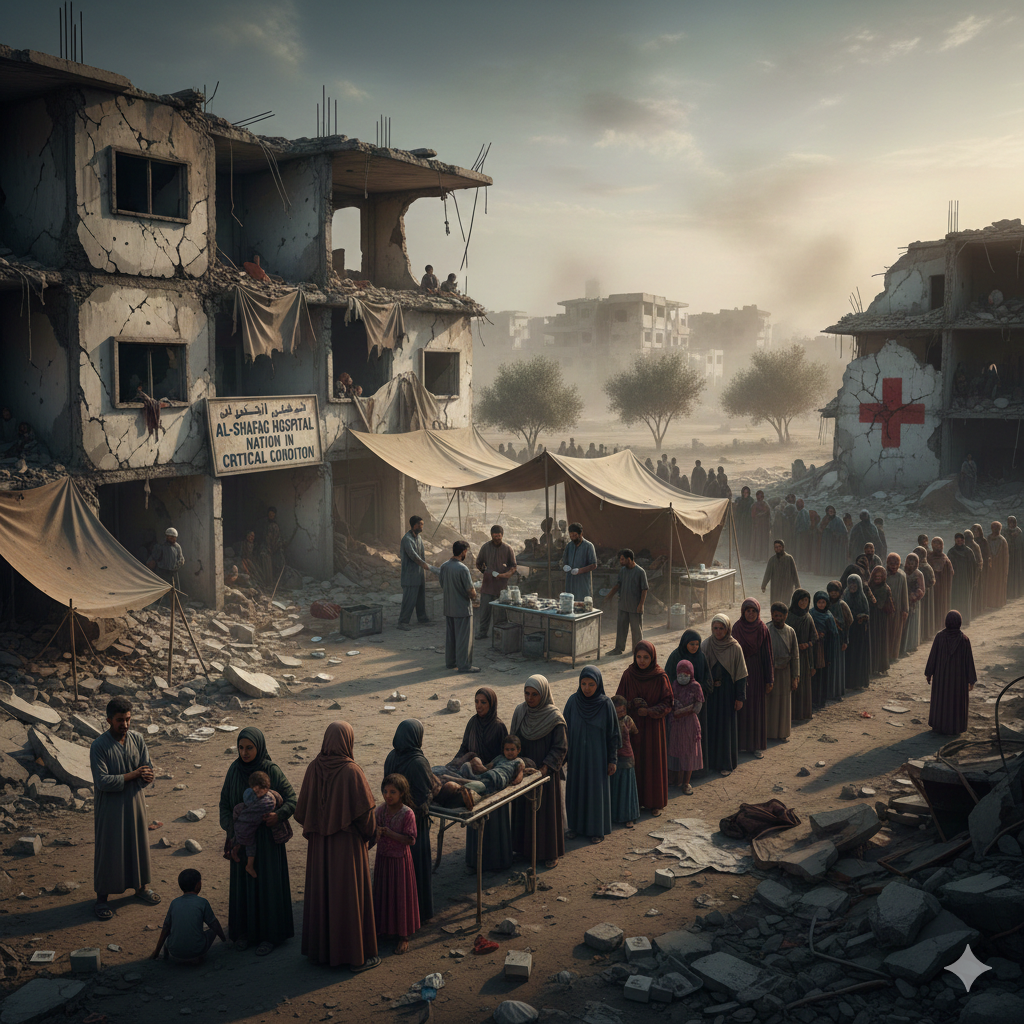
SANAA, YEMEN – In the brutal calculus of modern conflict, the health of a nation is often the first and most profound casualty. Nowhere is this truer than in Yemen, where nine years of unrelenting war have not just damaged, but systematically dismantled an already fragile healthcare system. Today, Yemen’s health landscape is not merely one of crisis; it is a catastrophic failure, a man-made disaster where disease, starvation, and a lack of the most basic medical care converge to create one of the world’s worst humanitarian emergencies. The story of health in Yemen is a grim testament to how war, when used as a tool of siege and strategy, can extinguish the very possibility of healing.
A System Shattered: The Infrastructure of Care in Ruins
Yemen’s healthcare infrastructure has been a direct target and an indirect victim of the conflict. Hundreds of health facilities have been damaged or destroyed by airstrikes and shelling. Those that remain standing often operate in name only, lacking electricity, clean water, functional medical equipment, and basic supplies. The World Health Organization estimates that only 51% of health facilities are fully functional.
The supply chain for medicines and medical equipment is shattered. A stringent air and sea blockade, while intended to restrict weapons, has critically impeded the import of essential humanitarian aid, including lifesaving drugs. There are chronic, devastating shortages of insulin for diabetics, chemotherapy agents for cancer patients, and anesthesia for surgeries. Dialysis centers have closed for lack of supplies; incubators for premature babies sit empty. For millions of Yemenis, a treatable condition—an infection, a complication in childbirth, a chronic illness—has become a potential death sentence because the tools to manage it simply do not exist.
The Triple Epidemics: Disease, Malnutrition, and Exhaustion
Within this broken system, a perfect storm of health crises rages, each exacerbating the others.
1. Infectious Disease Outbreaks: Yemen is experiencing the world’s worst cholera epidemic in modern history, with millions of suspected cases since 2016. The collapse of water and sanitation infrastructure has turned the country into a breeding ground for waterborne diseases. Diphtheria, measles, and dengue fever have re-emerged with force. COVID-19, though likely massively underreported due to a near-total lack of testing, swept through a population with virtually no immunity and no capacity to respond, further stretching an exhausted health workforce. These epidemics are not accidents of nature; they are direct outcomes of a war that has targeted civilian infrastructure and blocked essential maintenance.
2. The Silent Scourge of Malnutrition: This is the defining health crisis for Yemen’s children. Over 2.7 million children are acutely malnourished, with half a million facing severe acute malnutrition—a condition that, without treatment, is fatal. This is not due to a lack of food in the world, but a deliberate weaponization of hunger. Economic collapse, the blockade, and the destruction of agriculture have made food prohibitively expensive for most families. A malnourished child’s immune system collapses, making them fatally susceptible to diseases like cholera and pneumonia, creating a vicious, deadly cycle. For those who survive, the cognitive and physical stunting will impact an entire generation, mortgaging the nation’s future.
3. The Crushing Burden of Non-Communicable Diseases (NCDs): Beneath the acute emergencies lies a silent tsunami of untreated chronic illness. An estimated 3.25 million Yemenis suffer from NCDs like diabetes, hypertension, kidney disease, and cancer. The war has severed their access to consistent medication and care. Diabetics are rationing insulin or going without; cancer patients have seen their treatment centers bombed. For these individuals, the conflict is a slow, invisible death sentence.
Maternal and Child Health: A Story of Peril
The statistics for mothers and infants are harrowing. A Yemeni woman dies in childbirth every two hours. With only one in five births attended by skilled health personnel, complications like hemorrhage and eclampsia are often fatal. The loss of reproductive health services and a rise in child marriage have created a generation of young mothers at extreme risk. One in nine Yemeni children die before their fifth birthday, a rate that has reversed decades of pre-war progress. The most fundamental acts of life—being born and giving birth—have become among the most dangerous.
The Vanishing Health Workforce
Perhaps the most insidious collapse is that of human capital. Healthcare workers, who stayed at their posts through years of unpaid salaries, bombings, and threats, are now broken. Many have fled the country or left the profession to find any work that will feed their families. Those who remain work in conditions of unimaginable stress, with extreme shortages, overwhelming patient loads, and the constant trauma of being unable to provide care they were trained to give. The system is being drained of its very soul.
The Humanitarian Response: A Lifeline on the Brink
The international humanitarian response, led by organizations like the WHO, UNICEF, and a network of NGOs, is all that stands between millions of Yemenis and utter medical collapse. They operate most of the functional health facilities, run vaccination campaigns, support treatment for malnutrition, and attempt to deliver medicines and supplies.
Yet, this response is chronically underfunded and operates at the mercy of warring parties. Aid is routinely obstructed, diverted, or weaponized. Getting supplies into the country and across frontlines is a daily logistical and diplomatic battle. Humanitarian workers themselves are at constant risk. This international effort is a vital lifeline, but it is a bandage on a hemorrhaging wound—it cannot rebuild a system, only prevent total freefall.
Mental Health: The Invisible Wounds of War
The psychological toll of nine years of violence, loss, displacement, and constant fear is incalculable. Depression, anxiety, and post-traumatic stress disorder are endemic, affecting children who have known nothing but war and adults who have lost everything. With barely any mental health services available, this suffering is internalized, creating a legacy of trauma that will outlast the physical conflict. The mental health of Yemen is its most overlooked and untreated wound.
The Political Determinants of Health
In Yemen, health is not a medical issue; it is a political one. The health catastrophe is a direct and intended consequence of war strategy. The destruction of infrastructure, the blockade, the weaponization of aid, and the non-payment of civil servant salaries (including health workers) are tactics of war. Health outcomes are dictated by checkpoints, import restrictions, and the shifting lines of battle. There can be no health recovery without a political solution. Medicine alone cannot cure what politics has broken.
Glimmers of Resilience
Amidst the darkness, there are glimmers of profound resilience. Yemeni health workers continue to show up, often volunteering their time. Community health volunteers, often women, traverse dangerous terrain to deliver basic health messages and screen children for malnutrition. Families care for each other with dwindling resources. This innate human resilience is the last, thin line of defense.
Conclusion: A Prognosis Tied to Peace
The prognosis for health in Yemen is dire, and it is entirely conditional. There is no medical solution to a political crisis. Every cholera case, every starving child, every mother who dies in childbirth is a direct outcome of the war.
The international community’s focus must go beyond funding humanitarian aid—as vital as it is—to exerting unrelenting diplomatic pressure for a sustainable peace. The reconstruction of Yemen’s health system will be the work of a generation and will require a Marshall Plan-level of investment.
For now, Yemen remains a nation in critical condition on the world’s conscience. Its health indicators are not just statistics; they are a real-time measure of human suffering and a damning indictment of a conflict the world has allowed to fester. The healing of Yemen can only begin when the bombs stop falling, the siege is lifted, and its people are granted the most fundamental right of all: the right to survive.
