

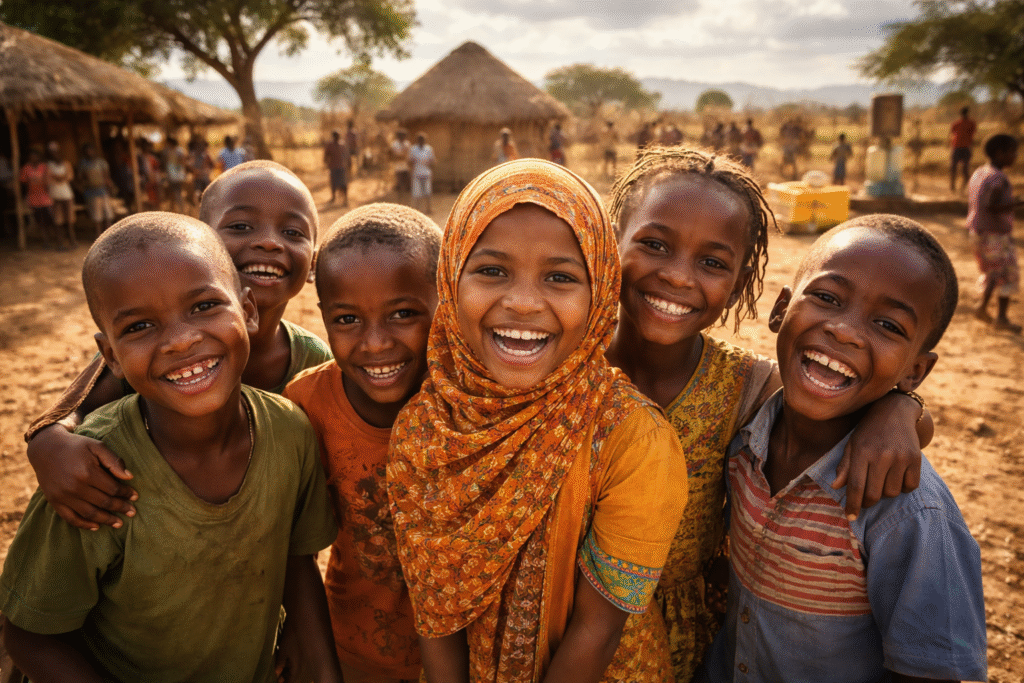
As the world navigates the second month of 2026, the children of East Africa are facing a perfect storm of hardship. Across the region—from the drought-stricken displacement camps of Somalia to the under-resourced health facilities in rural Kenya and the conflict-affected zones of Sudan—millions of children are fighting for their survival. The challenges are not new, but their convergence is creating a humanitarian emergency that demands urgent global attention.
This is the state of children’s health in East Africa today: a region where progress is being reversed, where preventable diseases are once again claiming lives, and where the resilience of families is being tested to its breaking point.
A Regional Reversal: The Numbers Tell a Story of Loss
The most alarming headline for child health in 2026 comes from the latest Goalkeepers Report, a flagship initiative by the Gates Foundation designed to track progress on the Sustainable Development Goals. After more than two decades of steady decline, global child mortality has begun to rise again. In 2024, the world lost 4.6 million children under five. In 2025, that number is projected to increase by 200,000 to approximately 4.8 million .
For East Africa, this reversal is not just a statistic—it is a lived reality. According to UNICEF’s Humanitarian Action for Children 2026 appeal, nearly 30 million children across Eastern and Southern Africa face life-threatening risks from conflict-driven displacement, escalating malnutrition, and recurrent disease outbreaks . The region is grappling with a “new normal” of humanitarian triage, where needs outpace resources and children’s bodies bear the first and heaviest cost .
Somalia: The Epicentre of a Preventable Catastrophe
Nowhere is the crisis more acute than in Somalia. Ranked among the world’s most climate-vulnerable countries, Somalia has endured recurrent droughts and floods. After four consecutive failed rainy seasons, the situation has deteriorated into a full-blown health and nutrition emergency .
Doctors Without Borders (MSF) reports a “worrying trend” of increasing numbers of children arriving at overcrowded camps with severe acute malnutrition or preventable diseases like measles, diphtheria, and acute watery diarrhoea . In Baidoa, a hub for displaced families, MSF recorded a 48 percent increase in admissions for severe acute malnutrition in October 2025 compared with the previous month. During the same period, 189 children were treated for suspected measles—95 percent of whom had never been vaccinated .
The stories behind these numbers are harrowing. Kaltuma Kerow, a 35-year-old mother living in a displaced persons camp in Baidoa, described her family’s daily struggle: “We cannot afford water. We are extremely short of food and water, and we fear diseases like cholera. Hunger and lack of clean water are making everything worse” .
In Galkayo, Rahma Mohamed Ibrahim, a mother of eight, echoed the same despair: “Most are malnourished. We pay $4 for a tank of water or 25 cents for a jerrycan of salty water. My children drink it and get diarrhoea” .
The humanitarian response, meanwhile, has shrunk to its lowest level in a decade. Since early 2025, more than 200 health and nutrition facilities have closed nationwide, while food assistance has plummeted from reaching 1.1 million people a month to just 350,000 . MSF’s country representative in Somalia, Elshafie Mohamed, did not mince words: “This situation is unacceptable because it is predictable and largely preventable. The current humanitarian response is leaving millions without access to basic healthcare, food or water” .
Kenya: Drought and Disparity in the Arid Lands
In Kenya, the situation is similarly dire, though the context differs. The country is in the grip of a severe drought affecting 23 counties, with an estimated 3.3 million people in need [citation:2 from Kenya article]. The government has declared an emergency, but the underlying health indicators for children remain deeply concerning.
The most recent Kenya Demographic and Health Survey (2022) provides a sobering baseline. Nationally, infant mortality stands at 32 deaths per 1,000 live births, and under-five mortality at 41 per 1,000. Perhaps most tellingly, 18 percent of children are stunted—a condition that permanently damages both physical and cognitive development .
In Turkana County, one of Kenya’s most arid and underserved regions, the numbers are even worse. Maternal mortality is estimated at 381 deaths per 100,000 live births, while child mortality stands at 55 per 1,000 live births. Only 53 percent of births are attended by skilled health providers, and Turkana has the lowest proportion of women receiving postnatal care within 48 hours of delivery—just 14 percent .
There is some cause for hope. In January 2026, the International Rescue Committee (IRC), in partnership with the Qatar Fund for Development, launched Afya Uzazi Jumuishi, an 18-month, $2 million initiative to strengthen reproductive, maternal, newborn, child, and adolescent health services in Kakuma refugee camp and surrounding host communities . The project includes the construction of a modern 70-bed maternity unit and upgrades to primary health care infrastructure. It is a tangible investment in a region that has long been neglected.
Sudan: Conflict and the Collapse of Nutrition
While often considered separately, the crisis in Sudan is inextricably linked to the health of children in the wider East African region. Since April 2023, conflict has torn apart lives and livelihoods, devastating agriculture, disrupting trade, and forcing over 12 million people from their homes .
Today, more than half of Sudan’s population faces extreme levels of food insecurity. More than 750,000 people are experiencing famine conditions, including in the country’s largest camp for displaced people . For communities facing famine, death by starvation is a daily occurrence.
The human cost is captured in the stories of mothers struggling to save their children. Halima, a mother in Sudan’s Blue Nile Region, watched her two-year-old daughter Zainab battle malnutrition with no doctor nearby. “We don’t eat much. We cook porridge, sometimes pudding. For us, if we eat in the morning we won’t eat again until evening,” she told IRC staff. “The cows are skinny now. Their milk won’t support a sick child” .
Another mother, Shama, was displaced with her family and forced to travel for four days with her three-month-old son Anwar, who became ill during the journey. Upon arrival, his health declined further. “He was very skinny. He was not able to sit and was unable to move his body,” she recalled. With treatment from an IRC clinic, Anwar is now recovering, but he still suffers from growth delays .
The Underlying Causes: What the Research Tells Us
To understand why East African children are so vulnerable, it is essential to look beyond the immediate crises of drought and conflict. A comprehensive new study published this month in the journal Nutrients examined the socioeconomic and environmental factors associated with child undernutrition in Ethiopia, Kenya, Madagascar, and Tanzania .
The study, which analyzed data from 37,570 children using the Composite Index of Anthropometric Failure (CIAF), found that the prevalence of anthropometric failure ranged from 24 percent to 44 percent across the four countries. The CIAF is significant because it captures children facing multiple forms of malnutrition simultaneously—stunting, wasting, and underweight—which single indicators often miss .
The research identified several key predictors of better child health outcomes:
- Parental education: Children of educated mothers in Ethiopia had 45 percent lower odds of anthropometric failure (AOR = 0.547). In Kenya, educated fathers reduced the risk by 41 percent (AOR = 0.589) .
- Postnatal care: In Madagascar, children who received a postnatal checkup within two months had 69 percent lower odds of malnutrition (AOR = 0.309) .
- Socioeconomic status: Children from rich households in Ethiopia had 35 percent lower odds of undernutrition. In Kenya, those from middle-income (AOR = 0.683) and rich (AOR = 0.535) households were significantly better off .
- Child’s sex: Female children had lower odds of anthropometric failure in all four countries, suggesting potential gender-based differences in care or biology .
The findings underscore a fundamental truth: child malnutrition is not merely a medical issue but a social one. It is shaped by access to education, economic opportunity, and quality healthcare. As the study’s authors conclude, viewing child nutrition through an “equity lens” reveals how anthropometric failures disproportionately affect children from poorer households and communities with limited access to education and postnatal care .
The Funding Crisis: A System Under Strain
Underpinning all of these challenges is a global funding crisis. In 2025, Stop Work Orders landed as a shock across the humanitarian sector. Overnight, partners paused, pipelines stalled, and leaders were forced into impossible decisions .
At the Eighth Replenishment Summit for the Global Fund, held in South Africa in late 2025, donors pledged approximately $11.4 billion for the 2027-2029 period—far below the $18 billion target . GAVI, the Vaccine Alliance, which funds upwards of 80-85 percent of national immunisation programmes across low- and middle-income countries, is also facing a significant shortfall .
Samburu Wa-Shiko, the Gates Foundation’s regional representative for East Africa, put the challenge in stark terms: “It’s no longer tenable for African governments to be reliant on the external world for funding their core primary healthcare programmes” . He called on governments to prioritize spending on health, education, and agriculture, and to make “best buys” like investing in community health promoters and routine immunisation.
Yet even with the best domestic efforts, the gap is enormous. As one humanitarian analyst noted on LinkedIn, “The cost of underfunding shows up first in children’s bodies and futures. Prevention gets cut first: early nutrition support, child protection casework, GBV prevention, school retention, and outreach. More outbreaks and malnutrition follow when WASH, immunisation outreach, and basic health access thin out” .
Signs of Hope: Innovation and Commitment
Despite the bleak picture, there are glimmers of hope. In Kenya, the government has launched a Rapid Results Initiative on maternal and child health, with President William Ruto declaring the country’s maternal mortality rate “not just unacceptable but also shameful” . This level of political attention is critical for galvanising action.
Local innovation is also making a difference. Revital Healthcare, a Kenyan company based at the Coast, received a seed grant from the Gates Foundation during COVID-19 to produce vaccine syringes. It has since pivoted to manufacture diagnostic tools for malaria, HIV, and TB, strengthening local supply chains .
Another Kenyan company, Njenbuma, is manufacturing drapes to address postpartum haemorrhage—the leading cause of maternal mortality. These drapes are now being supplied not only to Kenya but to countries across the region, including Rwanda, Uganda, and the DRC .
In Edo State, Nigeria, authorities have launched a statewide measles and rubella vaccination campaign targeting 2.2 million children aged zero to 14 years . While Nigeria is in West Africa, the campaign reflects a broader commitment across the continent to tackling preventable diseases through sustained immunisation coverage.
Conclusion: We Cannot Stop at Almost
The theme of this year’s Goalkeepers Report was deliberately provocative: “We Cannot Stop at Almost” . It is a reminder of how close the global community has come to achieving key Sustainable Development Goals on maternal and child health—and a lamentation that progress is now slipping away.
For the children of East Africa, the stakes could not be higher. Nearly 30 million face life-threatening risks. Four million under-fives are at risk of severe acute malnutrition. Preventable diseases like measles and diphtheria are surging in displacement camps. And the funding needed to save them is drying up .
Yet the solutions are known. Investing in primary healthcare, community health promoters, and routine immunisation works. Educating girls and supporting mothers works. Local manufacturing of essential medical supplies works. What is lacking is not knowledge, but political will and financial commitment.
As Samburu Wa-Shiko put it, speaking to parents with small children: “The message of hope here is reminding communities, including in Kenya, of the journey the world has walked to reduce maternal and child mortality. We have important new tools in our hands, including very exciting innovations that we can bring to bear” .
The question is whether the world will use them—before another 200,000 children lose their lives.
