

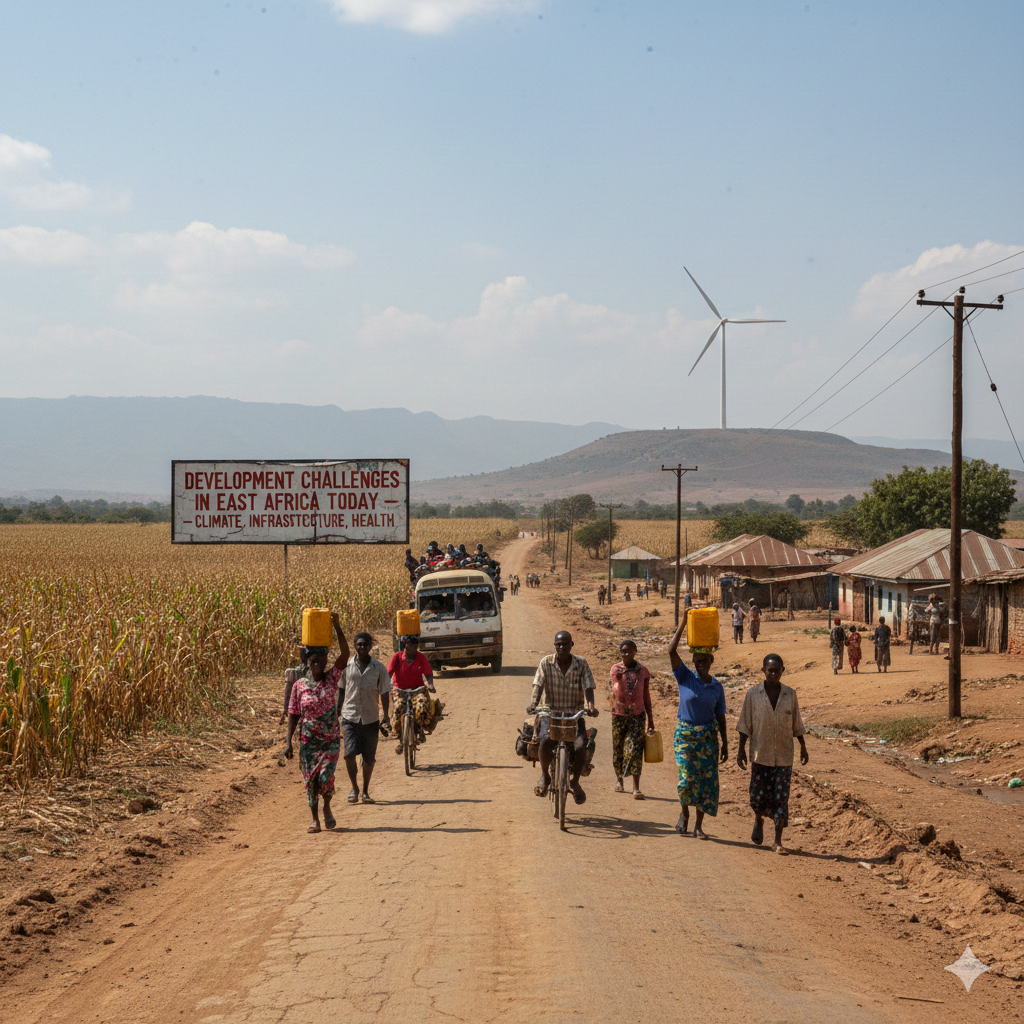
Major Problems Facing East African Countries Today
East Africa is a region rich in natural resources, cultural diversity, and economic potential. Countries such as Kenya, Tanzania, Uganda, Ethiopia, Rwanda, Somalia, South Sudan, Eritrea, and Burundi play a vital role in Africa’s political and economic landscape. Despite progress in infrastructure development, regional integration, and economic growth, East African countries today face a range of serious social, economic, political, and environmental challenges. These problems continue to slow development and affect the quality of life for millions of people.
1. Poverty and Income Inequality
Poverty remains one of the most pressing problems in East Africa. Although some countries have recorded economic growth, the benefits have not reached all citizens equally. Large portions of the population still live below the poverty line, particularly in rural areas.
Income inequality between urban and rural communities is wide. While cities experience growth in business, technology, and services, rural areas often lack access to basic infrastructure, markets, and employment opportunities. This imbalance fuels migration to cities, increasing pressure on urban services.
2. Unemployment and Youth Challenges
East Africa has a young and rapidly growing population, which presents both an opportunity and a challenge. High youth unemployment is a major concern across the region. Each year, millions of young people enter the labor market, but job creation has not kept pace with population growth.
Lack of skills training, limited industrialization, and slow private-sector growth have contributed to high unemployment and underemployment. Youth unemployment increases the risk of crime, drug abuse, political unrest, and radicalization in some areas.
3. Political Instability and Conflict
Political instability continues to affect several East African countries. Conflicts in parts of Somalia, South Sudan, eastern Democratic Republic of Congo, and occasional unrest in other states disrupt economic activity and weaken social cohesion.
Election-related violence, weak democratic institutions, corruption, and poor governance undermine trust in leadership. Conflict destroys infrastructure, displaces millions of people, and diverts resources from development to security spending.
4. Climate Change and Environmental Degradation
East Africa is highly vulnerable to climate change. Prolonged droughts, unpredictable rainfall, floods, and rising temperatures have severely affected agriculture, which is the backbone of most East African economies.
Climate shocks lead to food shortages, livestock deaths, water scarcity, and loss of livelihoods. Environmental degradation caused by deforestation, overgrazing, and poor land management further worsens the situation. These challenges threaten food security and increase poverty levels.
5. Food Insecurity and Hunger
Food insecurity remains widespread in East Africa. Drought, conflict, rising food prices, and reliance on rain-fed agriculture have left millions facing hunger and malnutrition.
Children and pregnant women are particularly vulnerable to undernutrition, which affects long-term health and productivity. While governments and humanitarian organizations provide food assistance, long-term solutions such as climate-smart agriculture and irrigation remain limited.
6. Weak Health Systems
Healthcare systems in many East African countries face significant challenges. Shortages of doctors, nurses, medical equipment, and medicines limit access to quality care, especially in rural areas.
Communicable diseases such as malaria, tuberculosis, and HIV/AIDS remain prevalent, while non-communicable diseases like diabetes and hypertension are increasing. Limited funding and overcrowded facilities reduce the effectiveness of healthcare delivery.
7. Education Challenges
Although access to primary education has improved, quality of education remains a major issue. Overcrowded classrooms, shortage of trained teachers, inadequate learning materials, and poor infrastructure affect learning outcomes.
Many young people complete school without the practical skills needed for employment. Gender disparities persist in some areas, with girls facing barriers such as early marriage, poverty, and cultural practices.
8. Infrastructure Deficits
Inadequate infrastructure continues to hinder economic growth in East Africa. Poor road networks, unreliable electricity, limited access to clean water, and weak digital connectivity affect businesses and households.
While major infrastructure projects such as railways, ports, and highways have been developed, rural areas still lag behind. High transport and energy costs reduce competitiveness and discourage investment.
9. Corruption and Governance Issues
Corruption remains a persistent problem across the region. Misuse of public funds, lack of transparency, and weak accountability reduce trust in government and discourage foreign and local investment.
Corruption also affects service delivery, leading to poor-quality healthcare, education, and infrastructure. Strengthening institutions and promoting good governance remains a key challenge.
10. Public Debt and Economic Pressure
Many East African countries are facing rising public debt levels. Borrowing to finance infrastructure and social programs has increased debt servicing costs, limiting funds available for development.
Currency depreciation, inflation, and global economic uncertainty have increased the cost of imports, fuel, and essential goods, making life more expensive for citizens.
Regional Cooperation and Hope for the Future
Despite these challenges, East Africa has strong potential for growth. Regional cooperation through organizations such as the East African Community (EAC) promotes trade, mobility, and shared development initiatives.
Investments in renewable energy, technology, agriculture, education, and healthcare offer opportunities for long-term progress. A growing private sector and youthful population could drive innovation and economic transformation.
Conclusion
East African countries today face complex and interconnected problems, ranging from poverty and unemployment to climate change, conflict, and weak institutions. These challenges continue to slow development and affect millions of lives.
However, with committed leadership, regional cooperation, inclusive policies, and investment in human capital, East Africa can overcome these problems. Addressing root causes rather than short-term solutions will be critical in building a stable, prosperous, and resilient region for future generations.
If you want, I can:
- Change the title
- Add a picture
- Focus on one country only
- Simplify it for school use
Just tell me 🌍