

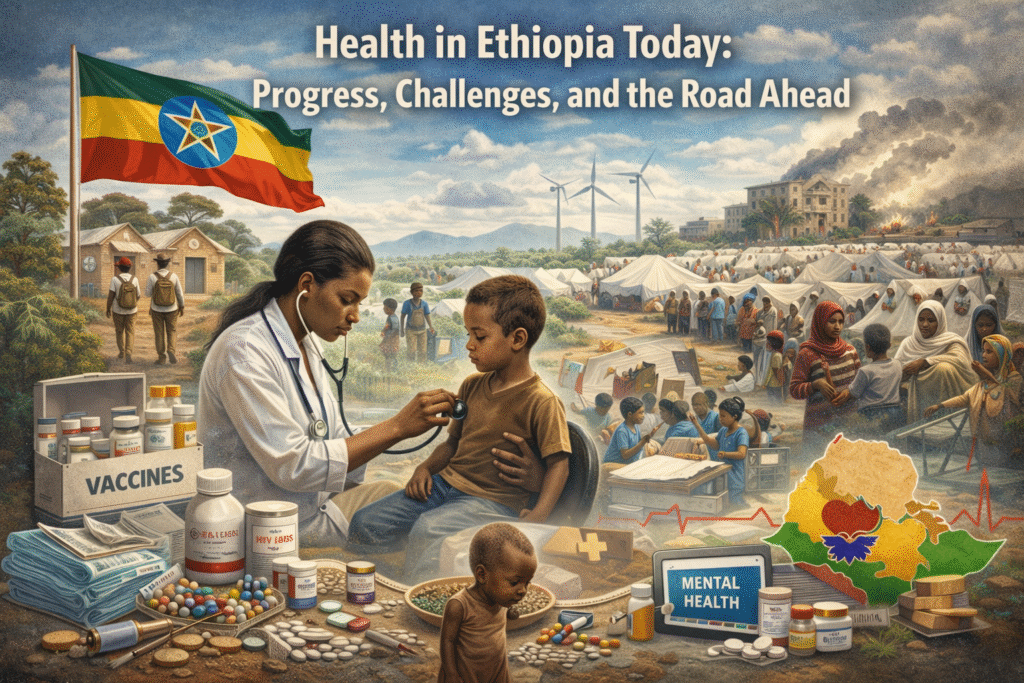
Health in Ethiopia Today: Progress, Challenges, and the Road Ahead
Ethiopia, one of Africa’s most populous countries, has made notable progress in improving public health over the past two decades. Significant investments in primary healthcare, disease prevention, and community health programs have helped reduce child mortality and expand access to basic services. However, health in Ethiopia today remains shaped by a complex mix of achievements and persistent challenges, including limited resources, population growth, conflict, climate shocks, and emerging non-communicable diseases.
Overview of Ethiopia’s Health System
Ethiopia operates a three-tier public health system, consisting of primary healthcare units, general hospitals, and specialized referral hospitals. The government places strong emphasis on primary and preventive care, particularly in rural areas where the majority of the population lives.
A cornerstone of the health system is the Health Extension Program (HEP), which deploys trained health extension workers to communities. These workers provide basic services such as immunization, maternal care, family planning, hygiene education, and disease prevention. This model has contributed significantly to expanded coverage and improved health outcomes.
Progress in Maternal and Child Health
One of Ethiopia’s major public health successes has been the improvement in maternal and child health. Over the years, the country has reduced under-five mortality and increased immunization coverage for diseases such as measles, polio, and tetanus.
Skilled birth attendance and antenatal care coverage have also increased, particularly in urban areas. Health extension workers play a vital role in encouraging pregnant women to attend health facilities and receive professional care. However, maternal mortality remains high compared to global averages, especially in remote and underserved regions.
Communicable Diseases and Public Health Efforts
Communicable diseases continue to significantly affect Ethiopia’s population. Malaria, tuberculosis, HIV/AIDS, and waterborne diseases remain major public health concerns.
Malaria control efforts—including the distribution of insecticide-treated nets and indoor residual spraying—have reduced cases in many regions, though climate variability and population movement occasionally lead to outbreaks. Tuberculosis remains prevalent, particularly in urban and densely populated areas, while HIV/AIDS prevalence has stabilized but continues to place pressure on health services.
Access to clean water and sanitation remains uneven, contributing to diseases such as diarrhea and cholera. Improving water, sanitation, and hygiene (WASH) services remains a public health priority.
Nutrition and Food Security Challenges
Malnutrition is one of the most serious health challenges in Ethiopia. Child stunting, wasting, and micronutrient deficiencies affect millions, particularly in drought-prone and conflict-affected areas.
Recurrent droughts, economic pressures, and food insecurity have worsened nutritional outcomes for vulnerable populations. The government and humanitarian partners run nutrition programs targeting pregnant women, children, and internally displaced populations, but the scale of need often exceeds available resources.
The Growing Burden of Non-Communicable Diseases
While infectious diseases remain significant, Ethiopia is experiencing a rise in non-communicable diseases (NCDs) such as diabetes, hypertension, heart disease, and cancer. Urbanization, changes in diet, reduced physical activity, and increased tobacco and alcohol use contribute to this growing burden.
The health system, traditionally focused on infectious diseases, is still adapting to manage chronic illnesses. Limited diagnostic equipment, a shortage of specialists, and high treatment costs pose serious challenges for NCD care.
Mental Health: An Emerging Priority
Mental health is increasingly recognized as a major public health issue in Ethiopia. Conditions such as depression, anxiety, post-traumatic stress disorder, and substance use disorders are common, particularly in areas affected by conflict and displacement.
Despite growing awareness, mental health services remain limited. There is a shortage of trained professionals, and stigma continues to prevent many people from seeking care. Integrating mental health into primary healthcare services is an ongoing policy goal.
Health Workforce and Infrastructure Constraints
Ethiopia faces shortages of doctors, nurses, specialists, and medical equipment, particularly in rural and remote areas. Many health facilities struggle with inadequate supplies, unreliable electricity, and limited diagnostic capacity.
Urban centers are better served, creating disparities in health access and outcomes. Retaining skilled health workers remains difficult, as many seek better opportunities abroad or in the private sector.
Impact of Conflict and Displacement on Health
Ongoing and recent conflicts have severely affected health services in certain regions. Health facilities have been damaged or destroyed, supply chains disrupted, and healthcare workers displaced.
Millions of internally displaced people require emergency health care, nutrition support, and psychosocial services. Conflict has reversed health gains in affected areas and placed additional strain on the national health system.
Health Financing and Access
Health financing remains a major challenge. While public healthcare services are subsidized, out-of-pocket expenses can still be high for many families. Community-based health insurance schemes have expanded access to care, particularly in rural areas, but coverage is not yet universal.
Limited government spending and reliance on donor funding affect the sustainability of health programs.
Technology and Innovation in Healthcare
Digital health initiatives are gradually transforming healthcare delivery in Ethiopia. Mobile health platforms, electronic medical records, and telemedicine services are being introduced to improve efficiency and reach underserved communities.
These innovations offer hope for improving access, data collection, and health system management, though infrastructure and connectivity gaps remain barriers.
Conclusion: Building a Stronger Health System
Health in Ethiopia today reflects both remarkable progress and ongoing struggle. The country has made significant strides in expanding primary healthcare and controlling infectious diseases, yet continues to face serious challenges related to nutrition, maternal health, non-communicable diseases, and system capacity.
Sustained investment in health financing, workforce development, infrastructure, and peace-building is essential. With continued commitment, innovation, and international cooperation, Ethiopia can build a more resilient, equitable, and effective health system that meets the needs of its growing population.
If you want, I can also:
- Create a title
- Add a picture or illustration
- Simplify it for students
- Focus on one health issue (maternal health, nutrition, mental health)
Just tell me what you need 👍