

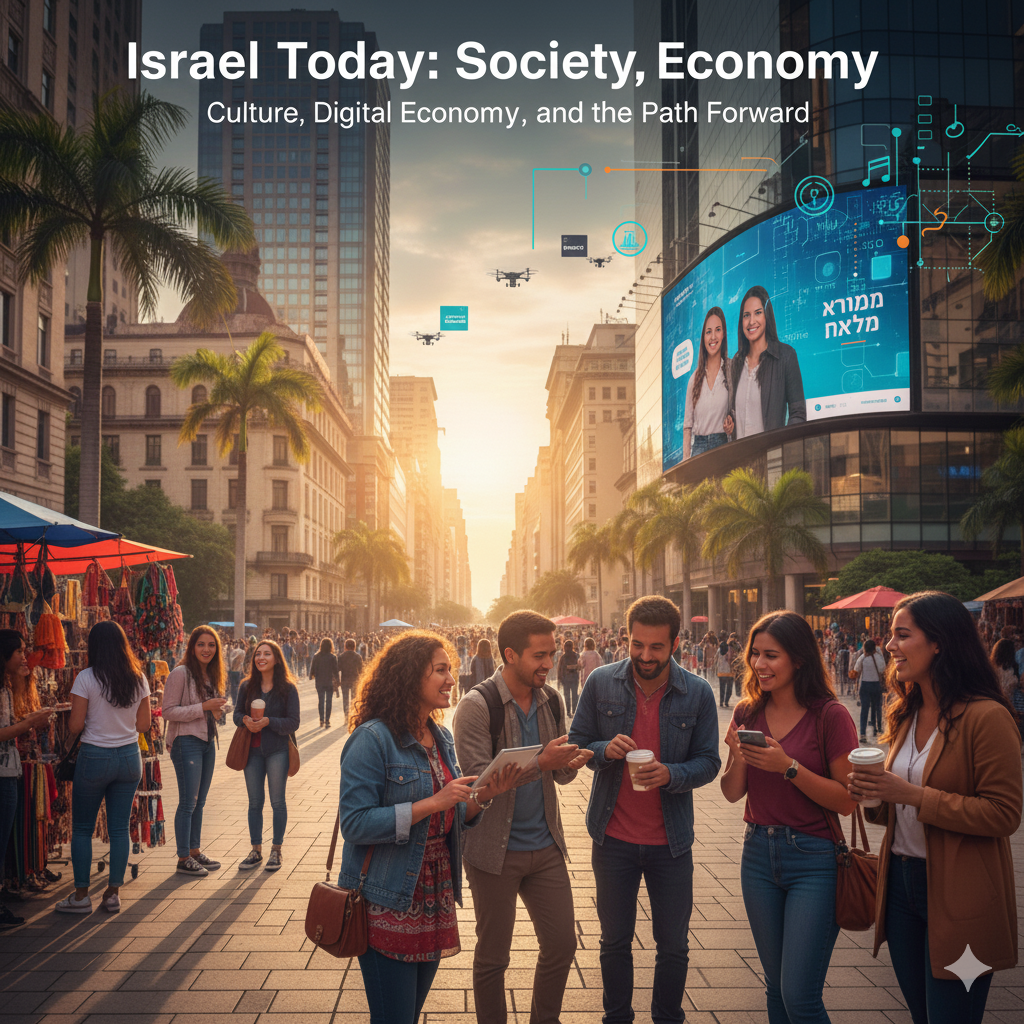
Israel today is a dynamic and complex country located at the crossroads of history, religion, politics, and technology. Since its establishment in 1948, Israel has developed into a modern state with a strong economy, advanced institutions, and a diverse population. At the same time, it continues to face significant security, political, and social challenges that shape daily life and national priorities.
Part 2: Geography and Demographics
Israel is a small country in terms of land area, but it is densely populated and demographically diverse. Its population includes Jewish citizens from different cultural backgrounds, Arab citizens, Druze communities, and other minority groups. Immigration continues to play a major role in shaping Israeli society, contributing to cultural variety and economic development.
Part 3: Political Landscape
Israeli politics is highly active and often polarized. The country operates under a parliamentary democracy with multiple political parties representing a wide range of ideologies. Coalition governments are common, which can lead to frequent elections and political instability. Public debate is lively, and political issues often dominate national discussion.
Part 4: Security and Regional Relations
Security remains a central concern in Israel today. Ongoing tensions with neighboring regions, conflicts involving Gaza, and broader regional instability influence defense policy and public life. Israel maintains strong defense capabilities and compulsory military service plays a significant role in society. At the same time, diplomatic relations with some regional and global partners continue to evolve.
Part 5: Economy and Innovation
Israel has one of the most advanced economies in the Middle East. Known as the “Startup Nation,” it is a global leader in technology, cybersecurity, artificial intelligence, biotechnology, and medical innovation. Strong investment in research and development, along with close cooperation between universities, the private sector, and the military, supports economic growth.
Part 6: Cost of Living and Social Inequality
Despite economic success, Israel faces challenges related to the cost of living and income inequality. Housing prices, food costs, and transportation expenses are high, particularly in major cities like Tel Aviv and Jerusalem. Social gaps exist between different communities, creating ongoing debates about economic fairness and social policy.
Part 7: Society and Culture
Israeli society is vibrant and diverse, blending ancient traditions with modern lifestyles. Religion plays an important role in public life, but Israeli society also includes secular, traditional, and religious populations with differing worldviews. Music, film, literature, and food reflect both Middle Eastern roots and global influences.
Part 8: Religion and Identity
Religion and national identity are deeply connected in Israel today. Judaism plays a central role in state institutions, holidays, and laws, while freedom of religion is also protected. Tensions sometimes arise around issues such as religious authority, civil marriage, and public observance, reflecting broader debates about the nature of the state.
Part 9: Education and Knowledge Economy
Education is highly valued in Israel, with strong emphasis on science, technology, and innovation. Universities and research institutes are internationally respected. While access to education is generally good, gaps remain between different social groups, and reducing educational inequality is an ongoing goal.
Part 10: Media and Public Discourse
Israeli media is active, independent, and influential. News outlets, social media, and public commentary play a major role in shaping opinions and political debate. Freedom of expression is strong, though public discourse is often intense and emotionally charged due to the country’s complex realities.
Part 11: Environmental and Social Challenges
Israel faces environmental challenges such as water scarcity, climate change, and urban congestion. Advances in desalination, renewable energy, and agricultural technology have helped address some of these issues. Social challenges, including integration of minorities and social cohesion, remain important areas of focus.
Part 12: The Future of Israel
The future of Israel will depend on its ability to balance security, democracy, economic growth, and social inclusion. Continued innovation, dialogue within society, and regional cooperation will play a crucial role. While uncertainties remain, Israel’s resilience and adaptability continue to shape its path forward in a rapidly changing world.
