

Part 1: Introduction to Marketing in Latin America
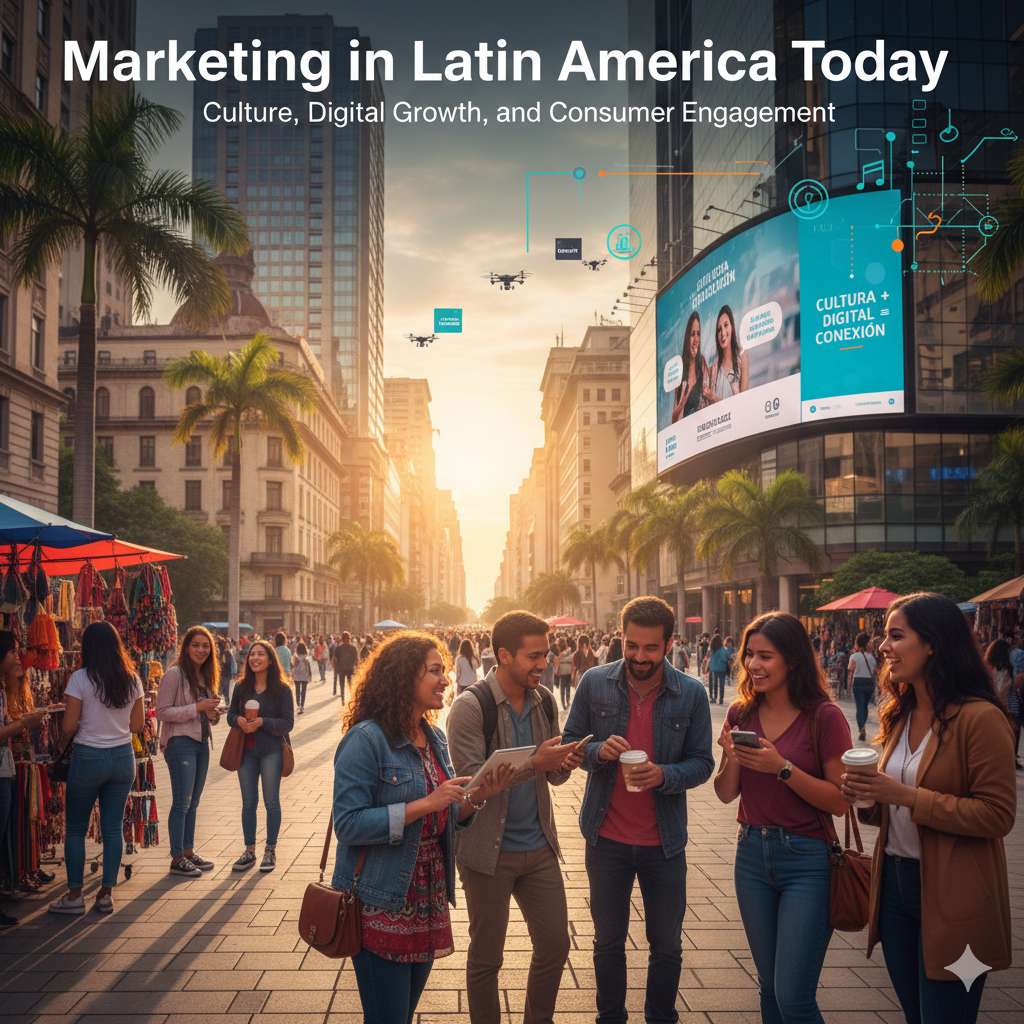
Marketing in Latin America today reflects a region full of creativity, cultural richness, and growing digital adoption. With a young population and expanding middle class, Latin America offers significant opportunities for brands that understand local markets and consumer behavior. Marketing strategies must balance innovation with sensitivity to economic and social realities.
Part 2: Diversity of Latin American Markets
Latin America is made up of countries with distinct languages, cultures, and economic conditions. While Spanish and Portuguese dominate, consumer preferences vary widely between nations and even within regions. Successful marketing requires localization, not only in language but also in messaging and product positioning.
Part 3: The Latin American Consumer
Consumers in Latin America are highly social, emotionally driven, and relationship-oriented. Brand trust, word-of-mouth, and recommendations from family and friends strongly influence purchasing decisions. Price sensitivity exists, but consumers are willing to pay for quality and brands that resonate culturally.
Part 4: Cultural Influence on Marketing
Culture plays a central role in marketing across Latin America. Music, sports, festivals, family values, and national pride often feature prominently in campaigns. Storytelling and emotional appeals are effective tools for building strong brand connections.
Part 5: Digital Growth and Connectivity
Digital marketing is growing rapidly in Latin America, driven by increased smartphone usage and mobile internet access. Social media platforms are widely used for brand discovery, communication, and customer support, making digital channels essential for modern marketing strategies.
Part 6: Social Media and Community Engagement
Platforms such as Facebook, Instagram, WhatsApp, TikTok, and YouTube dominate the digital landscape. Brands use social media to engage directly with consumers, build communities, and provide customer service. Interactive and conversational marketing performs особенно well.
Part 7: Influencer and Creator Marketing
Influencer marketing is highly effective in Latin America due to strong audience loyalty and trust. Local influencers, content creators, and celebrities help brands reach niche communities. Authenticity and relatability are key to successful influencer partnerships.
Part 8: E-commerce and Social Commerce
E-commerce is expanding quickly, supported by digital payments and logistics improvements. Social commerce—selling directly through social platforms—has become especially popular. Brands must adapt pricing, delivery, and trust-building strategies to meet consumer expectations.
Part 9: Traditional Media Still Relevant
Despite digital growth, traditional media such as television, radio, and outdoor advertising remain influential. TV and radio continue to reach large audiences, particularly in rural and lower-income areas. An integrated approach combining traditional and digital channels is most effective.
Part 10: Challenges in Latin American Marketing
Marketers face challenges including economic volatility, infrastructure gaps, security concerns, and regulatory complexity. Informal markets and income inequality also affect consumer behavior. Flexibility and creativity are essential for overcoming these obstacles.
Part 11: Purpose-Driven and Social Marketing
Consumers increasingly support brands that demonstrate social responsibility. Campaigns addressing education, sustainability, diversity, and community development resonate strongly. Purpose-driven marketing helps build loyalty and long-term brand value.
Part 12: The Future of Marketing in Latin America
The future of marketing in Latin America is dynamic and promising. As digital access grows and consumers become more connected, brands that prioritize authenticity, innovation, and cultural relevance will thrive. Long-term success depends on understanding local realities and building genuine relationships with consumers.
