

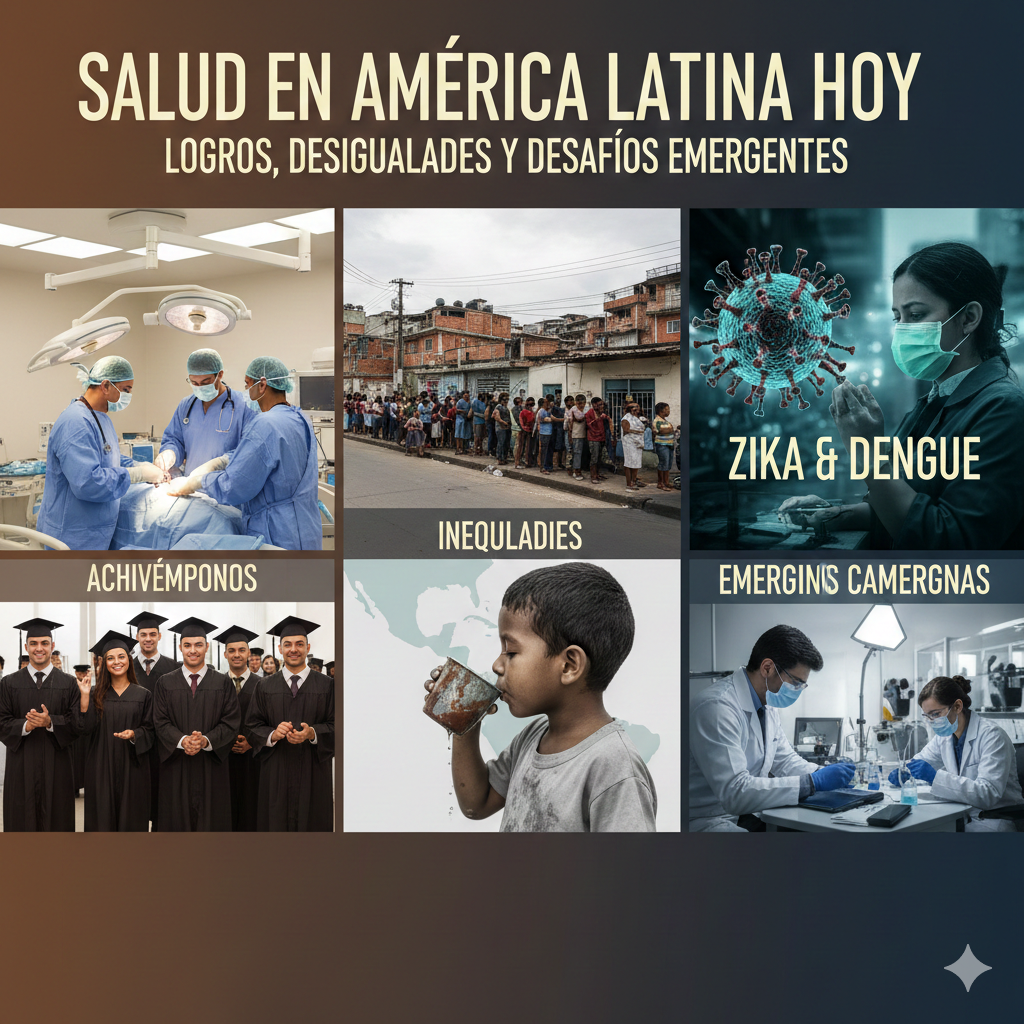
Health in Latin America today reflects a region in transition, marked by notable progress in public health alongside persistent structural challenges and emerging threats. Over the past several decades, many Latin American countries have improved access to healthcare, reduced poverty, and achieved significant gains in life expectancy and disease control. However, deep social inequalities, economic instability, and changing disease patterns continue to shape health outcomes across the region.
One of the major achievements in Latin America has been the expansion of primary healthcare and social protection systems. Countries such as Brazil, Costa Rica, Chile, and Cuba have developed strong public health models that prioritize universal access and community-based care. Widespread vaccination campaigns, improved maternal and child health services, and better access to clean water and sanitation have contributed to sharp declines in infant and maternal mortality. Life expectancy across much of the region has steadily increased, reflecting these long-term investments in public health.
Despite these advances, infectious diseases remain an important concern. While many traditional infectious diseases have been controlled, others persist or have re-emerged. Dengue fever, Zika virus, chikungunya, and malaria continue to affect millions, particularly in tropical and low-income areas. Rapid urbanization, climate change, and inadequate sanitation create favorable conditions for mosquito-borne diseases. In some countries, tuberculosis remains a challenge among marginalized populations, including migrants, prisoners, and people living in poverty.
At the same time, Latin America is facing a growing burden of non-communicable diseases (NCDs), which now account for the majority of deaths in the region. Cardiovascular disease, diabetes, cancer, and chronic respiratory conditions are on the rise due to aging populations and lifestyle changes. Increased consumption of ultra-processed foods, physical inactivity, tobacco use, and harmful alcohol consumption have significantly affected population health. Obesity has become a serious public health issue, affecting adults and children alike and increasing the risk of long-term health complications.
Mental health is an increasingly visible health concern in Latin America today. Depression, anxiety, and substance use disorders affect millions, yet mental health services remain underfunded and unevenly distributed. Social factors such as poverty, unemployment, violence, and political instability contribute to psychological stress and trauma. In some communities, stigma and lack of awareness prevent people from seeking help, further worsening outcomes. Integrating mental health care into primary health services is widely recognized as an essential step toward improving well-being.
Health inequality is one of the most persistent challenges in Latin America. Although many countries guarantee healthcare as a right, access and quality often vary widely depending on income, location, and social status. Rural populations, indigenous communities, and people living in informal urban settlements frequently face barriers to care, including long distances to health facilities, shortages of healthcare workers, and financial constraints. Fragmented health systems, divided between public, private, and social security sectors, can further reinforce inequality.
The COVID-19 pandemic had a profound and lasting impact on health in Latin America. The region experienced some of the highest infection and death rates globally, exposing weaknesses in health systems and social safety nets. Hospitals were overwhelmed, healthcare workers faced severe shortages of protective equipment, and routine health services were disrupted. At the same time, the pandemic highlighted the dedication of health professionals and the importance of public health measures, vaccination campaigns, and regional collaboration. It also drew attention to the social determinants of health, as low-income communities were disproportionately affected.
Environmental health issues also play a critical role in shaping health outcomes in Latin America. Deforestation, mining, industrial pollution, and climate change threaten both ecosystems and human health. Extreme weather events such as floods, droughts, and hurricanes increase the risk of disease, food insecurity, and displacement. Indigenous populations are particularly vulnerable to environmental degradation, which affects traditional livelihoods and access to clean water and nutritious food.
Innovation and reform continue to shape the future of health in the region. Many countries are investing in digital health technologies, including telemedicine and electronic health records, to expand access and improve efficiency. Regional cooperation in vaccine production, disease surveillance, and research has gained renewed attention. Community health programs and preventive strategies focusing on nutrition, physical activity, and early detection of disease are increasingly recognized as cost-effective solutions.
In conclusion, health in Latin America today is characterized by important achievements alongside complex and interrelated challenges. Progress in primary healthcare, disease control, and life expectancy demonstrates the region’s capacity for improvement. However, rising non-communicable diseases, mental health concerns, environmental threats, and deep inequalities continue to strain health systems. Addressing these issues requires sustained political commitment, inclusive health policies, and a focus on social and environmental determinants of health. With continued investment and cooperation, Latin America can move toward more equitable, resilient, and healthy societies for the future.