

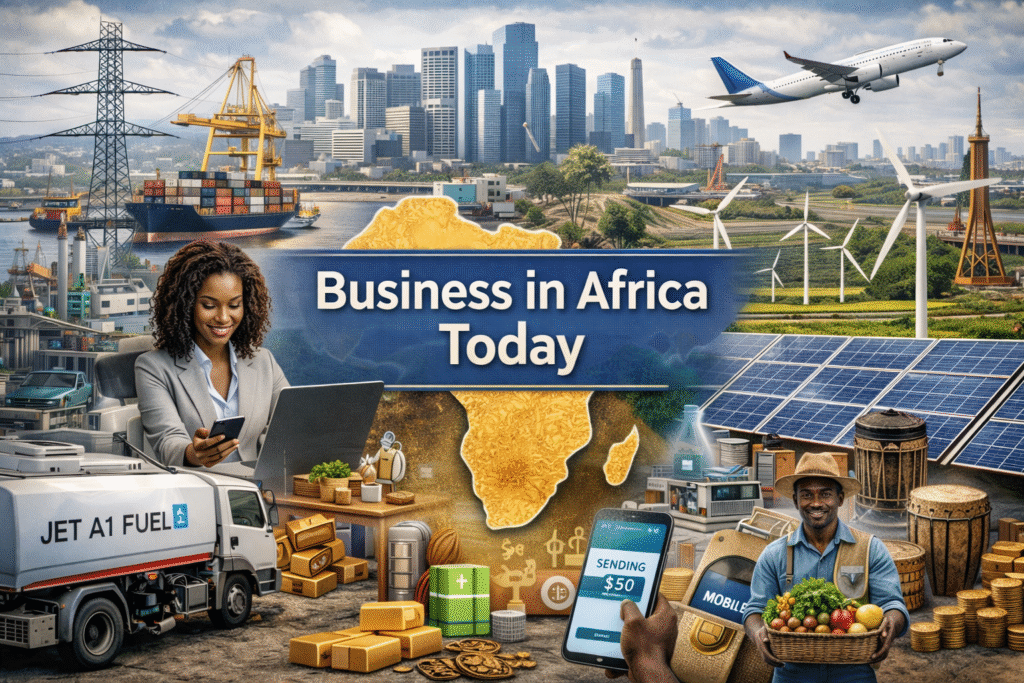
Business in Africa Today
Africa is increasingly recognized as one of the world’s most promising regions for business and economic growth. With a population of over 1.4 billion people, vast natural resources, rapid urbanization, and a growing middle class, Africa presents significant opportunities for both local and international investors. Despite facing several structural challenges, the business environment in Africa today is more dynamic and diverse than ever before.
Economic Growth and Market Potential
Many African countries have experienced steady economic growth over the past two decades. Sectors such as agriculture, mining, telecommunications, manufacturing, and services continue to expand. Africa’s young and growing population has created strong consumer demand, making the continent an attractive market for goods and services. Cities such as Lagos, Nairobi, Johannesburg, Accra, and Addis Ababa have become major business hubs, supporting entrepreneurship and innovation.
Natural Resources and Agriculture
Africa is rich in natural resources, including oil, gas, gold, diamonds, copper, and rare minerals critical for modern technology. These resources remain a foundation of many African economies. Agriculture is also a major business sector, employing a large portion of the population. The continent has vast arable land, favorable climates, and growing agribusiness opportunities in food processing, export crops, and value-added agricultural products.
Rise of Entrepreneurship and Small Businesses
Small and medium-sized enterprises (SMEs) play a critical role in Africa’s business landscape. Across the continent, young entrepreneurs are starting businesses in retail, logistics, technology, fashion, entertainment, and renewable energy. Innovation hubs, incubators, and startup accelerators are helping entrepreneurs access training, mentorship, and funding. African startups have gained international attention, particularly in fintech, e-commerce, and mobile-based services.
Technology and Digital Transformation
Technology has transformed business in Africa today. Mobile technology, digital payments, and internet access have revolutionized how businesses operate. Africa is a global leader in mobile money services, enabling financial inclusion for millions who previously lacked access to banking. Fintech companies have improved payment systems, lending services, and cross-border transactions, supporting trade and entrepreneurship.
E-commerce platforms are expanding rapidly, connecting businesses to wider markets and improving supply chains. Digital tools also help businesses reduce costs, improve efficiency, and reach customers more effectively. Technology-driven solutions are especially important in healthcare, education, agriculture, and transportation.
Foreign Investment and Trade
Foreign direct investment (FDI) continues to play an important role in African business. Investors from China, Europe, the United States, the Middle East, and other regions are involved in infrastructure, energy, manufacturing, and services. Trade agreements such as the African Continental Free Trade Area (AfCFTA) aim to promote intra-African trade by reducing tariffs and improving market access. If fully implemented, AfCFTA has the potential to create a single large market, encourage industrialization, and strengthen regional value chains.
Challenges Facing Businesses in Africa
Despite its potential, doing business in Africa is not without challenges. Poor infrastructure remains a major obstacle in many countries. Inadequate roads, unreliable electricity, limited transport networks, and weak logistics systems increase costs and reduce productivity. Access to finance is another serious challenge, especially for small and medium-sized businesses. High interest rates, limited credit availability, and strict lending requirements restrict business growth.
Political instability, corruption, and inconsistent government policies also create uncertainty for investors. In some countries, bureaucratic delays, complex regulations, and weak legal systems discourage business expansion. In addition, currency fluctuations and inflation affect operating costs and profitability.
Workforce and Skills Development
Africa has a young and growing labor force, which is a major advantage for business development. However, skills gaps remain a concern. Many industries face shortages of skilled workers in areas such as engineering, technology, manufacturing, and management. Improving education, vocational training, and professional development is essential to ensure businesses have access to a capable workforce.
Sustainability and Green Business Opportunities
Sustainability is becoming increasingly important in African business. Renewable energy, climate-smart agriculture, and environmentally friendly manufacturing are gaining attention. Africa has strong potential in solar, wind, and hydroelectric power, offering opportunities for green investment. Sustainable business practices not only protect the environment but also attract international investors and create long-term economic benefits.
The Future of Business in Africa
The future of business in Africa is full of promise. Continued urbanization, technological advancement, and regional integration will create new opportunities across sectors. Governments that implement sound economic policies, improve infrastructure, and support private enterprise will strengthen business confidence. Increased collaboration between governments, businesses, and international partners will be critical for sustainable growth.
Conclusion
Business in Africa today is characterized by both opportunity and challenge. The continent’s vast resources, young population, entrepreneurial spirit, and growing digital economy provide a strong foundation for growth. While issues such as infrastructure deficits, access to finance, and regulatory barriers remain, ongoing reforms and innovations are improving the business climate. With strategic investment, good governance, and skills development, Africa is well positioned to become a major global business destination in the years ahead.
