

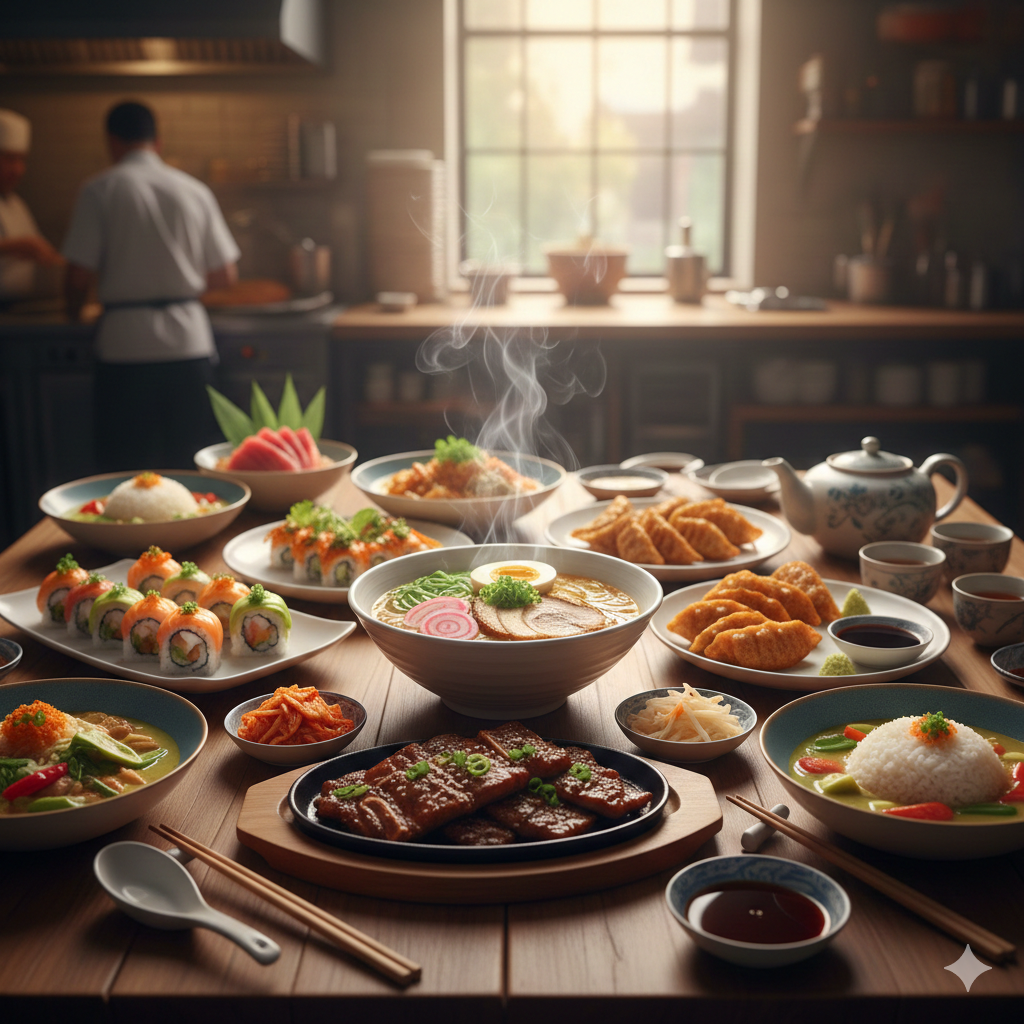
Asia is home to the world’s largest and most diverse culinary landscape, offering flavors, techniques, and ingredients that vary dramatically across regions. From the spicy curries of South Asia to the delicate sushi of East Asia and the aromatic dishes of Southeast Asia, Asian foods are celebrated globally for their richness, balance, and cultural significance.
Staples and Regional Specialties
- East Asia: Countries like China, Japan, and Korea emphasize rice, noodles, and soy-based products as staples. Chinese cuisine includes stir-fries, dumplings, and Peking duck, while Japanese cuisine highlights sushi, sashimi, ramen, and tempura. Korea is renowned for its fermented dishes, such as kimchi, and barbecue-style cooking.
- South Asia: India, Pakistan, Bangladesh, and Sri Lanka showcase bold, aromatic flavors. Rice, lentils, and wheat-based breads like naan and roti form staples. Curries, tandoori dishes, biryani, and samosas are popular, with spices like turmeric, cumin, coriander, and chili adding depth and complexity.
- Southeast Asia: Thailand, Vietnam, Malaysia, Indonesia, and the Philippines emphasize balance in flavors—sweet, sour, salty, bitter, and spicy. Signature dishes include Thai green curry, Vietnamese pho, Indonesian nasi goreng, and Filipino adobo. Coconut milk, lemongrass, ginger, and chili peppers are widely used.
- Central Asia: Countries like Kazakhstan, Uzbekistan, and Kyrgyzstan rely on wheat, dairy, and meat, reflecting their nomadic heritage. Dishes like plov (rice with meat and vegetables) and manti (steamed dumplings) are regional favorites.
Street Food Culture
Street food is a vibrant aspect of Asian culinary life. Examples include:
- Dim sum and baozi in China
- Takoyaki and yakitori in Japan
- Pad Thai and mango sticky rice in Thailand
- Chaat and pani puri in India
These foods are convenient, flavorful, and often tell a story about local culture and history.
Ingredients and Flavor Profiles
Asian cuisines use a rich variety of ingredients. Soy sauce, fish sauce, sesame oil, garlic, ginger, chili, coconut milk, and a variety of herbs are common. Fermentation is also widely used, creating unique tastes in dishes like Korean kimchi, Japanese miso, and Thai fermented fish sauces.
Influence and Global Popularity
Asian foods have gained immense popularity worldwide. Sushi bars, Indian curry houses, Thai restaurants, and dim sum cafés can be found on nearly every continent. Fusion cuisine continues to emerge, blending Asian flavors with global cooking techniques.
Conclusion
Asian foods offer an extraordinary diversity of flavors, textures, and aromas. From the street markets of Bangkok to the kitchens of Tokyo, the culinary traditions of Asia reflect centuries of culture, trade, and innovation. Exploring Asian cuisine is not just a meal—it is a journey through history, geography, and human creativity.
