

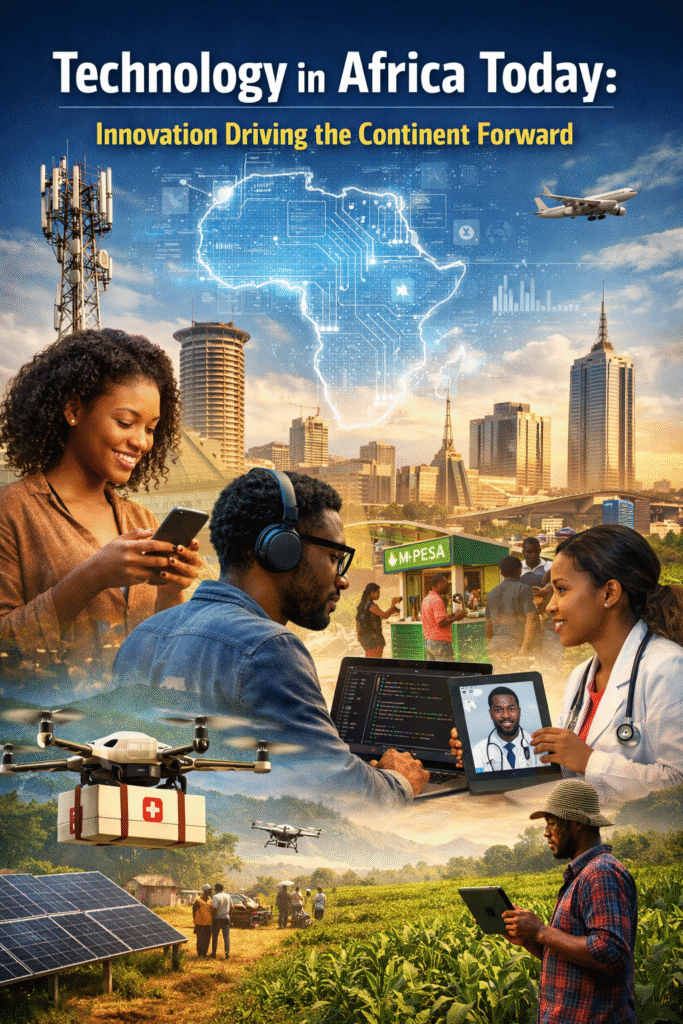
Technology in Africa today is no longer just about catching up—it is about leapfrogging, adapting, and innovating in ways that respond directly to local needs. Across the continent, technology is reshaping economies, improving access to essential services, and empowering a young, dynamic population. From mobile money to artificial intelligence, Africa’s tech landscape is vibrant, diverse, and rapidly evolving.
Digital Connectivity and Mobile Revolution
One of the most transformative aspects of technology in Africa has been the widespread adoption of mobile phones. With limited fixed-line infrastructure, mobile technology became the fastest and most accessible way to connect people. Affordable smartphones and expanding 4G—and in some areas 5G—networks have brought millions online for the first time.
This connectivity has enabled access to information, education, healthcare advice, and markets, particularly in rural and underserved communities. Social media platforms are also playing a key role in communication, entrepreneurship, and civic engagement.
Fintech and Mobile Money Leadership
Africa is a global leader in financial technology (fintech), especially in mobile money services. Platforms like M-Pesa in Kenya have revolutionized how people save, transfer, and spend money. Today, mobile money is used for everyday transactions, paying school fees, receiving salaries, and even accessing microloans and insurance.
Fintech startups across Nigeria, Ghana, South Africa, Rwanda, and beyond are addressing financial inclusion by serving people who were previously unbanked. This has strengthened small businesses and stimulated economic growth.
Tech Startups and Innovation Hubs
The rise of tech hubs and startup ecosystems is another defining feature of technology in Africa today. Cities such as Lagos, Nairobi, Cape Town, Kigali, and Cairo have become innovation centers, hosting incubators, accelerators, and venture capital activity.
African startups are developing solutions in areas such as agritech, healthtech, edtech, logistics, and clean energy—often tailored specifically to local challenges. These innovations are attracting international attention and investment.
Technology in Education and Healthcare
Technology is improving access to education through e-learning platforms, online courses, and digital classrooms. Students can now access global learning resources using just a smartphone and internet connection.
In healthcare, telemedicine, electronic medical records, and health-monitoring apps are helping to bridge gaps caused by shortages of medical professionals and facilities. Drones delivering medical supplies in countries like Rwanda demonstrate how advanced technology can be adapted to African contexts.
Challenges and the Way Forward
Despite significant progress, challenges remain. These include limited internet access in rural areas, high data costs, electricity shortages, cybersecurity risks, and the digital skills gap. Addressing these issues requires investment in infrastructure, supportive government policies, and a focus on digital education.
Conclusion
Technology in Africa today is a powerful driver of transformation. It is fostering innovation, inclusion, and resilience across the continent. With its youthful population, growing startup culture, and increasing global partnerships, Africa is not just participating in the digital age—it is helping to shape it. The future of African technology holds immense promise, and its impact will be felt far beyond the continent.
