

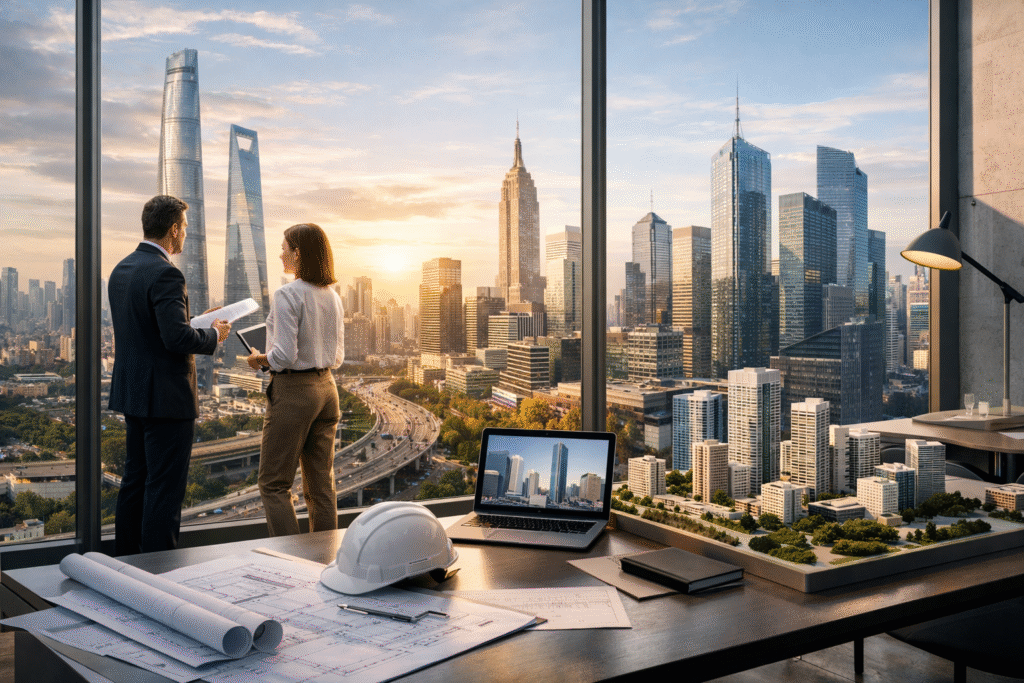
The Intersection of Business and Architecture: Designing Success Beyond Structures
Architecture is often perceived as an art form—beautiful buildings, innovative designs, and iconic skylines that define cities. Yet, beneath the aesthetic allure lies a critical business dimension. In today’s global economy, architecture and business are inseparable partners, influencing one another in profound ways. From project financing to workplace efficiency, sustainable construction, and urban planning, the relationship between business and architecture has become central to shaping both the physical and economic landscapes of our world.
At its core, architecture is about solving problems—creating functional spaces that meet human needs. Business, similarly, is about solving problems for markets and communities, generating value through products, services, and services innovation. When architecture aligns with business objectives, it becomes more than a structure; it becomes a strategic asset that enhances brand value, drives productivity, and supports long-term growth. For instance, commercial office buildings today are designed not just to house employees but to boost creativity, collaboration, and employee retention—directly impacting a company’s bottom line.
Economic Drivers of Architecture
One of the most obvious links between business and architecture is economic. Large-scale construction projects are multi-million-dollar investments, requiring careful planning, financial modeling, and risk assessment. Architects must collaborate with developers, investors, and city planners to ensure that designs are not only aesthetically pleasing but also financially viable. In metropolitan hubs like New York, London, and Singapore, iconic structures such as skyscrapers and mixed-use complexes symbolize not only architectural innovation but also economic power. The financial success of these projects often depends on factors like location, efficiency of design, and adaptability to market demands.
Moreover, architecture can significantly influence property value. A well-designed building can attract premium tenants, command higher rents, and enhance resale value. From a business perspective, architecture is an investment that directly affects revenue streams. Developers increasingly recognize that sustainable, energy-efficient designs—though initially costly—reduce long-term operational expenses and appeal to environmentally conscious clients, aligning financial goals with social responsibility.
Brand Identity and Architectural Design
Beyond economics, architecture plays a crucial role in shaping brand identity. Consider global corporations like Apple, Google, or Amazon: their headquarters are more than office spaces—they are physical embodiments of brand philosophy. Apple’s sleek, minimalist Apple Park reflects the company’s commitment to innovation and elegance. Google’s campuses, with open spaces and playful design, embody creativity and collaboration. In these examples, architecture is leveraged as a business tool, conveying values, enhancing corporate culture, and reinforcing market positioning.
Retail businesses, too, rely on architectural strategies to influence consumer behavior. Store layouts, lighting, façade design, and interior aesthetics are carefully crafted to attract customers, enhance experience, and ultimately drive sales. Flagship stores, especially in luxury sectors, often invest millions in architectural design to create a “wow factor” that resonates with their brand narrative. The architecture itself becomes part of the product, blending function, art, and marketing in a unique synergy.
Workplace Design and Productivity
In the corporate world, architecture also directly impacts employee productivity and satisfaction. Studies have shown that workspace design—natural light, ventilation, spatial layout, and access to collaborative areas—affects not only morale but also efficiency and innovation. Businesses increasingly invest in architectural solutions that foster creativity, flexibility, and well-being. The rise of open-plan offices, co-working spaces, and biophilic design (incorporating natural elements) demonstrates a growing awareness that architecture is a strategic business tool rather than just a construction requirement.
Flexible design has become particularly important in the age of hybrid work. Companies must balance in-office collaboration with remote work dynamics, and architecture plays a key role in supporting this balance. Thoughtful spatial planning, modular furniture, and technologically integrated environments enable businesses to adapt quickly, reduce operational costs, and maintain employee engagement. In this sense, architecture is a bridge between human needs and business objectives, making it an indispensable component of corporate strategy.
Sustainability and Corporate Responsibility
Sustainability has emerged as another critical intersection between business and architecture. Green building practices, energy-efficient materials, and low-carbon construction are no longer optional—they are business imperatives. Companies increasingly recognize that sustainable architecture enhances reputation, attracts investors, and reduces long-term costs. LEED-certified buildings and net-zero energy designs signal corporate responsibility and forward-thinking strategy, appealing to both consumers and shareholders.
In addition, sustainable architecture can create competitive advantage. Cities are encouraging eco-friendly designs through tax incentives, grants, and regulatory support, making green architecture a financially attractive choice. Businesses that integrate sustainability into their architectural strategy often enjoy improved operational efficiency, lower utility costs, and stronger stakeholder trust. The convergence of environmental stewardship and economic performance demonstrates how architecture can directly influence a company’s success in the modern market.
Urban Planning and Strategic Growth
Finally, architecture and business intersect on a macro scale through urban planning. City planners, architects, and business leaders collaborate to create districts that stimulate commerce, improve transportation, and enhance livability. Mixed-use developments, for example, combine residential, commercial, and recreational spaces, creating vibrant ecosystems that support local economies. Businesses benefit from these thoughtfully designed urban environments through increased foot traffic, customer engagement, and brand exposure.
Strategic architectural decisions—such as zoning, infrastructure, and accessibility—affect business operations and growth opportunities. Companies that anticipate urban trends and align their architectural projects with city development plans are better positioned to thrive in competitive markets. Here, architecture is not merely a backdrop for business; it becomes a critical driver of economic and social progress.
Conclusion
The relationship between business and architecture is dynamic, multifaceted, and increasingly strategic. Architecture shapes financial outcomes, brand identity, workplace productivity, sustainability, and urban growth. In turn, business considerations—budget, market trends, operational efficiency, and corporate philosophy—influence architectural design. Successful projects require a deep understanding of both domains, ensuring that structures are not only visually striking but also economically sound and socially relevant.
As the world continues to evolve, the synergy between business and architecture will only deepen. Businesses will increasingly leverage architectural innovation to gain competitive advantage, while architects will continue to embrace business acumen to realize their visions. Together, they create more than buildings—they design environments where commerce, culture, and human potential flourish. In this collaborative space, architecture and business are not just partners; they are co-creators of the future.
