

Exploring the Rich Tapestry of Kenyan Culture
Kenya, often called the “Cradle of Humanity” due to its archaeological significance, is also a vibrant mosaic of cultures, traditions, and languages. Located in East Africa, Kenya is home to over 47 ethnic groups, each contributing to the country’s rich cultural heritage. From colorful ceremonies to diverse cuisines and artistic expressions, Kenyan culture offers a fascinating insight into the lives, values, and identities of its people.
1. Ethnic Diversity and Traditions
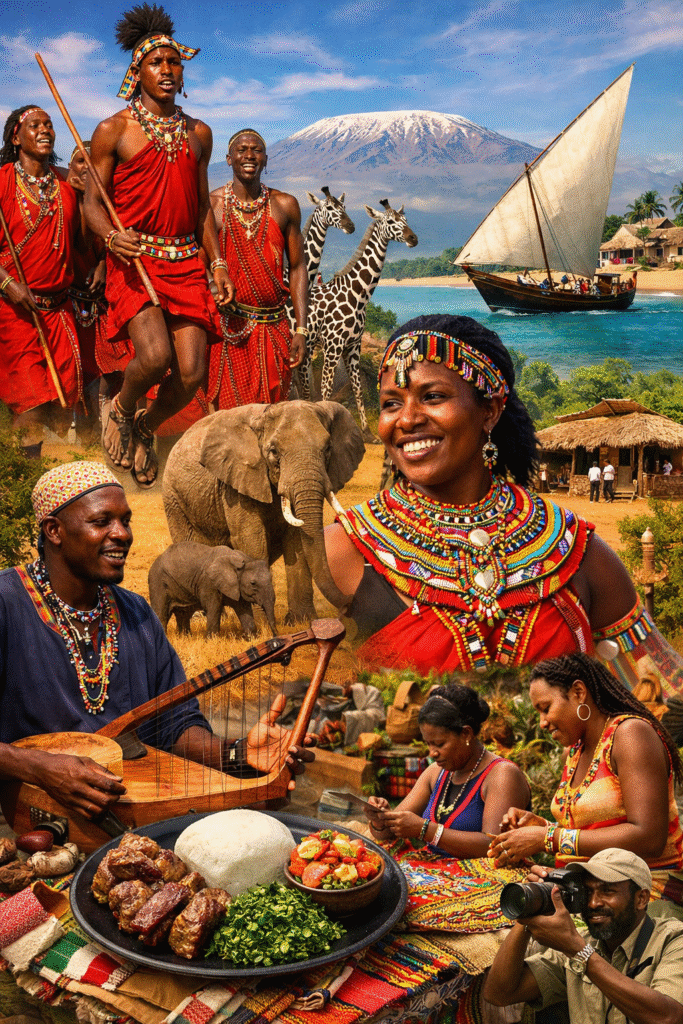
Kenya’s population includes communities such as the Kikuyu, Luo, Luhya, Maasai, Kalenjin, and Swahili, among others. Each ethnic group has distinct customs, languages, and social structures. For instance, the Maasai are renowned for their semi-nomadic lifestyle, elaborate beadwork, and vibrant clothing, while the Kikuyu have strong agricultural traditions and community-based rituals.
Traditional practices are deeply rooted in storytelling, rituals, and ceremonies. Life events—such as birth, initiation, marriage, and death—are marked with unique cultural practices. For example, initiation ceremonies for young men and women often signify the transition from childhood to adulthood and are celebrated with music, dance, and communal feasting.
2. Language and Communication
Kenya recognizes two official languages: English and Swahili, but over 60 indigenous languages are spoken across the country. Swahili, a Bantu language enriched with Arabic, Portuguese, and English influences, serves as a lingua franca that unites the diverse population. Language is not only a means of communication but also a vessel for passing down proverbs, folktales, and historical narratives that preserve cultural memory.
3. Music, Dance, and Art
Kenyan culture is highly expressive through music and dance. Traditional music often uses drums, string instruments like the nyatiti, and local flutes. Each ethnic group has its own rhythms and dances—such as the energetic Maasai jumping dance (Adamu) and the Luo Ohangla drumming dance. Modern Kenyan music has blended these traditional styles with global genres like hip-hop, reggae, and gospel, producing a unique contemporary sound.
Visual arts are also significant. Kenyan artisans excel in beadwork, wood carving, basket weaving, and pottery. These art forms are not just decorative; they often carry symbolic meanings connected to spirituality, social status, and communal identity.
4. Cuisine
Kenyan cuisine reflects the diversity of its people and regions. Staple foods include ugali (maize meal), sukuma wiki (collard greens), and nyama choma (grilled meat), often enjoyed at communal gatherings. Coastal communities favor dishes infused with coconut milk, spices, and seafood, reflecting Swahili influences. Food is more than sustenance—it is a symbol of hospitality and community.
5. Festivals and National Identity
Kenya celebrates both traditional and modern cultural festivals. Mashujaa Day honors national heroes, while Jamhuri Day marks independence. Ethnic communities hold unique local festivals that showcase traditional music, dance, and attire. These celebrations strengthen social bonds, promote cultural pride, and provide opportunities for younger generations to connect with their heritage.
6. Modern Influences and Globalization
While tradition is central, Kenyan culture is dynamic. Urban centers like Nairobi and Mombasa showcase a blend of local and global influences, from fashion and art to music and cuisine. The Kenyan diaspora also plays a role in spreading cultural awareness internationally, creating a feedback loop that enriches both domestic and global perspectives.
Conclusion
Kenya’s culture is a vibrant tapestry woven from centuries of history, ethnic diversity, and creative expression. It reflects a society that values community, respect for tradition, and a harmonious relationship with nature. Whether experienced through music, dance, art, or cuisine, Kenyan culture is a testament to the resilience, creativity, and spirit of its people. For anyone seeking to understand Kenya, engaging with its cultural richness is both an enlightening and inspiring journey.