

Beyond the Treadmill: How AI and Smart Machines are Redefining Fitness in 2025
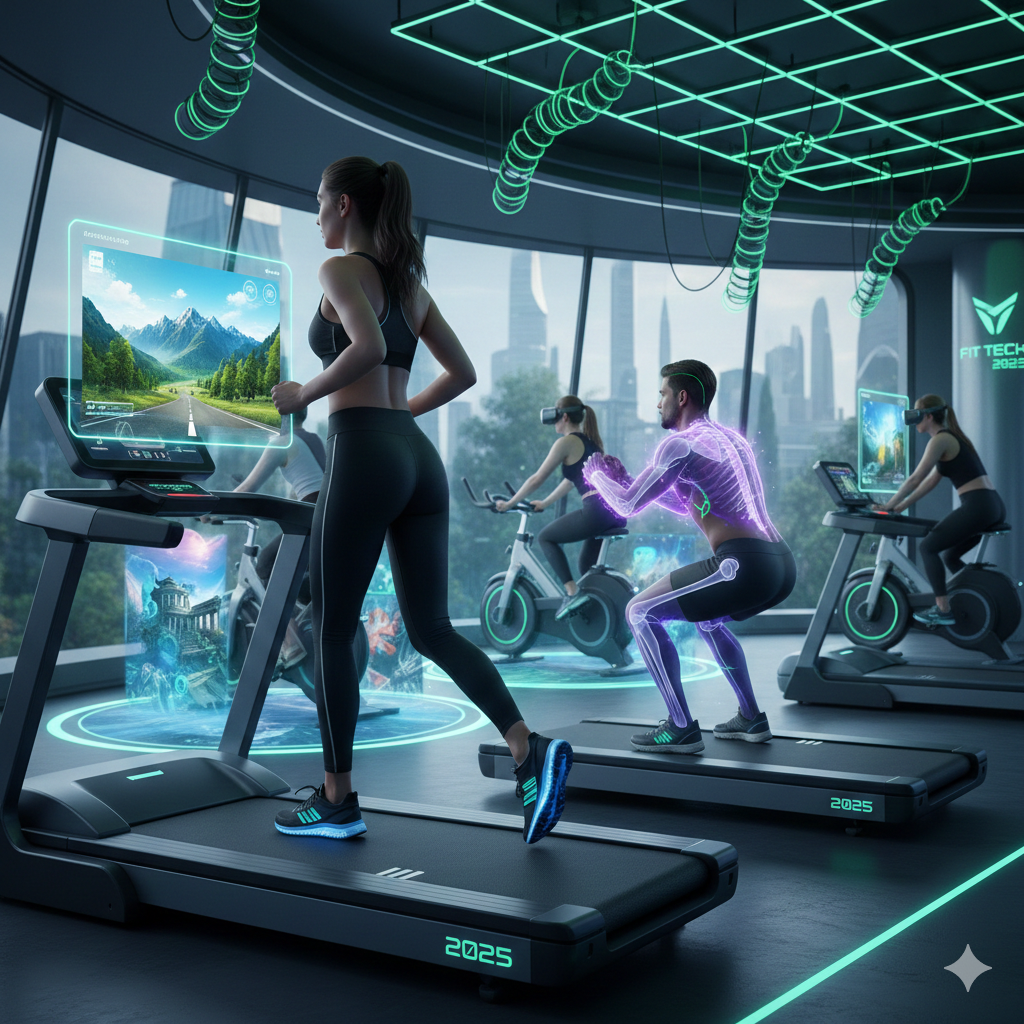
The Digital Pulse: How Machines are Redefining Exercise in 2025
For decades, the relationship between humans and exercise machines was one of mechanical repetition—pounding a treadmill belt while staring at a wall or pulling a steel cable until the muscles gave out. However, in 2025, the “machine” is no longer just a tool; it has become an intelligent partner.
Today, the intersection of fitness and technology has transformed the gym from a collection of iron weights into a data-driven ecosystem.
- The Rise of “Smart Strength”
The most significant shift this year is the move from “dumb” weights to Smart Strength platforms. Unlike traditional machines that use gravity and iron plates, modern systems often utilize electromagnetic resistance.
- Real-Time Form Correction: Using computer vision and sensors, machines now act as digital spotters. If your back arches too much during a squat or your range of motion is shallow, the machine provides immediate audio or visual feedback.
- Adaptive Resistance: These machines can sense when you are struggling (the “sticking point”) and shed a few pounds of digital weight to help you finish the rep safely, or add weight during the “eccentric” phase (lowering the weight) to maximize muscle growth.
- The AI Personal Trainer
In 2025, Artificial Intelligence (AI) has moved from mobile apps directly into the hardware. Machines now recognize users via biometrics (like a watch tap or facial recognition) and automatically adjust the seat height, weight stack, and training program based on your previous performance and current recovery levels.
The “Readiness” Factor: By syncing with your wearable (like an Oura Ring or Apple Watch), a 2025 treadmill knows if you slept poorly. It might automatically suggest a “Zone 2” recovery walk instead of the high-intensity sprint intervals originally scheduled.
- Gamification and Immersive Cardio
The days of “treadmill boredom” are largely over. Virtual Reality (VR) and high-definition “Exertainment” have turned cardio into a gaming experience.
- Virtual Racing: You aren’t just running on a belt; you are racing against the “ghost” of your personal best through a digital recreation of the Swiss Alps.
- Competitive Connectivity: Machines across the world are now linked, allowing users in London and Tokyo to compete in a live rowing sprint or cycling stage in real-time.
- Comparison: Traditional vs. Smart Equipment
| Feature | Traditional Machines | 2025 Smart Machines |
|—|—|—|
| Tracking | Manual (notebook/app) | Automatic (cloud-synced) |
| Resistance | Gravity/Iron Plates | Electromagnetic/Digital |
| Guidance | Static diagrams | Live AI form coaching |
| Motivation | Self-driven | Gamified / Socially connected |
| Safety | Requires human spotter | Auto-detects fatigue & failsafe |- Sustainability: The Green Machine
A growing trend in 2025 is the energy-harvesting machine. Many high-end gyms are now installing stationary bikes and ellipticals that convert the kinetic energy of the workout into electricity. This power is fed back into the gym’s grid to run the lights and AC, making your sweat literally pay the power bill.
Summary: The Human Element
Despite the surge in technology, the goal of the “machine” remains the same: to move the human body. While AI can track your reps and sensors can correct your form, the discipline to show up remains a human requirement. In 2025, the machine simply ensures that when you do show up, every minute of your effort is optimized, safe, and recorded.
Would you like me to create a personalized weekly workout plan that incorporates these modern machine features, or perhaps compare specific brands of smart home gym equipment?