The Agentic Era: How AI Moved from Chatting to Acting in 2025
The Rise of the “Agents“ The most significant trend of 2025 is the transition from generative AI to Agentic AI. While 2023 was about asking a prompt and getting an answer, 2025 is about giving a goal and getting a result. AI agents can now navigate software, manage calendars, book travel, and even write and deploy code autonomously to solve multi-step problems.
The Great Efficiency: Enterprise Scaling According to recent McKinsey data, nearly two-thirds of organizations have moved beyond the “experimentation” phase. AI is no longer a side project; it is being integrated into core business functions like supply chain logistics, real-time financial auditing, and automated customer success. The focus has shifted from “What can AI do?” to “How much ROI can AI generate?”
Hardware Wars and Custom Silicon As the demand for compute power hits a fever pitch, the “chip wars” have intensified. While NVIDIA remains a titan, 2025 has seen a massive surge in custom AI silicon (ASICs) developed by Google, Amazon, and Meta. These chips are designed specifically to run “Frontier Models” more efficiently, reducing the massive energy costs associated with general-purpose GPUs.
The Geopolitics of Intelligence AI has become the new “space race.” 2025 saw a major shift as Chinese models, such as those from DeepSeek, reached parity with Western models at a fraction of the training cost. Governments are now treating AI clusters as critical national infrastructure, leading to “sovereign AI” initiatives where nations build their own data centers to ensure data privacy and cultural alignment.
Scientific Discovery at Warp Speed AI is no longer just for writing emails; it is solving the “hard sciences.” In 2025, AI-driven models have significantly accelerated drug discovery and materials science. We are seeing the first batch of AI-designed proteins entering clinical trials and new battery chemistries discovered by AI that could double the range of electric vehicles.
The Democratization of “Edge AI” We are moving away from total reliance on the “cloud.” Small Language Models (SLMs) now allow sophisticated AI to run locally on smartphones, glasses, and laptops. This Edge AI ensures better privacy, works offline, and significantly reduces the latency of personal assistants like those found in the newest generation of smart glasses.
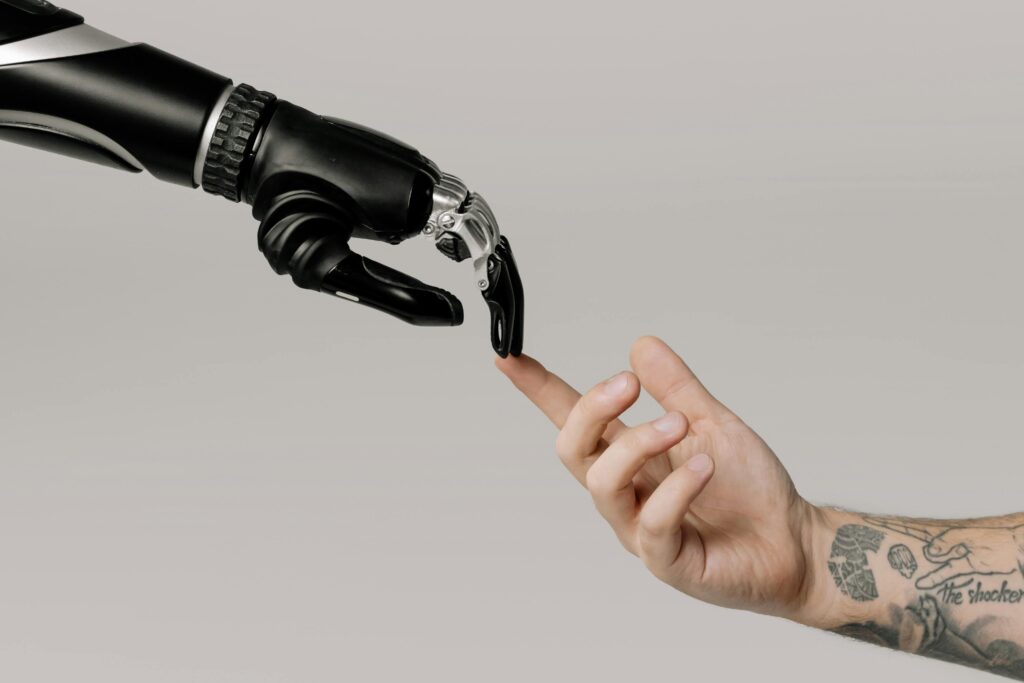
Robotics and “Physical” AI Tesla’s Optimus and other humanoid robots have made leaps in dexterity and perception this year. AI is “breaking out of the screen.” In 2025, we are seeing autonomous systems move from controlled factory floors to “unstructured” environments—meaning robots that can navigate messy warehouses or assist in hospital wards without pre-programmed paths.
The Ethics and Regulation Crossroads 2025 is a year of legal reckoning. With the full implementation of the EU AI Act and new frameworks in the US, companies are now legally required to provide transparency into how their models are trained. Issues like Deepfake Defense have become a multi-billion dollar industry as platforms race to authenticate “human-generated” content.
The Energy Challenge: Nuclear Rebirth The massive power consumption of AI data centers has sparked a “Nuclear Renaissance.” In late 2024 and throughout 2025, major tech firms have signed deals to reopen nuclear plants or invest in Small Modular Reactors (SMRs). To keep the AI revolution going, the industry is becoming the largest private driver of clean energy investment in history.
The Shift in Human Labor The conversation around “AI taking jobs” has matured into “AI-human collaboration.” While certain roles in data entry and basic coding are being heavily automated, new roles like AI Orchestrators and Ethics Auditors are booming. The workforce is shifting toward “soft skills”—critical thinking, empathy, and strategic oversight—leaving the “grunt work” to the models. Would you like me to dive deeper into one of these sections, perhaps by creating a detailed case study on how Agentic AI is changing a specific industry?