

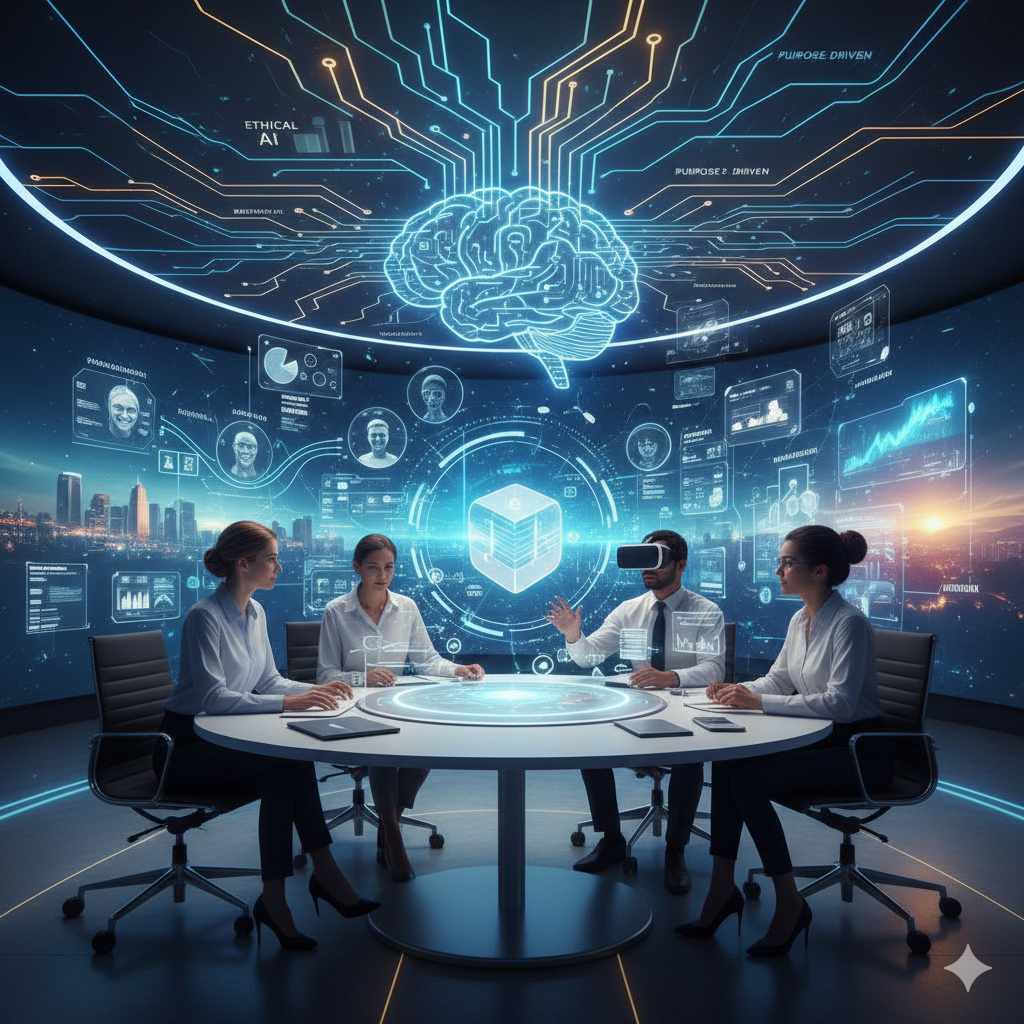
🚀 The AI-Powered Renaissance: Marketing Today (2025)The landscape of marketing has always been a mirror of technological and cultural shifts. Today, in 2025, it’s less a mirror and more a high-speed, interactive hologram, driven by the twin engines of Artificial Intelligence (AI) and a relentless demand for authentic, human connection. Marketers are navigating a world where personalization is no longer an advantage but a fundamental expectation, and data privacy is paramount. This article explores the defining trends, challenges, and strategies shaping modern marketing.The Reign of Artificial IntelligenceAI is not just a tool; it is the new operating system for modern marketing. Its integration is transforming everything from content creation to customer experience, fundamentally changing the way brands interact with their audience.Hyper-Personalization at ScaleThe days of generic marketing messages are over. AI and Machine Learning (ML) are the key to unlocking hyper-personalization—delivering the right message, on the right platform, at the exact right moment. * Predictive Analytics: AI analyzes vast amounts of customer data (purchase history, browsing behavior, etc.) to predict future actions and preferences, allowing brands to proactively offer relevant products or content. * Generative AI for Content: Tools leveraging Generative AI are accelerating content production, creating personalized email copy, ad variations, and even draft articles in minutes. This frees human marketers to focus on strategy, empathy, and high-level creative direction. * AI Agents and Voice Commerce: As AI agents become autonomous shopping assistants for consumers, brands will need to optimize their presence not just for humans but for these non-human consumers as well, ensuring their product features and details are easily ‘findable’ by algorithms.The Data Challenge: Privacy and First-Party FocusThe move towards a cookieless future and tightening global data privacy regulations (like GDPR and CCPA) presents a significant challenge and a massive opportunity. The reliance on third-party data is fading, making first-party data (data collected directly from customer interactions) the new gold standard. * Zero-Party Data: Brands are strategically asking customers for their preferences (zero-party data) through interactive content, polls, and quizzes, building trust and gaining explicit, valuable insights. * Ethical AI: With the rise of AI, marketers must prioritize ethical and humane use, ensuring transparency and actively guarding against algorithmic bias to maintain consumer trust.The Evolution of Customer EngagementConsumers, particularly Millennials and Gen Z, demand more than just a transaction; they seek value, entertainment, and authenticity. This shift is redefining how content is created and distributed.The Video and Visual Content DominanceShort-form video platforms (TikTok, Instagram Reels, YouTube Shorts) continue to dominate. Audiences crave bite-sized, engaging, and highly visual storytelling. * Shoppable Video: Integrating direct purchase options into videos is closing the gap between discovery and conversion, transforming content from an awareness tool into a direct revenue driver. * Immersive Experiences: Augmented Reality (AR) and Virtual Reality (VR) are moving beyond novelty, offering consumers interactive, immersive brand experiences, such as virtual try-ons or digital tours.The Power of Social CommerceSocial media platforms are rapidly evolving into comprehensive marketplaces. The convergence of content and commerce is seamless, with in-app checkouts and live shopping events making the purchase journey frictionless.Authenticity Through InfluenceWhile large-scale celebrity endorsements remain, the focus is increasingly shifting to micro- and nano-influencers. These smaller creators boast higher engagement rates and are perceived as more authentic and trustworthy by their highly segmented, dedicated audiences.Strategic Pillars for Marketing SuccessTo thrive in this complex environment, marketers must adopt agile, multi-channel strategies.The Omnichannel ImperativeMarketing in 2025 requires a unified and cohesive omnichannel experience that stitches together digital and physical touchpoints. A customer’s journey from a social media ad to an in-store pickup, and a follow-up email, must feel like one continuous, intelligent conversation.Purpose-Driven MarketingConsumers are more socially and environmentally conscious than ever. Brands must move beyond superficial claims and embed genuine sustainability and social responsibility into their core values. Brands that practice greenwashing (misleading claims of being eco-friendly) risk significant damage to their reputation. This requires transparency in the supply chain and an authentic commitment to societal causes.Proving ROI with Advanced MeasurementWith increasing pressure on budgets and the challenge of the cookieless world, demonstrating a clear Return on Investment (ROI) is the top metric. Marketers are investing in advanced measurement tools: * Marketing Mix Modeling (MMM): This analytical technique is making a resurgence, helping marketers understand the cross-channel effectiveness and incremental impact of their various campaigns. * Predictive Analytics: Beyond personalization, predictive models are used to forecast campaign outcomes and optimize media spend in real-time for maximum efficiency.ConclusionThe state of marketing today is defined by a dynamic tension: the dizzying speed of technological advancement, primarily driven by AI, versus the enduring human need for trust, authenticity, and connection. Success is reserved for those who can deftly balance the two. The smart marketer of 2025 is a strategic, data-driven humanist—one who leverages AI to achieve unprecedented scale and efficiency while remaining fiercely committed to ethical practices, real-world purpose, and delivering genuinely valuable, human-centric experiences. Mastering this balance is not just the key to survival; it is the blueprint for exponential growth in the new age of marketing.Would you like to explore a specific trend, such as the impact of Generative AI on content marketing, in more detail?
