

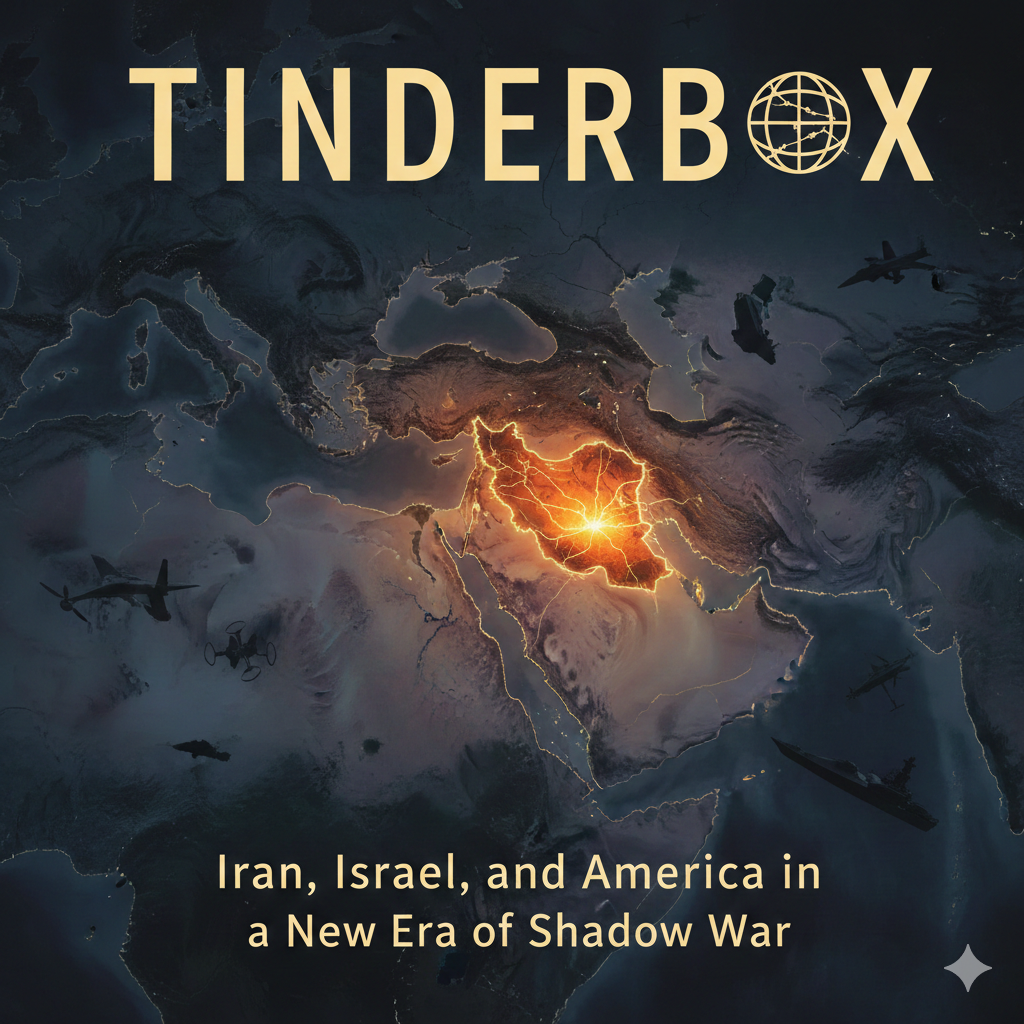
JERUSALEM / WASHINGTON / TEHRAN – The strategic triangle between Iran, Israel, and the United States has entered its most volatile and unpredictable phase in decades. The foundational pillars that once contained their conflict—a nuclear deal, clear red lines, and a semblance of diplomatic distance—have crumbled. In their place, a new and dangerous paradigm has emerged: a multi-front shadow war conducted through proxies, cyber-attacks, and covert operations, all unfolding beneath the constant, looming threat of a catastrophic direct confrontation. Today, every drone launched in Syria, every cyber-breach of an electrical grid, and every act of piracy in the Gulf is a move in a high-stakes game where the rules are unwritten and the potential for miscalculation is immense.
Iran’s Strategy: The Arsenal of the Axis
Emerging from the wreckage of the 2015 nuclear deal (JCPOA) and crippled by “maximum pressure” U.S. sanctions, Iran has doubled down on its doctrine of strategic deterrence and asymmetric warfare. Its primary goals are regime survival, regional hegemony, and the expulsion of U.S. influence from the Middle East.
Its toolkit is now more potent and precise than ever:
- The “Axis of Resistance”: A mature, decentralized network of proxy militias—Hezbollah in Lebanon, various Shia militias in Iraq and Syria, and the Houthis in Yemen. These groups provide Iran with strategic depth and plausible deniability, allowing it to project power and pressure adversaries without committing its own forces. Hezbollah’s arsenal of over 150,000 rockets can saturate Israel; the Houthis can fire drones and missiles at Saudi Arabia and international shipping.
- Precision and Proximity: Iran has moved beyond simple rocket barrages. It now supplies its proxies with precision-guided munitions, drones (like the Shahed-136), and advanced intelligence capabilities. This allows for more threatening strikes on specific Israeli or Gulf state targets.
- The Nuclear Threshold Dance: Iran has made staggering advances in its nuclear program since the U.S. withdrew from the JCPOA. It now enriches uranium up to 60% purity, has accumulated enough fissile material for several bombs, and has drastically reduced the time it would need to “break out” to a weapon. This program is the ultimate bargaining chip and deterrent, designed to force concessions while keeping the world guessing about its final intentions.
- The Maritime and Cyber Battlefield: From seizing tankers to launching sophisticated cyber-attacks on infrastructure in Israel and the U.S., Iran demonstrates its ability to wage unconventional war far beyond its borders.
Israel’s Doctrine: The Campaign Between Wars and the Samson Option
For Israel, the Iranian threat is no longer theoretical or distant; it is an encircling reality. Israel’s strategy, under its most right-wing government in history, is characterized by unilateralism and preemption.
- The “Campaign Between Wars” (CBW): For over a decade, Israel has waged a relentless, undeclared air war—primarily from the skies of Syria—to disrupt Iran’s “land bridge” of weapons transfers to Hezbollah. Thousands of airstrikes have targeted convoys, warehouses, and Iranian-linked facilities. This campaign has expanded to include covert actions inside Iran itself: assassinations of nuclear scientists, sabotage at key facilities like Natanz, and cyber-attacks.
- Preparing for a Multi-Front Conflict: The Israeli military openly states it is preparing for a large-scale war with Hezbollah and Iran simultaneously. It has conducted massive drills simulating strikes on Iranian nuclear sites and urban warfare in Gaza and Lebanon.
- The Unbreakable Alliance & The Unilateral Trigger: Israel’s relationship with the U.S. is its cornerstone, yet there is a profound tension. While fully dependent on U.S. military aid and diplomatic cover, Israel’s government has repeatedly signaled it will not outsource its existential security to American timetables. The threat of a unilateral Israeli strike on Iranian nuclear facilities—a modern “Samson Option”—remains a live wire, a nightmare scenario that keeps Washington on edge.
America’s Dilemma: Pivot, Protect, or Punish?
The United States is caught in a strategic contradiction. Its stated goal is to prevent Iran from obtaining a nuclear weapon and curb its malign activities. Yet, its actions reveal a deep desire to disengage from large-scale Middle Eastern conflicts to focus on strategic competition with China and Russia.
This has created a schizophrenic policy:
- Military Deterrence and Diplomatic Paralysis: The U.S. maintains a formidable military presence in the region—troops in Syria, naval carriers in the Gulf—to deter Iran and protect allies. Simultaneously, diplomatic efforts to revive the nuclear deal are dead, and there is no viable diplomatic track to de-escalate tensions. The result is a holding pattern of military posturing without a political endgame.
- The “Deterrence by Punishment” Quagmire: When Iranian proxies attack U.S. forces (as seen with the drone strike that killed three U.S. soldiers in Jordan in January 2024), Washington is trapped. A weak response emboldens Iran; a massive retaliation risks triggering a full-scale regional war it desperately wants to avoid. This creates a cycle of hesitant, tit-for-tat strikes that fails to re-establish deterrence.
- The Alliance Management Challenge: The U.S. must balance its ironclad commitment to Israel’s security with the need to restrain its ally from actions that could drag America into a war. It must also reassure Gulf partners while encouraging their normalization with Israel, all while those partners fear both Iranian aggression and American abandonment.
The Gaza Catalyst and the New Regional Equation
The war in Gaza has supercharged this already toxic dynamic. Iran’s “Axis” has been activated: the Houthis disrupt global shipping, Hezbollah and Israel exchange fire daily across the Lebanese border, and Iraqi militias target U.S. bases. Iran positions itself as the leader of Muslim resistance, gaining prestige while carefully calibrating its proxies’ actions to avoid a direct war.
For Israel, Gaza has stretched its military and intelligence resources, potentially making it more vulnerable on its northern front with Hezbollah. For the U.S., the conflict has forced a massive re-engagement in the region, complicating its pivot to Asia and exposing its forces to increased attack.
The Path to the Abyss: How Miscalculation Could Happen
The greatest danger is no longer a deliberate decision for war, but an accidental spiral. Several flashpoints could ignite the tinderbox:
- A Hezbollah Miscalculation: A rocket barrage that causes mass Israeli casualties could force a massive Israeli ground invasion of Lebanon, instantly triggering Iranian involvement.
- A Successful Iranian Provocation: A major attack by Iranian proxies that kills significant numbers of U.S. personnel could force a U.S. military response against targets inside Iran itself.
- An Israeli “Bombing Campaign”: A decision by Israel that Iran’s nuclear progress has crossed an irreversible red line, leading to open aerial warfare.
- A Cyber “Pearl Harbor”: A devastating cyber-attack on a partner’s critical infrastructure (e.g., Saudi oil fields, Israeli water systems) attributed to Iran could mandate an overwhelming kinetic response.
Conclusion: Diplomacy in the Shadows, or War in the Light?
The Iran-Israel-America triangle today is a system hurtling toward a violent correction. There are no hotlines, no crisis communication channels, and almost no trust. The “long war” in the shadows has kept the peace in name, but it has also normalized aggression, eroded deterrence, and built up immense kinetic potential.
Avoiding a regional conflagration requires a near-impossible feat of statecraft: reviving a credible diplomatic track, even an incremental one, to manage the nuclear and regional files simultaneously. It would require the U.S. to offer Iran tangible sanctions relief for verifiable behavioral change, Israel to accept a negotiated framework over a military one, and Iran to curtail its revolutionary ambitions for economic survival.
The alternative is clear. The shadow war is slowly bleeding into the light. Each drone strike, each assassination, and each centrifuge spun brings the three nations closer to a conflict that would consume the Middle East, shatter the global economy, and define the 21st century. The time for managing the crisis is ending. The time for resolving it is perilously short. In the shadows between Tehran, Tel Aviv, and Washington, the next move could determine whether this remains a cold conflict or becomes the world’s next hot war.