

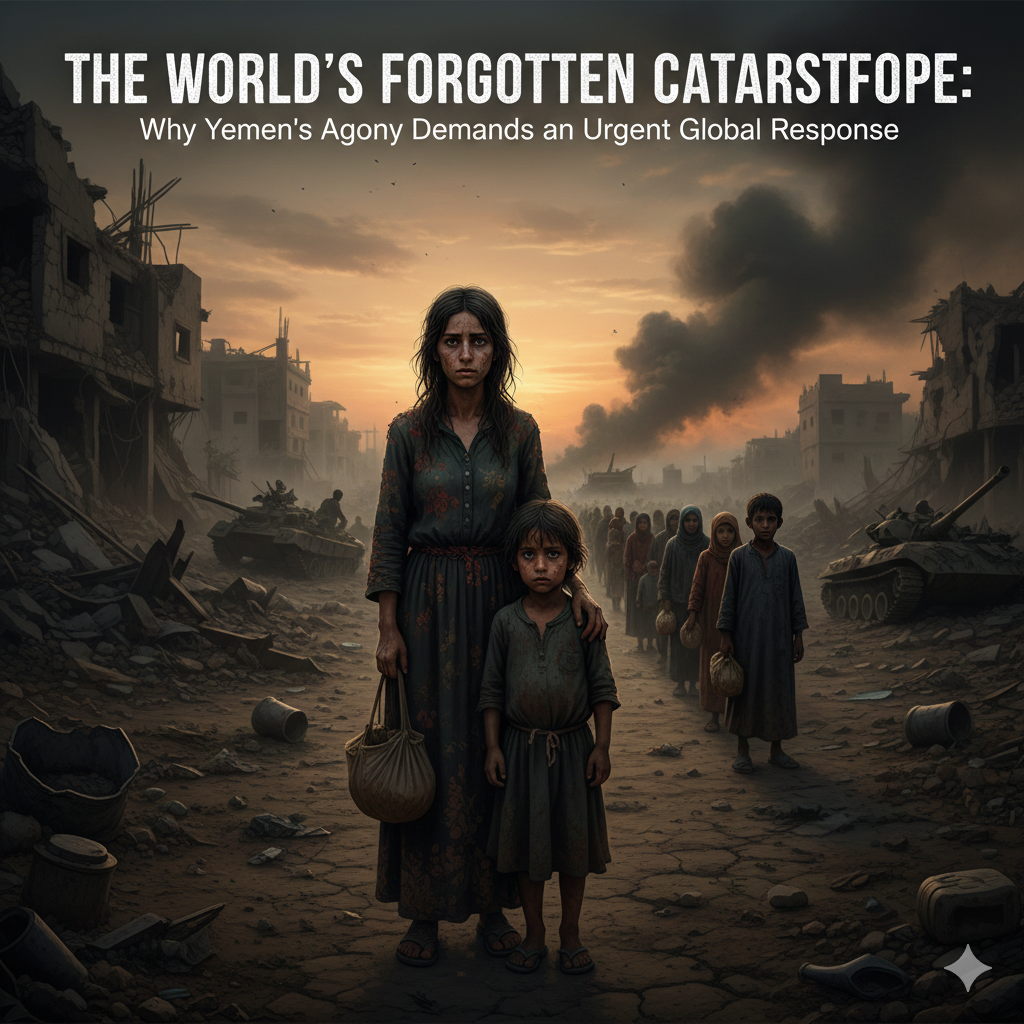
SANAA, Yemen – There is a special kind of cruelty in a forgotten war. While global attention pivots between other crises, the people of Yemen endure a hellscape of human suffering so vast, so systemic, and so preventable that it defies comprehension. Now in its tenth year of conflict, Yemen is not merely a country in need; it is a nation on the brink of being erased, its social and physical fabric systematically unraveled by a war that the world has chosen to overlook. The world’s worst humanitarian disaster is not a natural event; it is a man-made famine, a weaponized epidemic, and a moral failure of the highest order. To say Yemen “needs help” is a catastrophic understatement. Yemen needs an immediate, unconditional, and massive surge of humanitarian intervention, a sustained diplomatic push for peace, and a fundamental reckoning with the international complicity that has allowed this tragedy to persist.
The Anatomy of a Man-Made Famine
At the heart of Yemen’s suffering is hunger, deliberately engineered as a weapon of war. Over 21.6 million people—two-thirds of the population—require humanitarian assistance and protection. Of these, 17.6 million are food insecure, and 3.5 million children and pregnant or lactating women suffer from acute malnutrition. For half a million children, this malnutrition is so severe it is life-threatening.
This is not a famine caused by drought. It is a siege famine. The Saudi-led coalition’s air and naval blockade, while intended to pressure the Houthi rebels, has strangled the import-dependent nation. Even with exemptions, the bureaucratic and logistical throttling of food, fuel, and medicine has driven prices into the stratosphere. Inflation has rendered basic staples like wheat and cooking oil unaffordable for millions. Farmers’ fields have been bombed, fishing boats destroyed, and supply chains shattered. The result is a population slowly starving to death in full view of the international community, while the weapons to perpetuate the siege continue to flow from Western capitals.
The Collapse of Everything: A Nation Without Systems
Yemen’s catastrophe is total, affecting every pillar of a functional society:
- Health System Annihilation: The healthcare infrastructure has been systematically targeted. Over half of all health facilities are dysfunctional, lacking doctors, medicines, electricity, or clean water. Cholera, measles, diphtheria, and now COVID-19 rip through a malnourished, vulnerable population with no defenses. Vaccination programs have collapsed. A child dies every ten minutes from preventable causes. For those with chronic illnesses like diabetes or cancer, the war is a death sentence—medicines are unavailable, and treatment centers are gone.
- The Lost Generation: An entire cohort of Yemeni children is being sacrificed. Over 2 million children are out of school, their schools destroyed, occupied, or turned into shelters. Those who attend are often traumatized, hungry, and unable to learn. Children are not just victims of the war; they are being recruited as soldiers, forced into early marriage, or sent to work to support families. The psychological scars of growing up under bombardment will last for generations, crippling Yemen’s future long after the guns fall silent.
- Economic Obliteration: The economy has been reduced to rubble. The currency has collapsed, public servants go unpaid for years, and unemployment is endemic. What remains is a war economy of smuggling, extortion, and survival-level trade. The middle class has vanished, and families survive only on dwindling savings, the sale of personal assets, and meager humanitarian aid.
The Failure of the International Response
The humanitarian aid provided by the UN and NGOs is a lifeline, but it is a Band-Aid on a hemorrhaging artery. The response is chronically, criminally underfunded. Year after year, UN appeals for Yemen receive only a fraction of the required funds, as donor fatigue sets in and other crises emerge. Aid delivery is politicized, obstructed by all sides, and used as a bargaining chip. Humanitarian workers risk their lives in one of the world’s
