

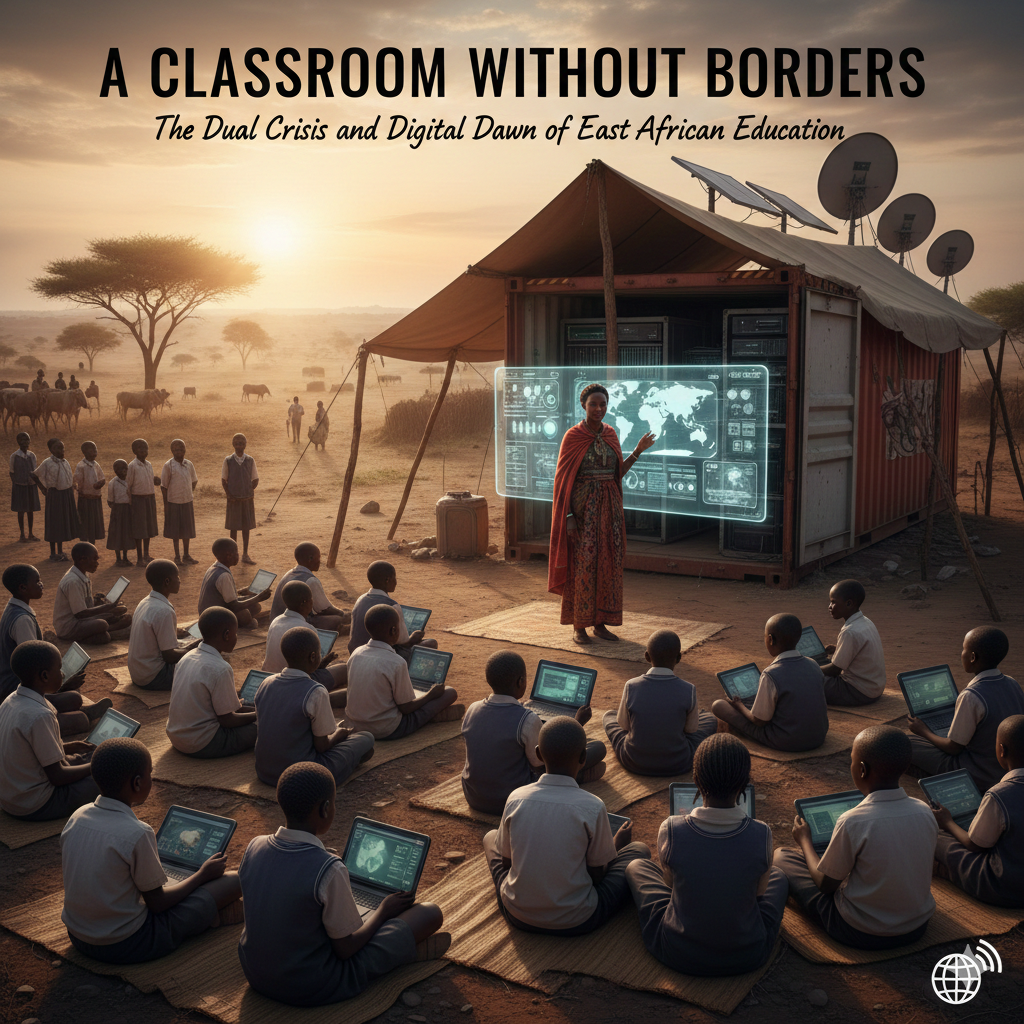
NAIROBI, KENYA – The story of education in East Africa today is a narrative of profound aspiration shadowed by systemic strain. In a region where over 60% of the population is under 25, the classroom is not merely a place of learning; it is the crucible in which the continent’s demographic dividend will be forged or squandered. From the overcrowded public primary schools of rural Uganda to the burgeoning private universities in Nairobi, the sector is grappling with a historic tension between the urgent need for mass access and the imperative for quality and relevance in a rapidly changing world. This is an ecosystem under pressure, yet one crackling with innovative energy and a fierce, generational demand for a different kind of learning.
The Access Revolution and the Quality Crisis
East Africa has made staggering progress in getting children into school. Driven by the UN’s Education for All goals and national policies abolishing primary school fees, enrollment rates have soared. Classrooms, however, have not kept pace. The continent-leading push for access has created a severe quality crisis. Pupil-to-teacher ratios routinely exceed 50:1, and in many rural areas, 70 or 80 students to one teacher is common. Teachers, often underpaid, under-supported, and demoralized, struggle with outdated pedagogical methods centered on rote memorization. The result is the phenomenon of “children in school but not learning.” UNESCO estimates that nine out of ten children in sub-Saharan Africa cannot read and understand a simple text by age 10, a foundational failure that jeopardizes all future learning.
This crisis is compounded by a broken pipeline. While primary enrollment is high, transition rates to secondary school plummet, especially for girls, due to costs, early marriage, and a lack of facilities. The dream of universal primary education (UPE) has, in many cases, created a bottleneck, with millions of semi-literate graduates entering economies with few opportunities for them.
The Higher Education Dilemma: Degrees Without Destiny
At the tertiary level, a parallel story unfolds. University enrollment has exploded across Kenya, Uganda, Tanzania, and Rwanda, fueled by the belief that a degree is the definitive ticket to the middle class. Public universities, once elite incubators of national leadership, are now overcrowded, underfunded degree factories, churning out graduates in fields with scant connection to the labor market. A massive graduate unemployment crisis has emerged, creating a generation of frustrated, indebted youth who find their humanities or business degrees hold little value in economies dominated by informal work and demanding specific technical skills.
This has spurred a boom in private universities and vocational colleges, offering more market-aligned courses but often at prohibitive cost, exacerbating inequality. The core dilemma remains: how to pivot an entire post-secondary system from producing certificate-holders to nurturing problem-solvers, critical thinkers, and job creators.
The Digital Disruption: EdTech’s Promise and the Connectivity Chasm
The most transformative force in East African education is technological. The EdTech revolution, supercharged by the COVID-19 pandemic’s school closures, is reshaping the learning landscape.
- Supplemental Learning Platforms: Apps like Kenya’s Eneza Education and Tanzania’s SmartClass deliver curriculum-aligned lessons, quizzes, and revision tools directly to basic feature phones via SMS and to smartphones via apps, reaching millions of students beyond the classroom walls.
- Digital Content and Teacher Support: Organizations are building vast repositories of open educational resources (OER), from interactive science simulations to localized digital storybooks. Platforms like Kolibri and Rumie provide offline-accessible digital libraries for schools with poor internet.
- The Rise of Coding and Digital Skills: Bootcamps and academies like Moringa School (Kenya) and African Leadership University (Rwanda) are challenging the traditional university model by offering intensive, industry-driven training in software development and data science, with a sharp focus on employability.
Yet, this digital dawn exposes a deep connectivity and equity divide. The EdTech boom is largely an urban, middle-class phenomenon. Rural schools often lack electricity, let alone devices or broadband. The risk is the creation of a two-tier education system: a digitally enriched path for the privileged and a stagnant, analog path for the poor.
The Skills Mismatch and the TVET Reckoning
Governments and the private sector are increasingly united on one diagnosis: the acute skills mismatch. There is a growing consensus that the overemphasis on academic university pathways must be balanced by a revitalization of Technical and Vocational Education and Training (TVET).
Countries like Rwanda and Kenya are making massive investments in modern TVET institutes, partnering with industries in sectors like construction, manufacturing, renewable energy, and hospitality to design curricula that lead directly to employment. The challenge is cultural: overcoming the deep-seated stigma that views vocational training as a destination for “academic failures” and rebranding it as a prestigious, lucrative pathway to essential 21st-century trades.
Teachers: The Overburdened Architects of the Future
At the heart of every education system are its teachers. In East Africa, they are both the greatest asset and the most strained component. Chronic issues of delayed pay (especially in remote areas), lack of professional development, and overwhelming class sizes lead to burnout and attrition. The most talented are often lured to better-paying private schools or out of the profession entirely. Investing in teachers—through technology-aided training, better compensation, and community status—is the single most important investment the region can make. Empowering a teacher with a tablet loaded with lesson plans and student progress data can be more transformative than building a new classroom.
The Path Forward: An Ecosystem Reimagined
The future of education in East Africa hinges on systemic, bold shifts:
- Outcome-Based Financing: Shifting focus from enrollment figures to learning outcomes. Holding systems accountable for literacy and numeracy mastery, not just attendance.
- Blended Learning as the Standard: Formally integrating technology into national curricula, not as a side project, but as a core delivery method. This requires public investment in device provision, teacher digital literacy, and offline-friendly digital content.
- Curriculum Revolution: Moving beyond colonial-era subject silos to curricula emphasizing critical thinking, creativity, and socio-emotional learning. Incorporating financial literacy, climate education, and digital citizenship as core competencies.
- Radical Tertiary Reform: Incentivizing universities to offer flexible, modular programs, forge deep industry partnerships, and prioritize research that solves local problems. Celebrating polytechnics and TVET as equal, vital pillars of the education ecosystem.
- Regional Harmonization: Leveraging the East African Community (EAC) to allow credit transfer, mutual recognition of qualifications, and shared digital resources, creating a larger, more dynamic educational market.
Conclusion: Building the African Century, One Learner at a Time
Education in East Africa today stands at a crossroads. One path leads to a continuation of the current model—mass schooling with uncertain outcomes, producing graduates for jobs that do not exist. The other, more difficult path requires reimagining the entire ecosystem around the needs of the African child in the 21st century.
This new model would be agile, digitally augmented, and fiercely relevant. It would honor the teacher as a coach and facilitator. It would value the artisan and the coder as highly as the lawyer. It would see a smartphone not as a distraction, but as the most powerful textbook ever created.
The energy for this change is palpable, driven by students who know the old model is broken, by entrepreneurs building new learning tools, and by a region whose economic future depends on getting this right. The classroom in East Africa is expanding beyond its brick-and-mortar walls, becoming a dynamic, connected, and contested space where the continent’s most valuable resource—its youth—is finally demanding an education worthy of their potential. The lesson plan for the African Century is being written now, not in ministry headquarters, but in the interactive hubs of Nairobi, the coding bootcamps of Kigali, and on the screens of millions of eager learners across the region.
