

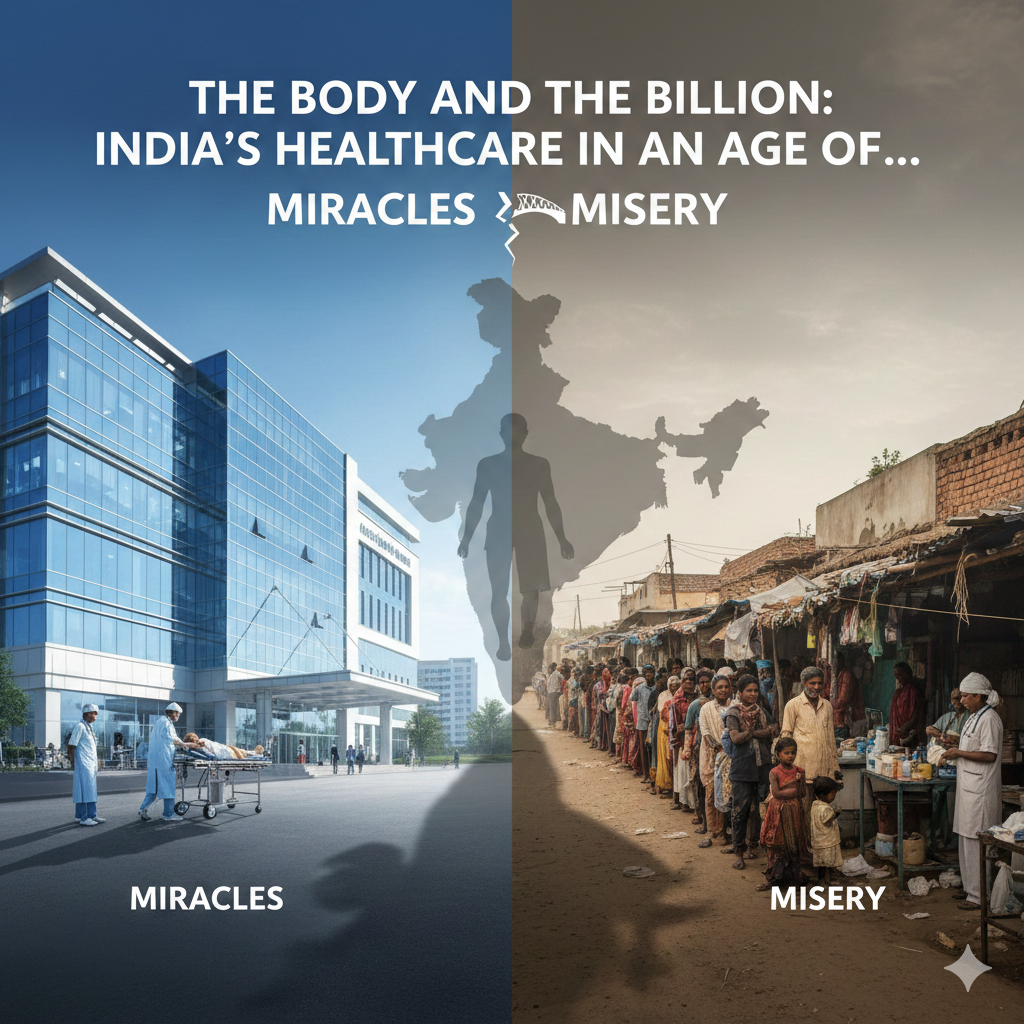
New Delhi, India – The health of India, a nation of 1.4 billion souls, is a story of breathtaking duality. It is a place where a farmer in rural Bihar might die from a snakebite because the nearest hospital lacks anti-venom, while a tech executive in Bangalore receives robotic surgery rivaling the best in the world. It is a system that produces world-class doctors and low-cost pharmaceuticals for the globe, yet struggles to provide basic antenatal care to millions of its own citizens. India’s healthcare today stands at a historic inflection point, straddling the legacy of colonial-era epidemics, the ambitions of a rising economic power, and the crushing weight of its own scale and inequality.
The Double Burden: Pandemics Old and New
India’s epidemiological profile is a stark map of its unfinished transitions. The country continues to wage war against the ghosts of its past: tuberculosis, which claims over 400,000 Indian lives annually, and vector-borne diseases like dengue and malaria, which surge with each monsoon. Maternal and child health, while improved, remains a challenge, with high rates of anemia among women and childhood stunting affecting future generations.
Yet, superimposed on this is the meteoric rise of non-communicable diseases (NCDs), a direct consequence of rapid urbanization, sedentary lifestyles, and changing diets. India is now the global epicenter of a diabetes pandemic, with over 100 million diagnosed adults. Hypertension, cardiovascular diseases, and cancers are placing an unsustainable strain on a system historically designed for acute, infectious care. The result is a populace where a daily wage laborer and a corporate CEO are equally, though not equally treatably, at risk of a heart attack.
The Architecture of Care: A Three-Tiered House of Cards
India’s public healthcare delivery is architecturally sound but critically underfunded and overburdened. The three-tiered system—Sub-Centers and Primary Health Clinics (PHCs) at the village level, Community Health Centers (CHCs) at the block level, and district hospitals—forms a vast network. However, its foundation is crumbling. PHCs are often understaffed, lacking even a permanent doctor, and plagued by stock-outs of essential medicines. This “crisis of credibility” drives even the poor to seek care elsewhere, incurring catastrophic costs.
This “elsewhere” is India’s massive, unregulated private healthcare sector, which provides nearly 80% of outpatient care and 60% of inpatient care. It ranges from gleaming, corporate hospital chains in metropolitan hubs—centers of medical tourism and advanced specialty care—to a vast informal network of solo practitioners and nursing homes of wildly variable quality. This privatization has created a brutal economic reality: healthcare is one of the leading causes of impoverishment in India. Out-of-pocket expenditures account for nearly 50% of total health spending, a rate among the world’s highest. A single hospitalization can bankrupt a family.
Ayushman Bharat: A Digital-Age Gambit
In response to this crisis of both access and affordability, the government launched Ayushman Bharat Pradhan Mantri Jan Arogya Yojana (PM-JAY) in 2018. It is the world’s largest publicly funded health insurance scheme, aiming to cover over 100 million vulnerable families for secondary and tertiary hospital care up to ₹5 lakh per year. Its scale is revolutionary, and it has provided millions of hospitalizations. Yet, it is a hospital-centric, curative model. Critics argue it risks creating a “procedural economy,” funneling public funds to private hospitals for surgeries while continuing to starve primary and preventive care—the very services that could reduce the need for hospitalization. Its success hinges on preventing fraud, ensuring quality, and ultimately shifting focus “upstream” to wellness.
The Silent Epidemics: Mental Health and Toxic Air
Beyond the physical, India faces two silent, growing crises that its system is woefully unprepared to address.
First, the mental health burden is colossal, exacerbated by social stigma, economic anxiety, and a severe shortage of professionals. With an estimated one in seven Indians affected, there are fewer than 10,000 psychiatrists to serve them all. Mental health remains deeply neglected in policy and practice.
Second, health is increasingly dictated by the environment. India is home to many of the world’s most polluted cities. Toxic air is now a leading risk factor for disease, contributing to everything from childhood asthma to lung cancer and strokes. Contaminated water remains a source of endemic illness. The health of Indians is now inextricably linked to failures in environmental, transportation, and industrial policy.
The Innovators: Frugal Science and Digital Leaps
Amidst the challenges, India’s capacity for frugal innovation and digital scaling offers glimmers of a different future. The country is a pioneer in low-cost medical devices, telemedicine, and generic drug production. The CoWIN platform, developed for COVID-19 vaccination, demonstrated a remarkable ability to manage public health logistics at a billion-person scale.
Telemedicine, accelerated by the pandemic, is bridging the urban-rural divide. Start-ups and public initiatives are using mobile technology for remote consultations, diagnostic support, and health worker training. The ASHA (Accredited Social Health Activist) network, comprising over one million female community health workers, forms a vital, if overworked, bridge between the formal system and rural households, embodying a community-centric model of care.
The Path Forward: From Sick-Care to Health-Care
The future of Indian health hinges on a fundamental reorientation. The goal must shift from merely treating illness to actively creating wellness. This requires:
- A Historic Investment in Primary Care: The National Health Policy’s goal of raising public health expenditure to 2.5% of GDP must be realized, with funds directed toward making PHCs functional, attractive, and comprehensive.
- Integrative and Preventive Models: Leveraging India’s AYUSH (Ayurveda, Yoga, Unani, Siddha, Homeopathy) systems for preventive wellness and integrative chronic disease management, based on evidence.
- Regulating the Private Sector: Ensuring transparency, cost control, and quality standards in private healthcare to protect patients from exploitation.
- A Health-in-All-Policies Approach: Recognizing that health is made in homes, schools, and environments. Policies on clean air, safe food, road safety, and urban design are public health policies.
Conclusion: The Prognosis is a Choice
India’s health is a pre-existing condition for its economic ambitions. A generation stunted by malnutrition or debilitated by early-onset diabetes cannot power a superpower. The nation stands at a crossroads: it can continue to manage sickness through a fragmented, financially toxic model, or it can embark on the harder but essential path of building a robust, equitable, and preventive system.
The tools exist: a legacy of community health, a thriving tech ecosystem, and a deep reservoir of medical talent. What is required is the political will to reimagine health not as a consumption expenditure, but as the most vital investment in human capital. The health of India today is a diagnosis of profound inequality, but its recovery plan—if chosen—could become a prescription for the world. The body of the nation is ailing, but its pulse, strong and resilient, continues to beat.
