

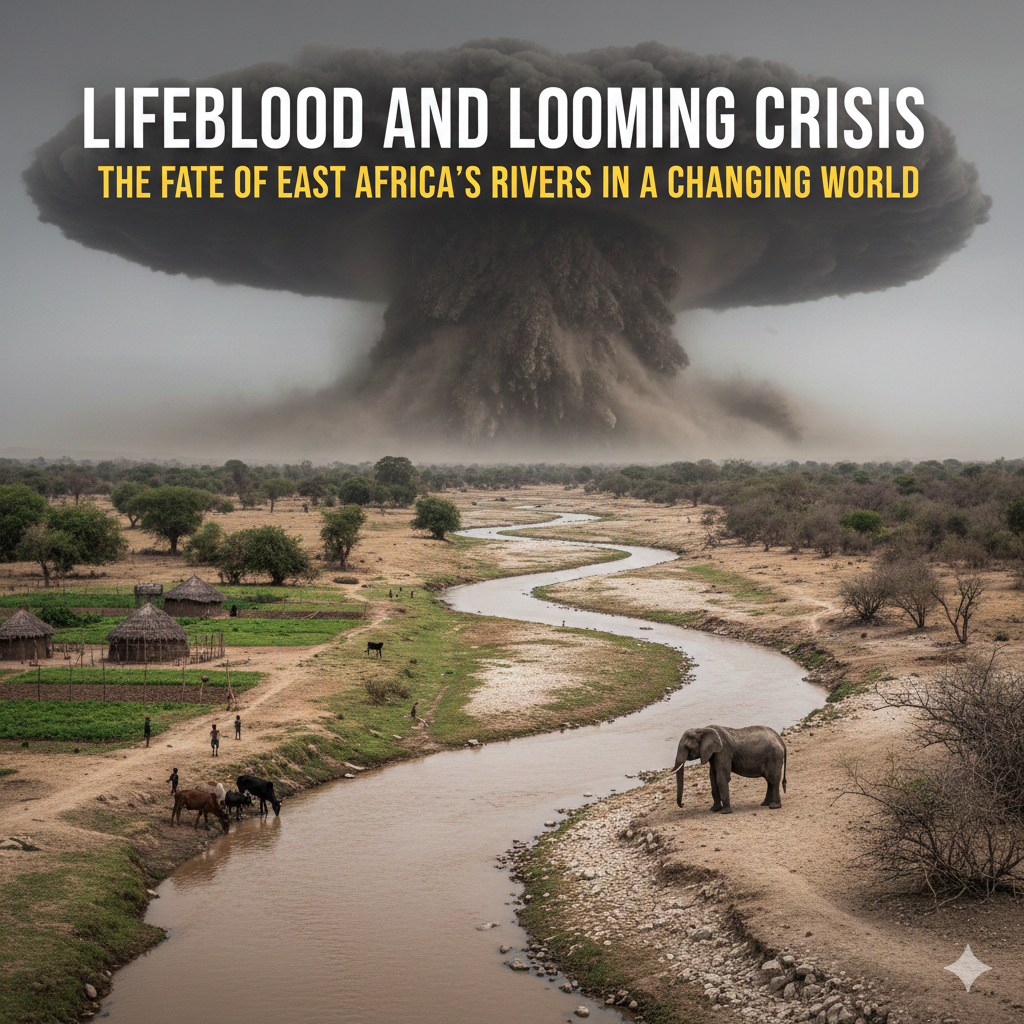
DATELINE: THE NILE BASIN, EAST AFRICA – Rivers are not merely geographical features in East Africa; they are the very sinews of life, economy, and civilization. From the legendary Nile, snaking from Lake Victoria to the Mediterranean, to the seasonal luggars of the arid Horn, these waterways have sustained empires, fueled modern agriculture, and powered burgeoning cities. Yet today, the region’s rivers are caught in a perfect and escalating storm of competing demands, geopolitical tension, and climatic upheaval. Their story is no longer one of timeless flow, but of profound vulnerability and a fierce contest over a resource that is becoming ever more precious and unpredictable.
The Arteries of a Region: A Network of Vitality
East Africa’s river systems are diverse but universally critical. The Nile River Basin, shared by 11 nations, is the world’s longest river and the region’s hydrological superhighway. Its two major tributaries—the White Nile, flowing steadily from Lake Victoria, and the volatile Blue Nile, surging from the Ethiopian highlands—carry over 90% of the water reaching Egypt. Beyond the Nile, vital arteries include the Rufiji and Ruvuma in Tanzania, the Tana and Athi-Galana-Sabaki in Kenya, and the Shebelle and Juba rivers, lifelines for Somalia that often fail to reach the Indian Ocean.
These rivers are the foundation upon which East Africa is built:
- Hydropower Ambition: They are seen as the key to unlocking industrial potential. Ethiopia’s Grand Ethiopian Renaissance Dam (GERD) on the Blue Nile is the continent’s largest, a $5 billion symbol of national pride and energy sovereignty. Uganda relies on the Nile for over 80% of its power, with major dams at Bujagali and Isimba. Tanzania and Kenya are rapidly expanding their hydropower portfolios on other rivers.
- Agricultural Backbone: Over 80% of water withdrawals in the region are for agriculture. Vast irrigation schemes, from Kenya’s Tana delta rice paddies to Ethiopia’s sugarcane plantations on the Omo River (a Nile tributary), depend on predictable flow. Millions of smallholder farmers rely on river water and seasonal floods for subsistence.
- Urban Lifelines: Nairobi’s thirst is quenched by the Tana and Athi rivers. Dar es Salaam depends on the Ruvu, a tributary of the Rufiji. Kampala and Juba sit astride the Nile. As cities explode in population, their demand for water is outstripping the capacity of these rivers to provide.
- Ecological Havens: The rivers support iconic ecosystems—the papyrus swamps of the Sudd in South Sudan, a massive carbon sink and biodiversity hotspot; the mangrove forests of the Rufiji delta; and the freshwater fisheries of Lake Victoria, fed by countless river inflows, which provide protein for millions.
The Gathering Storm: Pressures Threatening the Flow
This vital network is under unprecedented, multi-pronged assault.
1. Climate Change: The Great Destabilizer
The climate crisis is fundamentally altering the hydrological cycle. The region experiences a cruel paradox: more intense droughts and more catastrophic floods. Prolonged droughts, like the recent five-season failure in the Horn of Africa, cause rivers like the Shebelle to vanish before reaching the sea, devastating pastoralist communities. Conversely, when rains come, they are often torrential, causing rivers like Kenya’s Nzoia or Uganda’s Sezibwa to burst their banks, displacing thousands and washing away topsoil and infrastructure. This volatility makes river management for power, irrigation, and drinking water a nightmare of uncertainty. Glacial retreat on Mount Kenya and the Rwenzoris threatens the long-term flow of rivers they feed.
2. The Dam Rush and Geopolitical Friction
The drive for hydropower, while understandable for energy-starved economies, is creating monumental tensions. The GERD dispute is the most prominent flashpoint. Ethiopia sees the dam as an existential development priority. Downstream Sudan anticipates benefits from regulated flow and reduced silt but fears technical vulnerabilities. Egypt views any reduction of its historic Nile flow as an existential threat to its 100 million people. Years of fraught negotiations have failed to produce a binding agreement on filling and operation, leaving the region in a state of simmering hydro-political anxiety.
This is not isolated. Upstream dam construction on rivers like the Mara (shared by Kenya and Tanzania) affects the Serengeti-Mara ecosystem’s famous wildebeest migration. The cumulative impact of multiple small dams and water abstractions is degrading river health basin-wide.
3. Pollution and Environmental Degradation
East Africa’s rivers are becoming open sewers and industrial waste channels. Rapid, unplanned urbanization means raw sewage and solid waste flow directly into waterways like Nairobi River, which is biologically dead through the capital. Agricultural runoff, laden with pesticides and fertilizers from tea, coffee, and flower farms, causes eutrophication and toxic algae blooms in lakes and slow-moving rivers. Mining, particularly for gold and gemstones, leads to mercury and silt pollution, poisoning water and choking aquatic life. The degradation of catchment areas through deforestation for charcoal and farming increases siltation, reducing reservoir capacity behind dams and smothering river habitats.
4. Unsustainable Water Abstraction and Inefficient Use
Demand simply outstrips sustainable supply in many basins. Massive irrigation projects, often using flood irrigation methods that lose vast quantities to evaporation, draw down rivers. Inefficient municipal water systems with high leakage rates compound the problem. The concept of “water stress” is now a daily reality for basin managers. The lower reaches of rivers are increasingly drained dry, a phenomenon known as river fragmentation, which destroys delta ecosystems and the communities that depend on them.
Innovation, Cooperation, and the Path to Resilience
Amidst the crisis, solutions are being forged, combining modern technology with revived traditional knowledge and a growing recognition of the need for cooperation.
- Transboundary Water Management: The Nile Basin Initiative (NBI), despite the GERD tensions, remains a crucial platform for dialogue and joint technical projects. Similar bodies for the Kagera, Mara, and other shared rivers are essential for moving from conflict to collaborative management, focusing on the river as a shared asset, not a zero-sum prize.
- Nature-Based Solutions: There is a growing shift towards protecting critical watersheds and wetlands. Reforestation campaigns in the Mau Forest (source of the Sondu River feeding Lake Victoria) and Ethiopia’s highlands aim to stabilize water flow. Restoring floodplains and constructing artificial wetlands can act as natural water filters and buffers against floods.
- Technology for Efficiency: Satellite monitoring is being used to track water use, dam reservoir levels, and deforestation in catchments. Drip irrigation technology is slowly being adopted to reduce agricultural water waste. Off-grid solar water pumping provides an alternative to large, river-disrupting dams for small-scale irrigation.
- Community-Led Governance: Empowering local communities, particularly those downstream, to manage and protect their stretch of a river is proving effective. This includes establishing and enforcing local rules against pollution and overfishing, and reviving traditional rainwater harvesting techniques to reduce pressure on rivers.
Conclusion: Charting a New Course
The future of East Africa is inextricably linked to the fate of its rivers. The current path—of unchecked abstraction, pollution, and unilateral development—leads to scarcity, conflict, and ecological collapse. An alternative path requires a paradigm shift: viewing rivers not as infinite resources to be tapped, but as fragile, interconnected life-support systems that must be managed with wisdom and shared intent.
This means investing in water governance as seriously as in water infrastructure. It demands that economic planning internalizes the true value of a healthy river, from its fisheries to its flood protection services. It necessitates courageous diplomacy to forge equitable water-sharing agreements that recognize both historical use and future needs.
The rivers of East Africa have witnessed the rise and fall of kingdoms. The question today is whether the modern nations that line their banks will find the collective will to ensure these lifebloods continue to flow, not just for the next harvest or the next megawatt, but for generations to come. The clock is ticking, and the water level is falling.