

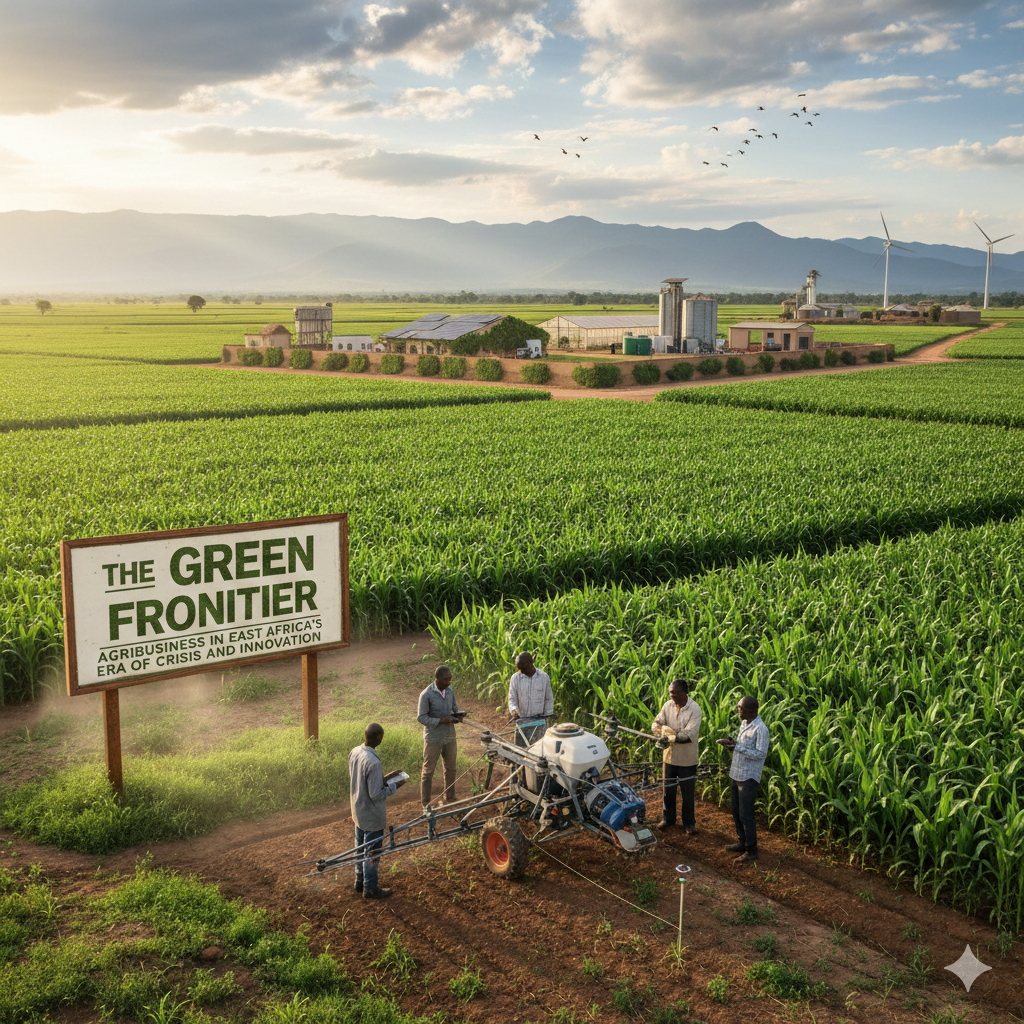
NAIROBI, KENYA – Beneath the soaring glass towers of Nairobi’s business districts and the relentless hum of Mombasa’s port, a more fundamental economic revolution is taking root in the soil of East Africa. The region’s agricultural sector, long characterized by subsistence farming, post-harvest losses, and fragmented supply chains, is being radically reshaped. A potent combination of demographic pressure, climate shocks, and technological adoption is transforming farming from a simple livelihood into a dynamic, high-stakes agribusiness frontier. Today, the business of agriculture in East Africa is a story of navigating existential risks while pioneering some of the world’s most innovative models for sustainable food production.
The Immense Stakes: Feeding a Booming Region
The scale of the opportunity—and the challenge—is daunting. East Africa’s population is projected to near 600 million by 2050, with rapid urbanization increasing demand for diverse, processed, and safely packaged foods. Agriculture remains the largest employer, engaging over 70% of the workforce and contributing a significant portion to the GDP of Kenya, Tanzania, Uganda, Ethiopia, and Rwanda. Yet, the sector is plagued by a persistent productivity gap. Yields for staple crops like maize remain a fraction of their potential, and the region remains a net food importer, spending billions of dollars annually—a stark paradox for a continent holding over 60% of the world’s uncultivated arable land.
The business case is clear: any enterprise that can close this productivity gap, reduce waste, and connect farmers to formal markets stands to tap into a multi-billion-dollar opportunity. This potential is driving a wave of investment and entrepreneurial activity unseen in previous generations.
The Triple Threat: Climate, Costs, and Connectivity
Before exploring the innovations, one must understand the formidable headwinds agribusinesses must navigate:
- The Climate Crucible: East Africa is on the front lines of the climate crisis. Prolonged droughts in the Horn of Africa, erratic rainfall patterns, and new pest infestations (like Fall Armyworm) devastate harvests with increasing frequency. For agribusiness, this translates into crippling volatility in supply and pricing, eroding investor confidence and making long-term planning a gamble.
- The Input Cost Spiral: The global surge in fertilizer and fuel prices, exacerbated by the Ukraine war, has hit East African farmers with devastating force. Many smallholders, the backbone of production, are priced out of essential inputs, leading to depressed yields. Agribusinesses dealing in inputs face a double bind: soaring costs and customers who can no longer afford their products.
- The Logistics Labyrinth: Perhaps the most enduring barrier is post-harvest loss (estimated at 30-40%) and logistical nightmares. Poor rural roads, a lack of cold storage, and inefficient middlemen-dominated supply chains mean food rots in the field while prices soar in the city. For any business aiming to add value, this “cold chain deficit” is a primary obstacle.
The Innovation Ecosystem: Seeds, Data, and Markets
In response to these challenges, a vibrant agri-tech and business innovation ecosystem has emerged, primarily centered in Nairobi’s “Silicon Savannah” but spreading rapidly across the region.
1. The Financial Inclusion Engine:
The single greatest unlock for agribusiness has been mobile money and digital finance. Platforms like M-Pesa (Kenya) and its equivalents have enabled a revolution in micro-transactions and credit. Agribusiness startups leverage this to:
- Provide digital credit: Companies like Apollo Agriculture (Kenya) and Crowdfarming platforms use satellite data and mobile wallets to offer “input loans” for seeds and fertilizer, repaid at harvest.
- Facilitate seamless payments: Cooperatives and exporters can pay thousands of smallholder farmers instantly upon delivery, eliminating theft and delay.
2. The “Uber-for-Tractors” and Precision Farming:
Addressing the mechanization gap, platforms like Hello Tractor (Nigeria, with operations in Kenya) allow farmers to book tractor services via mobile phone, optimizing expensive machinery use. Drones and satellite imagery are no longer futuristic; they are used by companies like Aerobotics to provide small and large-scale farms with data on crop health, irrigation needs, and predicted yields, enabling precision application of water and inputs.
3. The Marketplace Revolution:
Bypassing layers of exploitative middlemen, digital platforms are creating more efficient, transparent markets.
- Twiga Foods (Kenya): A landmark success, Twiga connects smallholder fruit and vegetable farmers directly to urban retailers via a mobile-based ordering and logistics platform. It guarantees farmers a market and stable prices while giving retailers reliable, quality-controlled supply.
- Copia Global (Kenya/Uganda): While not exclusively agri-focused, its agent-based network delivers packaged food and farm supplies to the most remote rural customers, tapping into the vast, underserved last-mile consumer.
4. Climate-Smart Solutions and Biotechnology:
Businesses are rising to meet the climate challenge. SunCulture (Kenya) sells solar-powered irrigation kits on a pay-as-you-grow model, freeing farmers from rain dependency. A new generation of seed and biotechnology companies is developing drought-tolerant, disease-resistant, and higher-yielding crop varieties specifically for East African conditions, though navigating public skepticism around GMOs remains a hurdle.
5. The Value-Add Wave:
The most significant value capture is moving beyond raw commodities. A surge of small and medium enterprises (SMEs) is focusing on local processing. This includes:
- Milling and fortification: Adding nutrients to staple flours.
- Fruit processing: Making juices, dried fruits, and jams to reduce post-harvest waste.
- Dairy chilling and packaging: Companies like Brookside Dairy (Kenya) have built vast networks of chilling plants to aggregate milk from smallholder herders for processing.
- Specialty Export Crops: The continued growth of horticulture—flowers, French beans, avocados—for the European market demonstrates the high-value potential, driven by stringent quality standards and dedicated logistics corridors.
The Policy Imperative and the Road Ahead
For this agribusiness revolution to scale, supportive government policy is non-negotiable. Key needs include:
- Land Tenure Security: Clarifying and securing land rights to enable farmers to invest and use land as collateral.
- Investment in Hard Infrastructure: Massive public investment in rural roads, electricity, and irrigation schemes to lower the cost of doing business.
- Regional Trade Facilitation: Reducing non-tariff barriers within the East African Community (EAC) to allow food to move freely from surplus to deficit areas.
- Support for Climate Adaptation: Directing climate finance to help smallholders and agribusinesses adopt resilient technologies and practices.
Conclusion: Sowing the Seeds of a New Economy
The future of East Africa is inextricably tied to the future of its agriculture. The move from subsistence to agribusiness is not merely an economic shift; it is a prerequisite for food security, job creation for the youth, and climate resilience.
The businesses thriving today are those that see the smallholder farmer not as a charity case, but as a vital client and partner in a value chain. They are leveraging technology not for its own sake, but to solve the gritty, real-world problems of finance, information, and market access. While the threats of climate change and global volatility are real, the convergence of mobile connectivity, entrepreneurial ingenuity, and a vast, unmet market is creating a green frontier of unprecedented potential. The businesses that will define East Africa’s tomorrow are those getting their hands dirty in its soil today, building an agricultural sector that is not just productive, but profitable, sustainable, and resilient.