

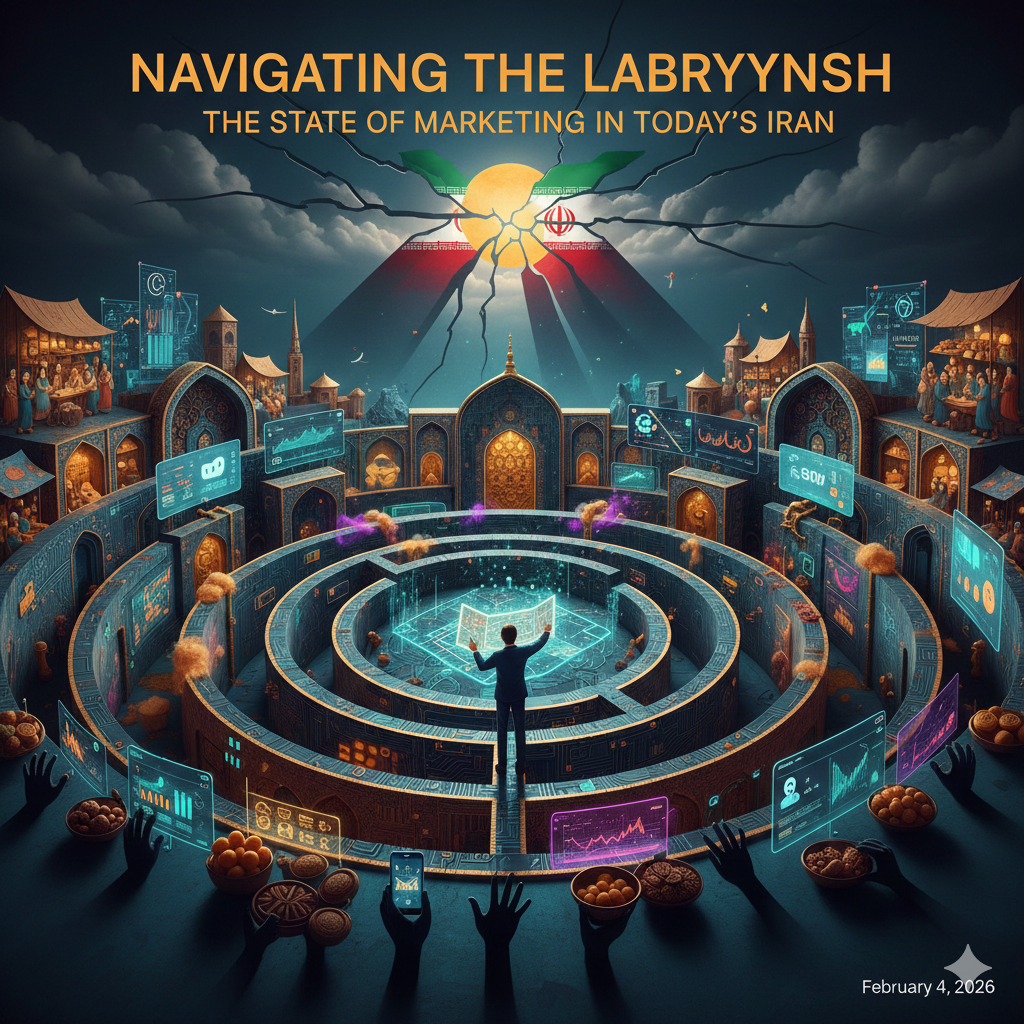
In the bustling Grand Bazaar of Tehran, ancient traditions of Persian commerce intersect with the digital age. Stall owners who once relied solely on word-of-mouth and personal relationships now showcase their wares on Instagram, accepting payments through local digital wallets. This juxtaposition epitomizes the complex, constrained, yet creatively vibrant world of marketing in contemporary Iran—a landscape where economic pressure, technological adaptation, and cultural nuance converge to create one of the world’s most unique commercial environments.
The Macro Landscape: Sanctions, Inflation, and Shifting Consumer Behavior
Iran’s marketing ecosystem operates under the long shadow of international sanctions and severe macroeconomic instability. With inflation consistently hovering around 40-50% annually and the rial losing over 90% of its value against the dollar in the past decade, consumer purchasing power has been decimated. This economic reality fundamentally reshapes marketing priorities.
Consumers have become hyper-value-conscious, prioritizing essential goods and durable items over discretionary spending. The middle class, once a thriving target market, has significantly shrunk, creating a polarized consumer base of a wealthy elite largely insulated from economic shocks and a struggling majority focused on survival. This necessitates highly segmented marketing approaches: luxury brands targeting the affluent with imported goods through parallel markets, while local producers emphasize affordability, durability, and value for the masses.
Sanctions have also created a paradoxical “resistance economy” marketing narrative. Brands increasingly position themselves as patriotic champions of national self-sufficiency. Slogans emphasizing “Made in Iran,” support for domestic production, and circumvention of foreign dependency resonate powerfully in official media and among certain consumer segments. This nationalist framing represents both a practical adaptation to import restrictions and a powerful emotional marketing lever.
The Digital Revolution Behind the Firewall
Iran’s most significant marketing transformation has occurred online, despite—and in many ways because of—restricted access to the global internet. With platforms like Facebook, Twitter, YouTube, and most international social media officially blocked, a parallel digital universe has emerged.
Domestic Platforms: Homegrown alternatives have filled the void. Rubika (similar to Telegram), Bale and Soroush (messaging apps), Aparat (Iran’s YouTube), and Digikala (the “Amazon of Iran”) dominate the digital landscape. Successful marketing requires mastery of these local platforms, each with its own algorithms, user behaviors, and advertising protocols. Digikala, in particular, has revolutionized e-commerce, offering sophisticated data analytics for sellers and becoming the essential platform for consumer electronics, home goods, and fashion.
The VPN Ecosystem: A significant portion of the population, particularly younger, urban, and more affluent consumers, uses Virtual Private Networks (VPNs) to access the global internet. This creates a dual digital identity. Brands often maintain a polished, formal presence on domestic platforms while running more avant-garde, globally-minded campaigns on Instagram (the most popular bypassed platform). This digital schizophrenia requires marketers to maintain parallel strategies and content calendars.
Social Commerce Explosion: Inspired by Chinese models, social commerce has exploded. Instagram and Rubika channels are not just for brand building but direct sales conduits. “Channel Admins” curate product catalogs, conduct live stream sales events, and manage transactions entirely within chat groups, often using digital wallets for payment. This informal, trust-based system leverages Iran’s strong social networks and circumvents formal banking restrictions.
Cultural Nuance and the Power of Storytelling
Successful marketing in Iran requires deep cultural intelligence. Key considerations include:
Islamic Values and Social Codes: Marketing must navigate religious norms and censorship laws. Mixed-gender interactions, certain forms of music, and explicit content are prohibited. However, within these boundaries exists significant creativity. Brands like Mordad Motors (an automotive company) and Shahrvand Chain Stores have built strong identities that harmonize modernity with cultural and religious values.
The Poetry of Persuasion: Persian culture reveres poetry, literature, and indirect communication. The most resonant marketing often employs sophisticated symbolism, historical references, and emotional storytelling over blunt sales pitches. Campaigns that tap into Persian identity, national heritage, or poetic metaphors can achieve deep cultural penetration.
Generational Divides: A profound gap exists between the conservative older generation and the large youth population (over 60% under 30). Youth-oriented marketing, often seen on VPN-accessed platforms, embraces global trends, humor, and direct challenges to social norms, while maintaining a public face of compliance. This generation values authenticity and is skeptical of overtly political or dogmatic messaging.
The Formal and Informal Economy: Two Marketing Worlds
Iran’s economy is bifurcated into the formal, state-influenced sector and a vast, agile informal market.
Formal Sector Marketing: This involves navigating bureaucracy, state media (IRIB), and official sponsorship. Success often depends on connections (parti bazi) and alignment with state narratives. Advertising on national television remains powerful for reaching mass audiences, particularly outside major cities. However, creativity is often stifled by layers of regulatory approval.
Informal/Social Sector Marketing: This is where innovation thrives. The bazaari tradition—relying on personal networks, reputation, and trust—has migrated online. Influencer marketing, while less formalized than in the West, is enormous. Popular actors, athletes, and Instagram personalities command significant fees for endorsements, often delivered through seemingly “organic” posts. Micro-influencers, trusted within specific communities, wield considerable power for niche products.
Sector Spotlights
- FMCG (Fast-Moving Consumer Goods): Dominated by local giants like Kalleh Dairy and Pegah Dairy, competition is fierce on price, promotional offers (bundling, discounts), and extensive distribution networks. Sanctions have ironically benefited some local producers by reducing foreign competition.
- Digital Services: With over 120 million mobile subscriptions and growing internet penetration, marketing for apps, online services, and digital content is booming. Freemium models, viral challenges, and referral incentives are common tactics.
- Automotive: As the largest domestic manufacturer, Iran Khodro dominates, but its marketing battles internal challengers like SAIPA and the allure of smuggled foreign cars. Marketing emphasizes durability, available spare parts, and national pride.
Challenges and Future Trajectories
Marketers in Iran face relentless challenges: hyperinflation that destroys campaign budgets, unpredictable regulatory shifts, the technological arms race of filtering and circumvention, and the difficulty of market research in an opaque economy.
Yet, the future points toward greater digitization and sophistication. Artificial intelligence is beginning to personalize offerings on platforms like Digikala. As 5G rolls out, video and immersive content will grow. The enduring entrepreneurial spirit of Iranians suggests that marketing innovation will continue to find paths through the labyrinth.
Ultimately, marketing in today’s Iran is an exercise in constrained creativity. It demands an agile, dual-platform strategy, profound cultural resonance, and the ability to build genuine trust in an environment of economic uncertainty. The brands that thrive are those that understand they are not just selling products, but navigating a complex web of identity, survival, and aspiration in one of the world’s most resilient societies. In the spaces between sanctions and servers, between tradition and technology, Iranian marketers are writing a unique playbook for the digital age in a revolutionary state.