

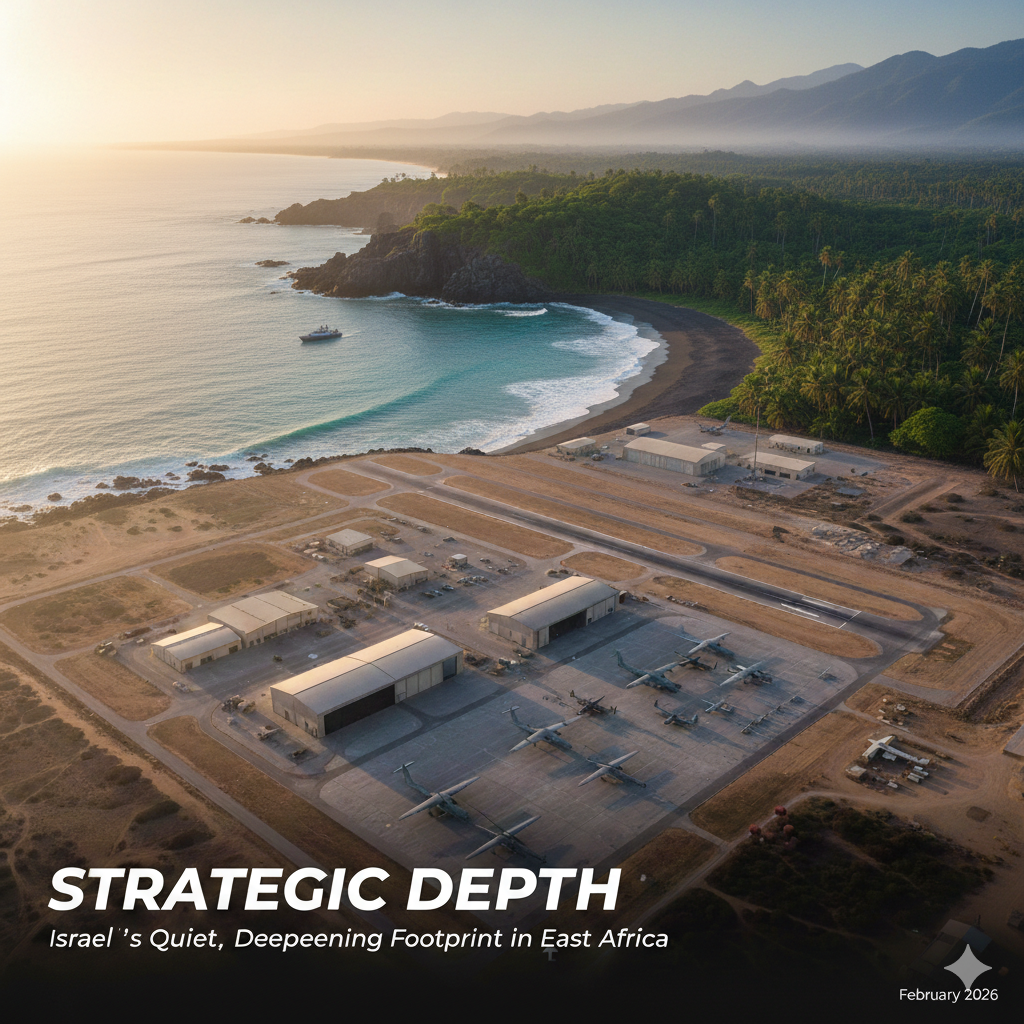
ADDIS ABABA, Ethiopia – Beyond the global headlines of conflict in Gaza, a less conspicuous but strategically vital Israeli foreign policy is being written in the capitals and farmlands of East Africa. In what analysts describe as a long-term pursuit of “strategic depth,” the State of Israel has, over the past decade, cultivated a network of relationships across the Horn of Africa that is transforming the region’s security, agricultural, and technological landscape. This pivot to Africa, championed by former Prime Minister Benjamin Netanyahu and sustained by successive governments, is driven by a potent mix of security imperatives, economic ambition, and diplomatic necessity, positioning Israel as a discreet yet influential power broker in one of the world’s most dynamic and volatile regions.
The Grand Strategy: From Isolation to Influence
For Israel, East Africa represents more than a new market; it is a geopolitical imperative. The strategy is threefold:
- Breaking Diplomatic Isolation: Israel seeks to build a reliable voting bloc in international forums like the United Nations, where African states constitute a significant portion of the membership. Normalizing relations and building goodwill is a direct counter to Palestinian diplomatic efforts.
- Securing the Red Sea Littoral: The Horn of Africa sits astride the Bab el-Mandeb strait, a critical chokepoint for global shipping and, for Israel, a vital maritime approach to its southern port of Eilat. Building friendly relationships with states on the opposite shore (Ethiopia, Eritrea, Somalia) is a classic security maneuver to safeguard strategic waterways and monitor mutual adversaries, notably Iran.
- Creating Economic Interdependence: By becoming an indispensable partner in water, agriculture, and security technology, Israel aims to create relationships based on tangible benefit and mutual interest, ensuring their longevity beyond political cycles.
The Security Vanguard: Defense Ties and Counter-Terrorism
The most visible pillar of Israel’s engagement is security cooperation. Israeli firms are major suppliers of surveillance technology, cyber tools, drones, and small arms to East African governments grappling with insurgencies, terrorism, and internal unrest.
- Ethiopia: A historic and deep relationship. Israel has long provided military training and equipment to Addis Ababa. During the recent Tigray war, reports of Israeli-origin surveillance drones being used highlighted the strategic nature of this tie. Israel views Ethiopia, with its large military and regional heft, as a cornerstone of its East African policy.
- Kenya: A key counter-terrorism partner in the fight against Al-Shabaab. Israeli companies have been involved in securing critical infrastructure, including ports and airports, and providing advanced training for elite police and anti-terror units. The 2013 Westgate Mall attack and subsequent threats have made Nairobi a significant client for Israeli security expertise.
- Rwanda: Under President Paul Kagame, Rwanda has become a model student of Israeli security doctrine. The relationship spans from military training and equipment to cybersecurity and intelligence sharing. Rwanda’s stability and regional military engagements make it a valuable ally.
- Somalia and the Gulf of Aden: Israel maintains discreet intelligence-sharing relationships with several actors in Somalia, primarily focused on monitoring Iranian activity and the movements of militant groups. Its interest in a stable Somali coastline is directly tied to Red Sea security.
This security dimension is not without controversy. Critics, including human rights organizations, warn that Israeli weapons and surveillance technology can be used by regimes to suppress political dissent and perpetrate human rights abuses, potentially exporting the tools of occupation to fragile African democracies.
The Technological Bridge: Water, Agritech, and “Start-Up Nation” Diplomacy
If security forms the hard edge of engagement, technology is its soft, transformative counterpart. Israel’s self-branding as the “Start-Up Nation” finds eager audiences in East Africa, where governments face existential challenges of food and water security.
- Water Management: In arid and drought-stricken regions, Israeli drip irrigation, desalination, and water recycling technologies are presented as life-saving solutions. Companies like Netafim are involved in large-scale agricultural projects from Ethiopia to Kenya, dramatically increasing crop yields while conserving water.
- Agritech: From climate-resilient seeds to cloud-based farm management software, Israeli agritech is helping to modernize East Africa’s most important economic sector. This builds immense goodwill, positioning Israel as a partner in development rather than just a security vendor.
- Digital Innovation: Israel actively fosters tech partnerships, hosting African entrepreneurs, and investing in innovation hubs. This “tech diplomacy” builds a network of future leaders with direct experience and affinity for Israeli solutions.
The Diplomatic Dance: Normalization, Rivalries, and the Gulf
Israel’s East Africa strategy is increasingly interwoven with its historic breakthrough with Arab states, the Abraham Accords. A key architect of the Accords was the UAE, which itself is a massively influential player in the Horn of Africa. In Sudan, for instance, Israeli normalization was reportedly facilitated by Emirati and U.S. diplomacy. This reveals a new alignment: Israel and Gulf states like the UAE now often pursue parallel, and sometimes coordinated, interests in Africa, viewing the region through similar lenses of countering Turkish and Iranian influence and securing economic opportunity.
However, rivalries persist. Israel views with suspicion Turkey’s deep involvement in Somalia and Qatar’s regional engagements, considering them potential vectors for influence by its adversaries. Its relationship with Egypt, a traditional power in the Horn, is complex and carefully managed to avoid stepping on Cairo’s sensitivities in the Nile Basin, particularly regarding Ethiopia’s Grand Ethiopian Renaissance Dam (GERD).
Challenges and Contradictions
The Israeli approach is not seamless. It faces several inherent tensions:
- The Public Opinion Gap: While governments may value Israeli expertise, public sentiment in largely Muslim East Africa is often strongly pro-Palestinian. This creates a disconnect that regimes must carefully manage, especially during periods of intense violence in Gaza.
- The “Regime Support” Dilemma: By prioritizing stability and security partnerships, Israel often ends up bolstering authoritarian or controversial governments. This can backfire if those regimes fall, tarnishing Israel’s reputation with successor governments.
- Ethiopia’s Internal Crisis: The devastating Tigray war presented a moral and strategic quandary, testing the limits of a security partnership amid allegations of war crimes.
Conclusion: An Enduring, Adaptive Presence
Israel’s role in East Africa today is that of a specialized, high-value partner rather than a traditional great power. It does not seek colonial-style territorial control or massive infrastructure dominance like China. Instead, it offers niche, cutting-edge solutions to critical problems—be it a drone to monitor a militant group, a drip irrigation system for a parched farm, or cybersecurity for a central bank.
This model grants Israel influence disproportionate to its size. It has successfully identified and filled strategic gaps, making itself quietly indispensable. The relationship is fundamentally transactional but deepened by consistent engagement and a clear, long-term vision.
As East Africa continues to be a theater of great power competition, demographic explosion, and climate crisis, Israel’s focus on security, water, and food will only become more relevant. Its future in the region hinges on its ability to navigate the delicate balance between private government partnerships and volatile public sentiment, and to ensure that its technological offerings are seen as tools for empowerment and development, not merely instruments of control. In the high-stakes arena of the Horn of Africa, Israel has secured a seat at the table not through sheer force, but through the persistent, pragmatic application of its unique national competencies.