

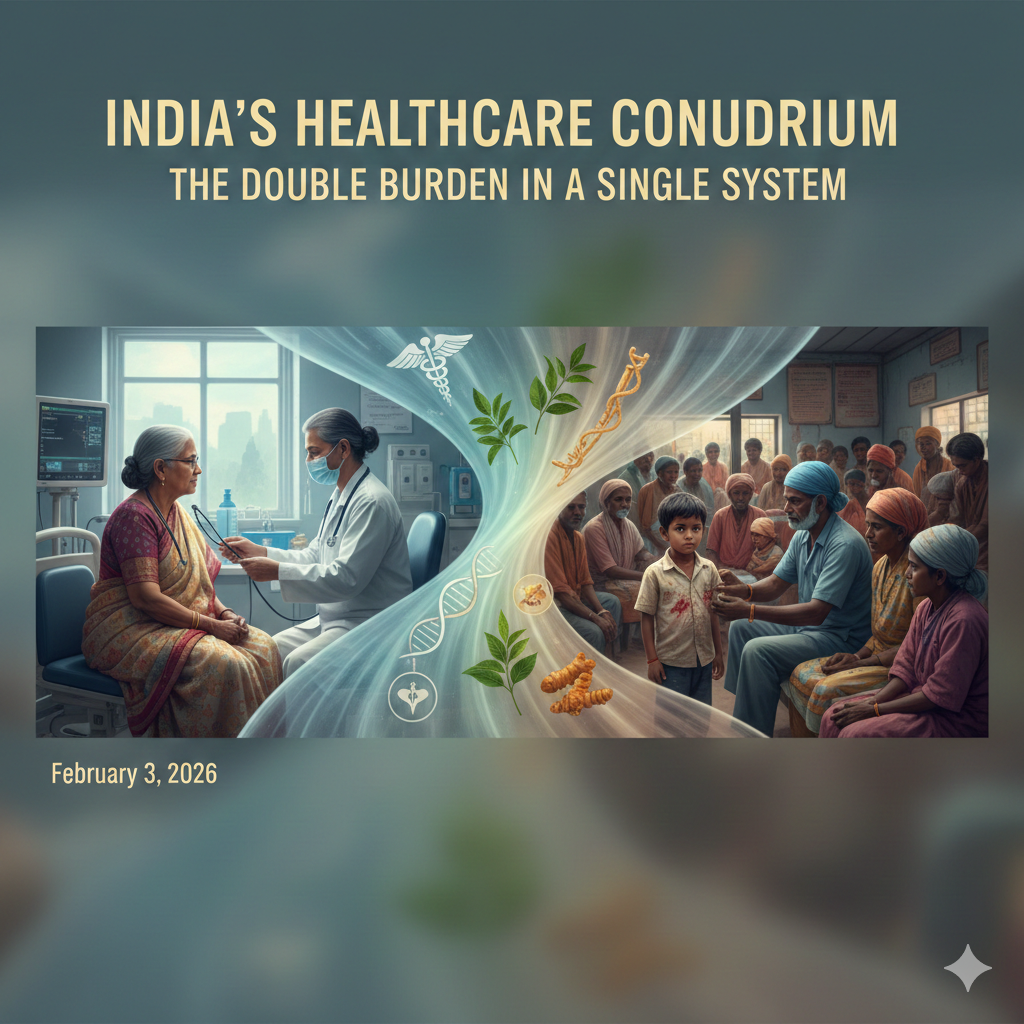
NEW DELHI, India — India’s healthcare landscape is a study in profound contrasts, a system that simultaneously grapples with the unfinished agenda of infectious diseases and the escalating crisis of lifestyle ailments. On one hand, it has eliminated polio and vastly reduced maternal mortality; on the other, it is the world’s diabetes capital and faces a silent epidemic of mental illness. This duality, known as the “double burden of disease,” is playing out within a healthcare framework that is itself a complex public-private hybrid, stretched between aspirational medical tourism and the stark reality of inaccessible primary care for millions. The health of India today is a reflection of its economic ascent, its deep inequities, and its demographic transformation.
The Double Burden: Pandemics and Penury, Prosperity and Pressure
The epidemiological transition in India is stark. The country has not yet fully conquered its age-old health adversaries. Tuberculosis remains a massive public health challenge, with India accounting for a quarter of the world’s cases. Vector-borne diseases like dengue and malaria surge annually with the monsoons. Childhood stunting and malnutrition, though improved, persist at rates higher than in much of sub-Saharan Africa, affecting long-term cognitive and physical development for a significant portion of the future workforce.
Superimposed on this is a meteoric rise in non-communicable diseases (NCDs). Driven by rapid urbanization, sedentary lifestyles, and dietary shifts towards processed foods, NCDs now account for over 60% of all deaths in India. The country is home to over 77 million diabetics and an even larger pool of pre-diabetics. Hypertension, cardiovascular diseases, and cancers are placing an unsustainable strain on a system historically designed for acute, episodic care. The result is a population where a child in rural Odisha may be undernourished and susceptible to infection, while their urban cousin in Delhi faces a high risk of childhood obesity and early-onset diabetes.
The Architecture of Care: A Lopsided Pyramid
India’s healthcare delivery is a lopsided pyramid. At the broad base is a vast but under-resourced public health system, intended to be the first point of contact for the majority. This network of Primary Health Centres (PHCs) and sub-centres is plagued by chronic underfunding, leading to severe shortages of personnel, essential drugs, and diagnostic equipment. The result is a crisis of trust; even the poor often bypass these centres, paying out-of-pocket to seek care in the private sector.
This leads to the pyramid’s massive, unregulated middle and apex: the private healthcare sector, which provides nearly 70% of outpatient care and over 50% of inpatient care. This sector ranges from world-class, multi-specialty hospitals in metropolitan hubs—attracting medical tourists from across the globe—to a sprawling informal network of solo practitioners and small nursing homes of wildly varying quality. This privatization has created a two-tier system: high-quality care for those who can afford it, and catastrophic financial hardship for those who cannot.
The Catastrophic Cost of Care: A Financial Shock Absorber
This reliance on private, fee-for-service care has a devastating financial impact. India has one of the highest rates of out-of-pocket (OOP) health expenditure in the world, accounting for nearly 50% of total health spending. A single major illness can push a family into a downward spiral of debt and poverty, undoing decades of economic progress. This “health poverty trap” is the single greatest threat to the economic security of India’s aspirational lower-middle class.
In response, the government launched Ayushman Bharat Pradhan Mantri Jan Arogya Yojana (PM-JAY) in 2018, the world’s largest publicly funded health insurance scheme, aiming to provide over 100 million vulnerable families with coverage of up to ₹5 lakh per year for secondary and tertiary hospital care. While a landmark policy that has provided millions of hospitalizations, its focus is on curative, hospital-based care. Critics argue it risks further distorting the system by funnelling funds to private hospitals while continuing to starve primary and preventive public health of investment—the very services that could reduce the need for hospitalization.
The Silent Epidemics: Mental Health and Environmental Toxicity
Beyond the physical, India faces two silent, growing crises. The mental health burden is colossal, with an estimated one in seven Indians affected. Depression and anxiety disorders are rampant, exacerbated by social stressors, economic uncertainty, and a lack of awareness. The treatment gap is abysmal, with a severe shortage of psychiatrists and psychologists, and deep-rooted social stigma preventing people from seeking help.
Secondly, health is increasingly being dictated by the environment. India is home to many of the world’s most polluted cities. Air pollution is now a leading risk factor for death, contributing to respiratory illnesses, cardiovascular disease, and strokes. Water contamination and pesticide overuse pose further chronic toxicity risks. Health policy can no longer be confined to hospital walls; it must encompass environmental, agricultural, and urban planning policy.
The Pandemic’s Legacy: Exposed Fault Lines and Digital Hope
The COVID-19 pandemic was a brutal stress test that exposed every fissure in the Indian health system—from oxygen shortages and overrun hospitals to the stark digital divide in education and telemedicine. It highlighted the chronic under-investment in public health infrastructure and the precariousness of the informal workforce, who had no safety net.
Yet, it also accelerated innovation. The rapid scaling of the CoWIN platform for vaccine administration demonstrated a capacity for tech-driven public health delivery. Telemedicine saw explosive growth, reaching patients in remote areas. The pandemic underscored the irreplaceable role of frontline health workers, particularly Accredited Social Health Activists (ASHAs), the all-female cadre of community health workers who became the backbone of the pandemic response in villages.
The Path Ahead: From Treatment to Prevention, from Access to Equity
The future of Indian health hinges on a fundamental reorientation of priorities:
- Reinventing Primary Care: The next decade must see a historic investment in strengthening PHCs as comprehensive wellness centres, offering not just treatment but also preventive screening, mental health counselling, and management of chronic NCDs. This requires a massive influx of funding, training, and human resources.
- Integrating AYUSH Responsibly: India’s unique asset is its traditional medicine systems—Ayurveda, Yoga, Unani, Siddha, and Homeopathy (AYUSH). The challenge is to thoughtfully integrate evidence-based practices from these systems into mainstream care, particularly for preventive wellness and chronic disease management, without promoting unscientific or替代疗法替代疗法替代疗法替代疗法替代疗法替代疗法替代疗法替代疗法替代疗法替代疗法替代疗法替代疗法替代疗法替代疗法替代疗法替代疗法替代疗法替代疗法替代疗法替代疗法替代疗法替代疗法替代疗法替代疗法替代疗法替代疗法替代疗法替代疗法替代疗法替代疗法替代疗法替代疗法替代疗法替代疗法替代疗法替代疗法替代疗法替代疗法替代疗法替代疗法替代疗法替代疗法替代疗法替代疗法替代疗法替代疗法替代疗法替代疗法替代疗法替代疗法替代疗法替代疗法替代疗法替代疗法替代疗法替代疗法替代疗法替代疗法替代疗法替代疗法替代疗法替代疗法替代疗法替代疗法替代疗法替代疗法替代療法 alternative therapies.
- Regulating the Private Sector: Effective regulation of private hospitals to control costs, ensure quality standards, and prevent unethical practices is critical to making healthcare affordable and safe.
- A Health-in-All-Policies Approach: Combating NCDs and environmental health threats requires intersectoral action. Policies on food (front-of-pack labelling, trans-fat bans), urban design (green spaces, pedestrian paths), and clean energy are public health policies.
Conclusion: The Demographic Dividend at Risk
India’s much-touted demographic dividend—its large, young population—is at severe risk if its health foundation remains weak. A generation battling the dual spectres of stunting and early diabetes cannot be fully productive. The choice is clear: continue with a hospital-centric, sickness-care model that bankrupts families and overlooks prevention, or embark on the harder but necessary path of building a robust, equitable, and preventive public health system.
The health of India today is at a crossroads. It can either become a global showcase for how a large, developing nation can achieve universal health coverage and wellness, or a cautionary tale of growth undermined by disease and disparity. The prognosis remains uncertain, but the prescription for recovery is evident. The time for a radical course correction in India’s health journey is now.
