

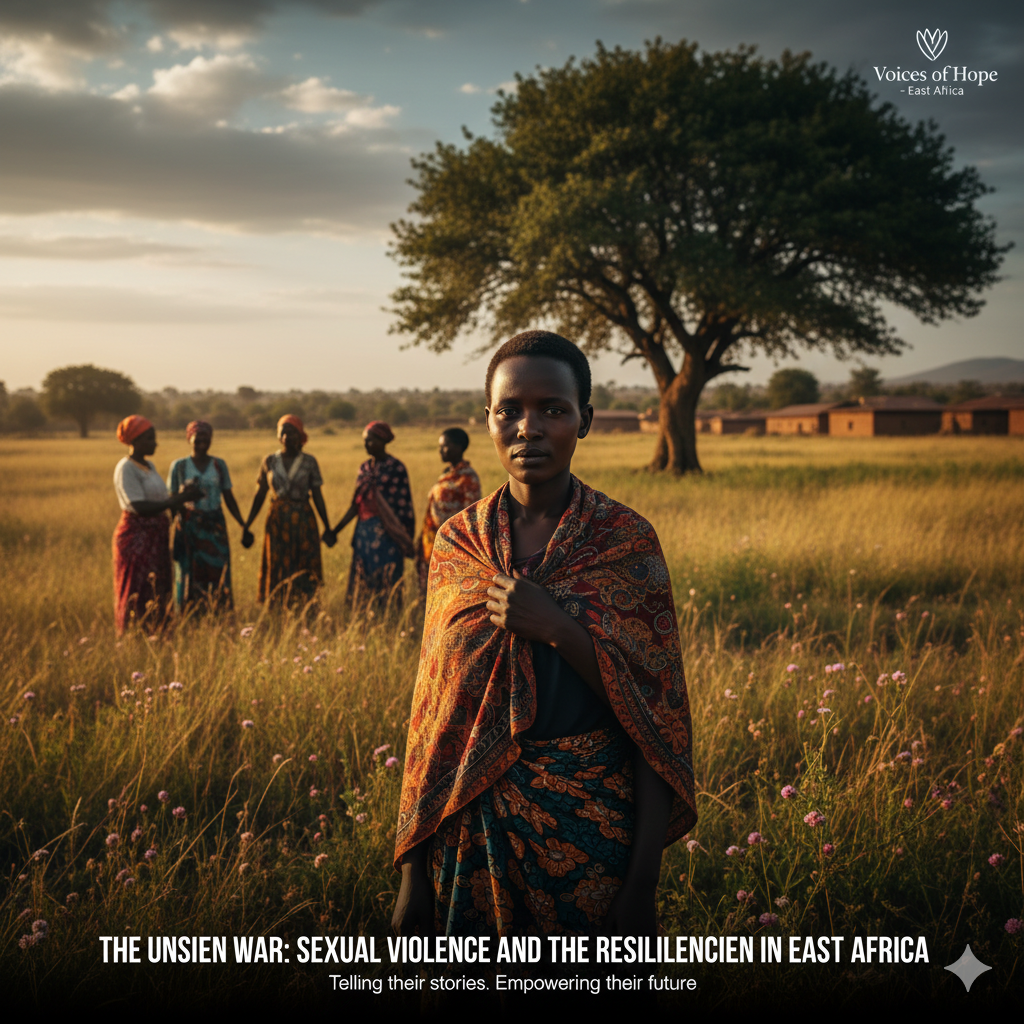
Subtitle: Beyond the Headlines, a Regional Crisis Demands Justice, Healing, and Systemic Change
[DATELINE: NAIROBI, Kenya] – In the lush, rolling hills of Eastern Congo, in the sprawling refugee camps of Uganda, and in the bustling, uneven alleys of Nairobi’s informal settlements, a silent and devastating war rages on. Its primary weapon is rape, and its primary casualties are women and girls. Sexual and gender-based violence (SGBV) in East Africa is not merely a crime; it is a pervasive public health crisis, a weapon of conflict, and a brutal tool of patriarchal control that transcends borders, class, and circumstance. To understand it is to confront a complex tapestry of impunity, resilience, and a painful struggle for justice in a region where survival often demands unimaginable courage.
A Landscape of Violence: From Conflict Zones to the Home
The manifestations of sexual violence in East Africa are multifaceted, occurring on a spectrum from the chaos of war to the supposed safety of the home.
In conflict and post-conflict zones, rape is deployed as a deliberate strategy of war. The legacy of this is most grotesquely visible in the eastern Democratic Republic of Congo (DRC), which, though geographically Central African, shares a border and a tragic epidemic of violence with East Africa. Militias use systematic rape to terrorize populations, destroy community bonds, and seize control of mineral-rich lands. The physical and psychological wounds are catastrophic, compounded by near-total impunity for perpetrators and a shattered healthcare system.
This tactic echoes in the histories of other regional conflicts. In South Sudan, rape has been a hallmark of the civil war, used by all sides. In the northern regions of Ethiopia, particularly Tigray, widespread and systematic sexual violence was a weapon of the recent conflict, leaving deep scars on a generation of women.
Yet, to focus solely on conflict is to miss the broader, more insidious crisis. The most common site of sexual violence is the home. Domestic intimate partner violence, including marital rape, is endemic but grossly underreported due to powerful social stigmas, economic dependency, and legal systems that often fail to recognize it as a serious crime. In countries like Kenya, Uganda, and Tanzania, deeply entrenched patriarchal norms prioritize family honor and male authority over a woman’s bodily autonomy. A culture of silence prevails, where survivors are shamed, blamed, and pressured to reconcile with their abusers to maintain social harmony.
The Cross-Cutting Drivers: Poverty, Displacement, and Inequality
Several interlocking factors fuel this epidemic. Extreme poverty is a primary accelerator. Economic desperation forces women and girls into high-risk situations, such as walking long, isolated distances for water or firewood, engaging in transactional sex for survival, or remaining in abusive relationships because they have no means of financial independence. The lack of economic power is a direct contributor to vulnerability.
Mass displacement, whether from conflict or climate-induced disasters, creates perfect conditions for predators. Refugee camps and informal settlements are often poorly lit, un-policed, and lacking in safe, private sanitation facilities. Women and girls fetching water or using latrines at night face extreme danger. The breakdown of traditional community protection mechanisms leaves them exposed.
At its core, however, is profound gender inequality. Laws and customs that deny women equal rights to land ownership, inheritance, and divorce trap them in subjugation. The socialization of girls to be submissive and the normalization of male sexual entitlement create a permissive environment for abuse. When a society values a woman’s virginity or marital status more than her safety and dignity, the survivor becomes the accused.
The Triple Trauma: Survival in the Aftermath
For a survivor, the attack is only the beginning of a lifelong ordeal. The trauma is triple-layered:
- Medical and Physical: Survivors face risks of fatal injury, sexually transmitted infections (including HIV), and devastating fistulas—a childbirth injury often caused by violent rape, leading to chronic incontinence and social ostracization. Access to critical post-rape care—emergency contraception, PEP (post-exposure prophylaxis for HIV), and forensic exams—is severely limited, especially in rural areas.
- Psychological: The mental health toll is crushing. Depression, severe anxiety, post-traumatic stress disorder (PTSD), and suicidal ideation are common. Yet, mental health services are a rarity, seen as a luxury in regions struggling with basic healthcare.
- Social and Economic: The stigma is often a second death. Survivors are frequently rejected by their husbands and families, cast out of their communities, and labeled as “unmarriageable.” This social death leads to economic destitution, completing a cycle of total devastation.
Beacons of Hope: The Frontline of Resistance and Healing
Amidst the darkness, the fierce resilience of East African women and their allies shines through. A powerful movement is growing, led by survivors and activists demanding change.
- Grassroots Advocacy: Organizations like Panzi Hospital and Foundation in DRC, founded by Nobel Laureate Dr. Denis Mukwege, provide holistic care—medical, psychological, legal, and socio-economic—thousands of survivors. In Kenya, groups like the Coalition on Violence Against Women (COVAW) lobby for legal reform and run safe houses.
- Legal Reform and Challenges: Progress is slow but evident. Kenya’s 2006 Sexual Offences Act was a landmark, defining rape broadly and mandating survivor-sensitive procedures. However, implementation is poor, conviction rates remain dismally low, and cases are often dropped due to corruption, witness intimidation, or “out-of-court settlements” forced on families.
- Survivor-Led Networks: The most transformative force is survivors organizing themselves. They provide peer support, advocate for policy changes, and fight to end the stigma by speaking out, transforming their pain into a collective demand for justice.
The Path Forward: A Call for Comprehensive Action
Ending this war on women requires a radical, multi-sectoral commitment that treats SGBV as the fundamental breach of human security that it is.
- Transform the Justice System: This requires specialized, gender-sensitive police units, dedicated courts to expedite cases, rigorous training for judges and prosecutors, and the elimination of corrupt practices that allow perpetrators to buy their freedom. Legal frameworks must be strengthened and uniformly enforced.
- Invest in Holistic Care: Every health center, especially in conflict zones and rural areas, must be equipped and staffed to provide confidential, compassionate, and comprehensive post-rape care. Mental health support must be integrated into primary healthcare.
- Dismantle Economic Dependence: Empowering women economically through land rights, access to credit, and vocational training is a critical form of prevention. Financial independence provides an escape route from abusive situations.
- Change the Culture, Transform Masculinity: Long-term prevention requires engaging men and boys as allies. Educational programs must challenge harmful gender norms, teach consent, and promote positive, non-violent masculinity from an early age.
- Protect the Most Vulnerable: In conflict and displacement settings, the international community and regional bodies must prioritize the physical safety of women and girls in camp design, peacekeeping mandates, and humanitarian programming.
Conclusion: From Weapons to Witnesses
The rampant sexual violence in East Africa is a mirror held up to the region’s deepest failures: failed justice, failed protection, and a failed commitment to gender equality. The bodies of women have become battlegrounds.
Yet, in their resistance, survivors are not just victims of history; they are agents of a new future. They are moving from being targets of weapons to becoming powerful witnesses for change. Their courage in speaking out, supporting one another, and demanding accountability is rewriting a narrative of shame into one of formidable strength.
The world must move beyond fleeting horror at individual headlines to sustained action. Supporting East African women in this struggle is not an act of distant charity; it is an investment in the very foundation of just, peaceful, and prosperous societies. For until every woman and girl in East Africa can live free from the fear of sexual violence, the region’s celebrated progress will remain a haunting, unfinished story. The unseen war must be seen, named, and ended.
