

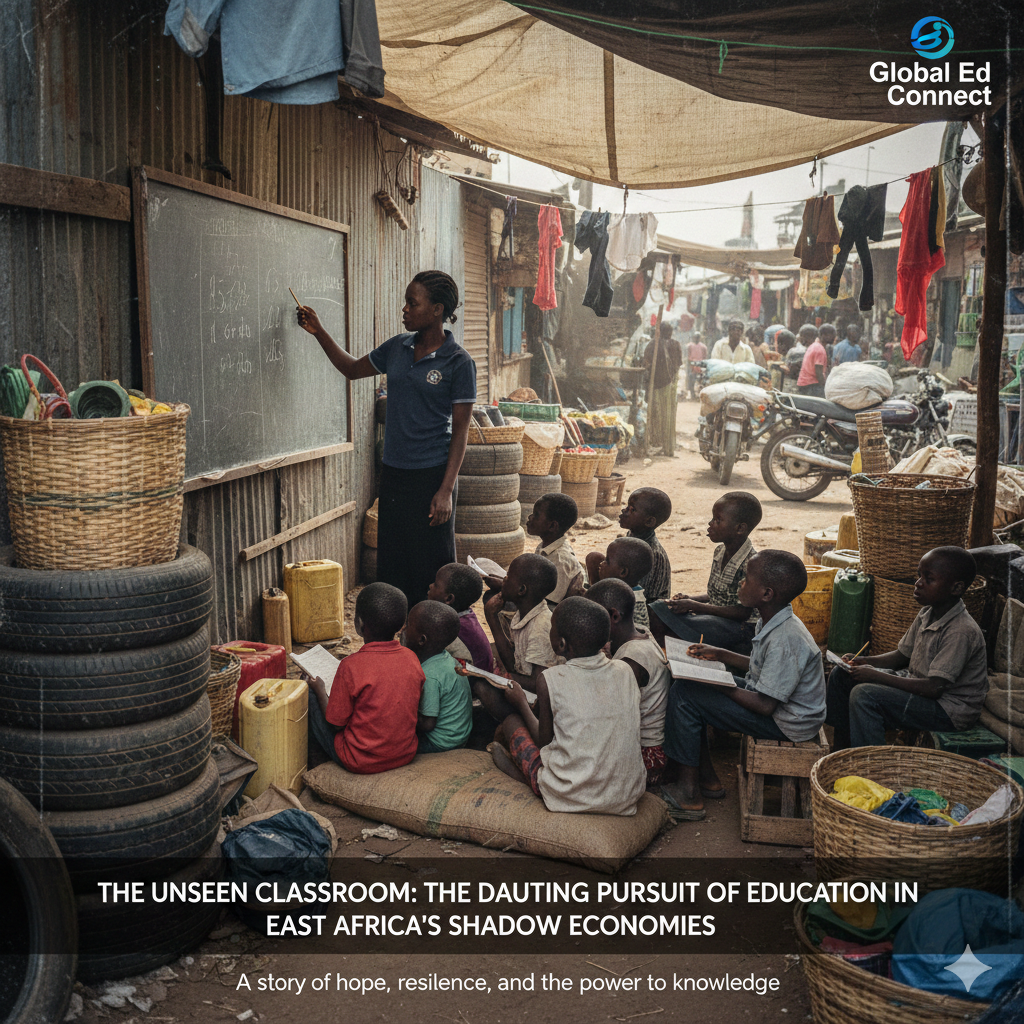
In the informal settlements of Kibera, Nairobi; the remote villages of Karamoja, Uganda; and the flood-prone regions of South Sudan, a parallel educational struggle unfolds, largely invisible to the world. For the millions living in severe poverty across East Africa, the promise of education—often touted as the great equalizer—is a promise perpetually deferred, a ladder with missing rungs leading to a wall of systemic inequality. The story of education for the poor in this region is not merely one of inadequate funding; it is a complex saga of survival economics, logistical impossibilities, and a system that often mirrors and reproduces the very inequalities it is meant to overcome.
The Cost of “Free” Education: The Hidden Burden on the Poorest
While most East African nations, including Kenya, Uganda, and Tanzania, have instituted policies of free primary education (FPE), the reality for impoverished families is anything but free. The concept of “indirect costs” forms an insurmountable barrier. These include:
- The Compulsory Uniform: A symbol of equality that becomes a tool of exclusion. A full uniform kit can cost the equivalent of a month’s income for a family surviving on $2 a day. Children without the correct uniform are frequently sent home in humiliation.
- Levies and “Motivation” Fees: Underfunded schools, facing their own crises, routinely ask parents for “development funds,” exam fees, or money for “desks and chairs.” These informal levies are non-negotiable for a child’s participation.
- Essential Supplies: Exercise books, pencils, textbooks (often shared 10-to-1), and sanitary pads for adolescent girls are out-of-pocket expenses that force impossible choices: a notebook or a meal?
For the ultra-poor, the greatest cost is opportunity cost. A child in school is a child not working on the family farm, fetching water from miles away, caring for younger siblings, or contributing to the household’s meager daily income through street vending or waste picking. When survival is a daily calculation, the long-term promise of education loses out to the immediate necessity of food.
The Infrastructure of Deprivation: Overcrowding and the Teacher Crisis
The schools serving the poorest communities are physical manifestations of neglect. Classrooms built for 40 students regularly hold 100 or more. Pupils sit on dirt floors, under collapsed roofs, or in sweltering, airless rooms. Sanitation is a critical health hazard; a single pit latrine might serve hundreds, often without doors, privacy, or running water, a factor that disproportionately drives adolescent girls to drop out.
At the heart of this crumbling infrastructure is a human resource crisis. Teacher-to-student ratios can exceed 1:70. Teachers, often underpaid, demoralized, and posted to remote areas they resent, face impossible conditions. Many engage in “private tutoring” after hours, creating a two-tier system where crucial curriculum content is only available for a fee, effectively locking out the poorest students from academic advancement. The quality of instruction suffers immensely, leading to the phenomenon of “children in school but not learning.” It is possible to complete primary school without achieving functional literacy or numeracy.
The Vulnerability Gauntlet: How Poverty Begets Educational Failure
The challenges extend far beyond the school compound. A child from a destitute household runs a daily gauntlet of vulnerabilities that directly sabotage learning:
- Chronic Hunger and Malnutrition: “A hungry stomach has no ears.” This local proverb encapsulates the neuroscience of poverty. Malnourished children cannot concentrate, have lower cognitive development, and are more susceptible to illness, leading to frequent absenteeism. School feeding programs, where they exist, are often the primary reason children attend at all.
- The Health Poverty Trap: Lack of access to basic healthcare means treatable conditions—malaria, intestinal worms, simple infections—become chronic, causing missed school days and developmental delays. For girls, the lack of menstrual hygiene management leads to them missing up to a week of school each month.
- The Shadow of Instability: For the poorest, life is precarious. A flood, a drought, a parent’s illness, or an episode of ethnic violence can force immediate displacement or withdrawal from school, permanently ending a child’s education.
Beyond Primary: The Vanishing Bridge to Secondary and Beyond
For the exceptional few from impoverished backgrounds who navigate the gauntlet of primary school and pass the high-stakes national exams, the next cliff is even steeper. Secondary education is rarely free. Boarding fees, tuition, and the costs associated with relocation to a secondary school are astronomically high. This is the point where dreams are most decisively extinguished. The pathway to university or technical college becomes a statistical near-impossibility, reinforcing a cycle where poverty begets a lack of advanced skills, which begets continued poverty.
Beacons of Hope and Models for Change
Despite the grim landscape, innovation and resilience persist. Solutions emerging from within these communities offer a blueprint for a more equitable future:
- Integrated, Poverty-Sensitive Schools: Successful models, often run by NGOs or faith-based organizations, understand that to educate the poorest child, you must support the whole child. This means providing daily nutritious meals, basic school medical clinics, subsidized or free uniforms and supplies, and flexible schedules that accommodate seasonal work for older children.
- Community-Based, Low-Cost Private Schools: In the absence of functional public options, a surge of ultra-low-cost private schools has emerged in slums. While varying in quality, they are often more accountable to parents, have smaller class sizes, and demonstrate that even the poorest are willing to invest pennies in what they perceive as a better alternative.
- Leveraging Mobile Technology: With mobile phone penetration soaring, digital tools are bridging gaps. Interactive literacy apps on basic phones, SMS-based homework reminders, and mobile money for fee payment are beginning to show promise in supporting learning outside the classroom.
- Scholarship and Mentorship Bridges: Organizations focused on identifying brilliant but needy students and providing full-ride scholarships, coupled with psychosocial mentorship, are creating critical pipelines of talent from the slums and villages into national leadership positions, proving that potential is universal, but opportunity is not.
A Call for a New Social Contract in Education
Addressing this crisis requires moving beyond incremental reform to a fundamental reimagining of education as a tool of social justice. This demands:
- Truly Free, Fully Funded Education: Governments must be held accountable to fund not just teacher salaries, but the full ecosystem of learning: adequate classrooms, sanitary facilities, instructional materials, and school meals as a non-negotiable core budget item.
- Poverty-Targeted Interventions: Policy must recognize that equality (giving everyone the same) is not equity. Pro-poor policies—cash transfers conditional on school attendance, targeted stipends for girls, and health interventions in schools—are essential to level the playing field.
- Rethinking Quality and Relevance: Curriculum must connect to the realities of students’ lives, incorporating practical skills in financial literacy, sustainable agriculture, and digital competency to make education visibly relevant to livelihood improvement.
Conclusion: The Unfinished Lesson
The struggle for education in East Africa’s poorest communities is the region’s most critical unfinished lesson. It is a stark reminder that opening a schoolhouse door is not enough if the child cannot walk through it—whether due to hunger, cost, shame, or the sheer exhaustion of poverty.
Investing in the education of the poor is not an act of charity; it is the single most strategic investment in breaking the intergenerational transmission of poverty, fostering social cohesion, and unlocking the continent’s stifled potential. Until a child in Kibera has the same realistic chance to learn and thrive as a child in Karen, East Africa’s celebrated economic growth will remain a fractured story, built on a foundation where too many have been left in the dark, their potential untested, and their voices unheard. The classroom of poverty is a harsh teacher, but its graduates, if ever given a real chance, could become the architects of a more equitable future.
