

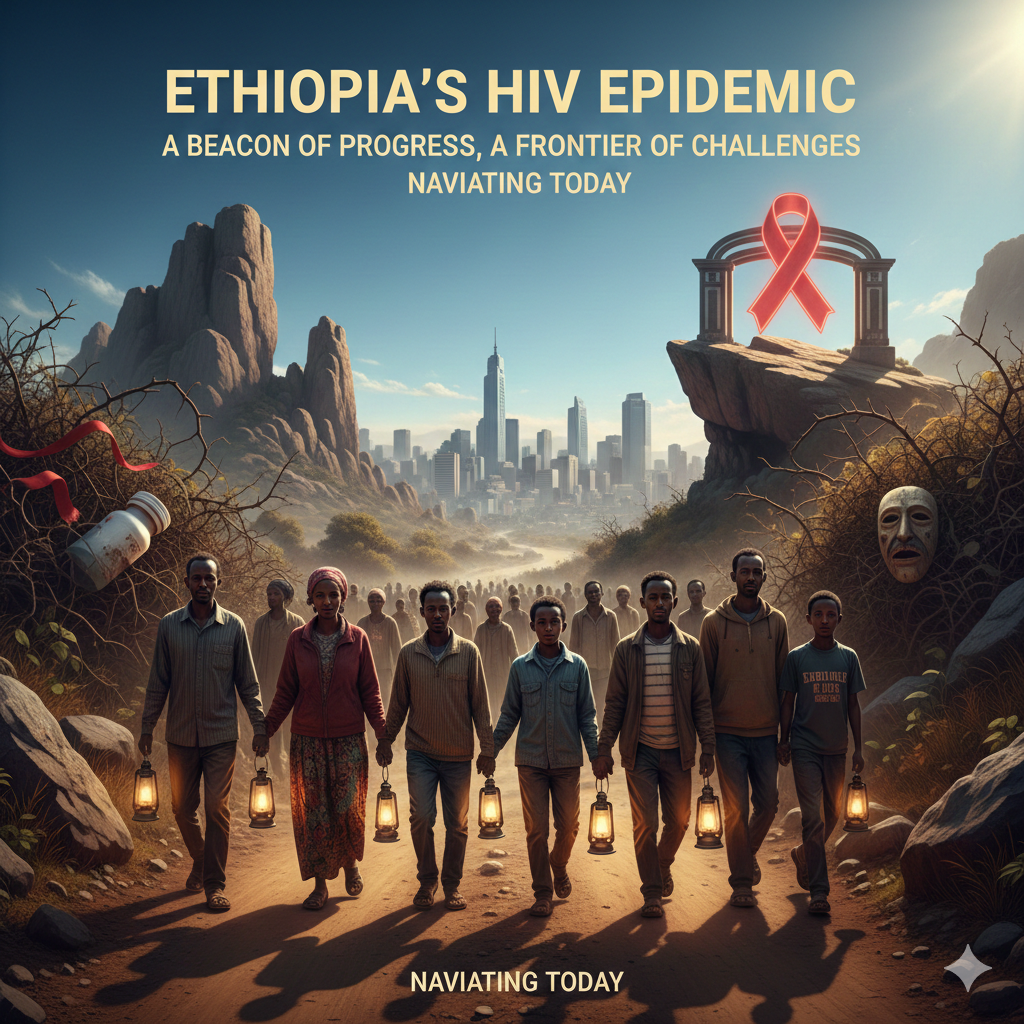
ADDIS ABABA, Ethiopia — In the heart of East Africa, Ethiopia’s journey with HIV is a narrative of remarkable public health achievement shadowed by persistent, evolving challenges. Once a country facing a generalized epidemic with prevalence rates nearing 4% in the early 2000s, Ethiopia is now hailed by UNAIDS as a leading example of a successful HIV response in sub-Saharan Africa. Today, with an adult prevalence rate estimated at 0.9%, the nation has achieved the global 95-95-95 targets—meaning 95% of people living with HIV know their status, 95% of those are on treatment, and 95% of those are virally suppressed—well ahead of the 2030 deadline. Yet, beneath this national success story lies a more complex reality of profound inequities, emerging threats, and a health system under strain from multiple crises.
The Architecture of Success: Community-Led Health Systems
Ethiopia’s achievements are not accidental; they are the product of a deliberate, scaled strategy built on two foundational pillars: a massive scale-up of Antiretroviral Therapy (ART) and the revolutionary deployment of the Health Extension Program (HEP).
Launched in 2003, the HEP trained and deployed over 40,000 female Health Extension Workers (HEWs) to rural villages, creating the largest community health workforce in Africa. These agents of change, drawn from the communities they serve, became the frontline in the HIV fight. They conduct outreach, promote testing, combat stigma, support treatment adherence, and provide crucial linkages to health centers. This community-based infrastructure allowed HIV services to permeate even the most remote areas, driving up testing and treatment initiation rates dramatically.
Coupled with this was a historic commitment to providing free ART through the public system, supported substantially by the U.S. President’s Emergency Plan for AIDS Relief (PEPFAR) and the Global Fund. The adoption of “Test and Treat” policies and the transition to simpler, more tolerable Dolutegravir-based regimens improved outcomes and reduced side effects, making lifelong management more sustainable.
The Persistent Frontiers: Geographic, Demographic, and Social Disparities
While national figures are impressive, they mask stark disparities. Ethiopia’s epidemic is now highly concentrated among key and vulnerable populations in specific regions.
- The Urban-Rural Divide: Major cities like Addis Ababa, Dire Dawa, and Gambella region continue to bear a disproportionate burden. Gambella, bordering South Sudan, has a prevalence rate above 4%, driven by mobility, cross-border migration, and limited service access.
- Key Populations Left Behind: The national response has historically focused on the general population, leaving female sex workers, men who have sex with men, people who inject drugs, and transgender individuals at much higher risk. Stigma, discrimination, and criminalization drive these groups underground, away from essential prevention and testing services. HIV prevalence among sex workers, for instance, is estimated to be over 20%.
- The Gender Dimension: Young women and adolescent girls remain disproportionately affected due to biological susceptibility, gender-based violence, intergenerational relationships, and lack of agency over sexual health. They are often diagnosed later and face greater barriers to consistent care.
The Evolving Threat: A Youthful Population and Shifting Priorities
With over 70% of its population under 30, Ethiopia faces a critical challenge: prevention fatigue. The generation coming of age today did not witness the ravages of the epidemic in the 1990s and early 2000s. This, combined with competing socioeconomic priorities, has led to risky behaviors and a decline in condom use. Comprehensive sexuality education remains patchy and culturally contentious, leaving youth without the knowledge to protect themselves.
Furthermore, the success of treatment has created a new demographic: a growing population of aging adults living with HIV. The health system must now pivot to manage co-morbidities like hypertension, diabetes, and cancers, requiring integrated care models that are still in their infancy.
Storms on the Horizon: Crises That Threaten Progress
Ethiopia’s hard-won gains are under severe threat from concurrent humanitarian and political crises:
- Conflict and Internal Displacement: The two-year war in Tigray, and ongoing conflicts in Amhara and Oromia, have shattered health systems in affected zones. HIV clinics were looted or destroyed, supply chains for medications were severed, and millions were displaced, interrupting treatment for thousands. Tracking and re-engaging these patients is a monumental task.
- The Funding Cliff: Ethiopia’s HIV program is over 90% dependent on external donors, primarily PEPFAR and the Global Fund. With global health attention fragmented and donor budgets strained, there is a real risk of a funding plateau or decline. The country’s transition to greater domestic financing is an urgent but economically daunting necessity.
- Integration and System Strain: The HIV program has often operated as a well-funded vertical system. The push for integration into primary healthcare is sensible for sustainability but risks diluting the specialized expertise and dedicated resources that made the program effective. Meanwhile, the entire health system is stretched thin responding to malaria, cholera, and malnutrition outbreaks.
The Path Forward: Consolidation, Targeting, and Resilience
To protect its progress and address its gaps, Ethiopia’s HIV response must evolve in several key ways:
- Hyper-Targeted Interventions: The next phase must focus resources on the geographic hotspots and key populations where transmission persists. This means investing in stigma-free, peer-led services, pre-exposure prophylaxis (PrEP) programs for high-risk groups, and specialized outreach.
- Ownership and Financing: The government must accelerate its roadmap for domestic resource mobilization for health. This includes exploring national health insurance schemes and increasing the health budget to safeguard the HIV response from external shocks.
- Invest in the Youth: A revitalized, culturally sensitive prevention campaign targeting youth through digital media, schools, and youth centers is non-negotiable. This must include access to HIV self-testing kits and honest conversations about sexual health.
- Build Crisis-Resilient Systems: The program must be “hardened” against shocks. This involves creating decentralized drug stockpiles, multi-month prescriptions for ART, and robust patient tracking systems that can follow people across displacements.
- Address Comorbidities: Training healthcare workers in managing non-communicable diseases (NCDs) alongside HIV and integrating these services at the clinic level is essential for the long-term health of an aging cohort of people living with HIV.
Conclusion: A Precarious Triumph
Ethiopia’s HIV story is one of the great public health successes of the 21st century, a testament to what is possible with community-centered strategies, political will, and sustained partnership. The Health Extension Workers walking dusty village paths have been the true architects of this triumph.
Yet, the nation stands at a precipice. Success has bred complacency in some quarters, while conflict and funding uncertainty threaten to reverse gains. The epidemic’s fire is not out; it has condensed into smaller, hotter flames among marginalized communities.
The lesson from Ethiopia today is that defeating HIV requires more than medical tools; it demands an unwavering commitment to equity, resilience, and adaptation. The goal must shift from controlling numbers to sustaining the dignity and health of every individual at risk. The nation’s ability to navigate this next, more complex phase will determine whether its early victory becomes a lasting legacy or a cautionary tale of progress undone. The world, which invested heavily in this success, has a stake in ensuring it endures.
