

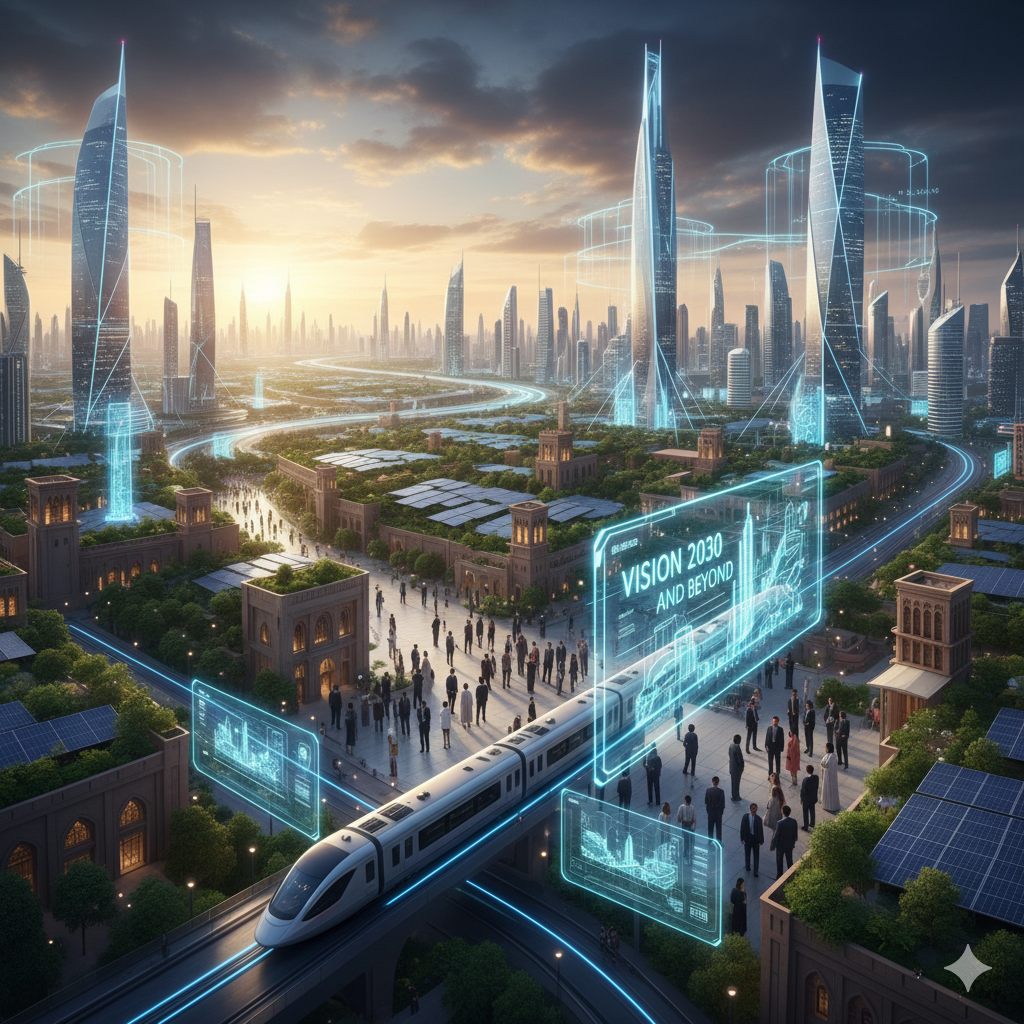
Saudi Arabia is in the midst of a historic metamorphosis, a nation executing an economic and social pivot of staggering ambition. The engine of this transformation is Vision 2030, the master plan conceived by Crown Prince Mohammed bin Salman to wean the Kingdom off its century-long dependence on oil. The business environment in Saudi Arabia today is therefore not merely a market; it is a dynamic, government-led project of national reinvention, characterized by massive state investment, aggressive regulatory overhaul, and a determined opening to the world. For global investors and entrepreneurs, it presents a landscape of unparalleled opportunity layered with unique challenges inherent to a society in rapid transition.
The Unmissable Megaprojects: Catalyzing New Economies
At the heart of the new Saudi business narrative are the “giga-projects”—unprecedented urban and tourism developments designed to act as economic engines and global showcases.
- NEOM: The $500 billion flagship, centered on the 170-kilometer linear city of The Line, is more than a construction project; it is a statement of intent. Marketed as a laboratory for futurism, it aims to attract businesses in advanced industries, robotics, and next-gen tourism. It is the ultimate test of whether ambition can manufacture a new economic zone from scratch in a remote desert.
- The Red Sea Global: This luxury tourism project, encompassing an archipelago of 90 islands, is spearheading the Kingdom’s bid to become a global tourism destination. It is pioneering regenerative tourism models and creating vast opportunities in hospitality, real estate, sustainable development, and marine services.
- Riyadh’s Meteoric Rise: Beyond the coastal megaprojects, the capital city of Riyadh is undergoing its own explosive transformation. With a target to grow its population to 15–20 million by 2030, the city is a frenzy of construction. The new airline Riyadh Air, the King Salman Park, the Sports Boulevard, and the expansion of the financial district all signal a deliberate centering of economic, political, and cultural gravity in the capital.
These projects are not just real estate plays; they are demand generators, forcing the rapid development of entire supply chains—from construction tech and logistics to entertainment and digital infrastructure—where none existed before.
Beyond Oil: The Diversification Drive in Action
The core objective of Vision 2030 is economic diversification, and tangible sectors are now emerging at scale.
- Mining & Metals: The New “Extractive” Frontier: Saudi Arabia is positioning its vast, untapped mineral wealth—including gold, copper, phosphate, and rare earth elements—as the next pillar of its resource economy. The establishment of the state-owned Ma’aden and the new Manara Minerals investment vehicle signals a strategic push to become a global player in the strategic materials essential for the energy transition.
- Manufacturing & “Saudization”: The Kingdom is leveraging its cheap energy and strategic location to become a manufacturing hub. The Saudi Arabian Military Industries (SAMI) aims to localize 50% of military spending. More broadly, the In-Kingdom Total Value Add (iktva) program mandates that energy giant Aramco and other state entities progressively increase local sourcing, creating a powerful incentive for foreign suppliers to set up local manufacturing and service facilities. This is intrinsically linked to Saudization (Nitaqat), which pressures companies to increase their percentage of Saudi employees, accelerating skills transfer.
- Tourism & Entertainment: Creating a New Consumer Society: Perhaps the most socially transformative shift is the birth of a domestic tourism and entertainment industry. From the Formula 1 Grand Prix in Jeddah and elite boxing matches in Riyadh to the opening of cinemas and mega-concerts, the Kingdom is actively creating a leisure economy. This fuels growth in retail, F&B, events management, and the arts, catering to a young population whose disposable income was previously spent abroad.
- Fintech and the Digital Leap: The regulatory body, the Capital Market Authority (CMA), has been aggressively liberalizing the financial sector. A sandbox environment has fostered a boom in fintech startups, particularly in payments, crowdfunding, and insurtech. The Tadawul stock market is expanding its offerings, and the Kingdom is marketing itself as a future hub for blockchain and digital asset innovation.
The Evolving Regulatory and Social Landscape
Doing business in Saudi Arabia requires navigating a state of flux where opportunity is often framed by new and evolving rules.
- The Drive for “Ease of Doing Business”: The government has made significant strides, establishing the Shareek program to incentivize private sector investment, simplifying visa processes with new investor and talent licenses, and digitizing many government services. The goal is clear: to attract foreign capital and expertise at an unprecedented pace.
- The Social Catalyst: Reforms in social policy are directly impacting business. The empowerment of women—evidenced by rising workforce participation, the lifting of the driving ban, and relaxed guardianship rules—has unlocked a new talent pool and consumer segment. The cautious easing of social restrictions has made the Kingdom more accessible to international talent and tourists.
- Localization and Compliance Pressures: The flip side of opportunity is the complex web of localization requirements. Navigating Saudization quotas, iktva programs, and strict anti-commercial concealment (anti-ghafalah) laws requires careful legal and operational planning. The state is a dominant economic force, and successful business models often involve forming strategic joint ventures or partnerships with powerful local entities, including the Public Investment Fund (PIF) itself.
Converging Challenges: The Other Side of Ambition
The breakneck speed of change brings inherent risks and challenges.
- “Giga” Competition and Cannibalization: With multiple world-scale projects launching simultaneously, there is internal competition for finite resources—skilled labor, materials, and management talent—which drives up costs and creates execution risks.
- Bureaucracy in Transition: While top-level vision is clear, implementation can be hampered by a bureaucracy still adapting to new mandates. Inconsistencies between different ministries or between central and local authorities can create friction, requiring businesses to be agile and relationship-focused.
- The Global Context: Saudi ambitions are exposed to global economic headwinds, geopolitical volatility in the region, and the long-term trajectory of the very oil prices it seeks to transcend. Attracting sufficient foreign direct investment (FDI) to fund Vision 2030’s later stages remains a critical test.
Conclusion: A Nation Betting on Itself
The Saudi business landscape today is a study in scale, speed, and state direction. It is a high-stakes environment where the rules are being rewritten in real-time, offering first-mover advantages to those who can navigate its complexities. Success here is not just about securing a contract; it is about aligning with a national project.
The ultimate business proposition of modern Saudi Arabia is the chance to build and shape entire sectors in the world’s largest economy undergoing a self-engineered renaissance. For global partners, the question is no longer if Saudi Arabia will change, but whether they will have a role in its new economic reality. The Kingdom is not just opening for business; it is actively, and with immense capital, building a new business—and inviting the world to invest in its audacious bet on the future.
