

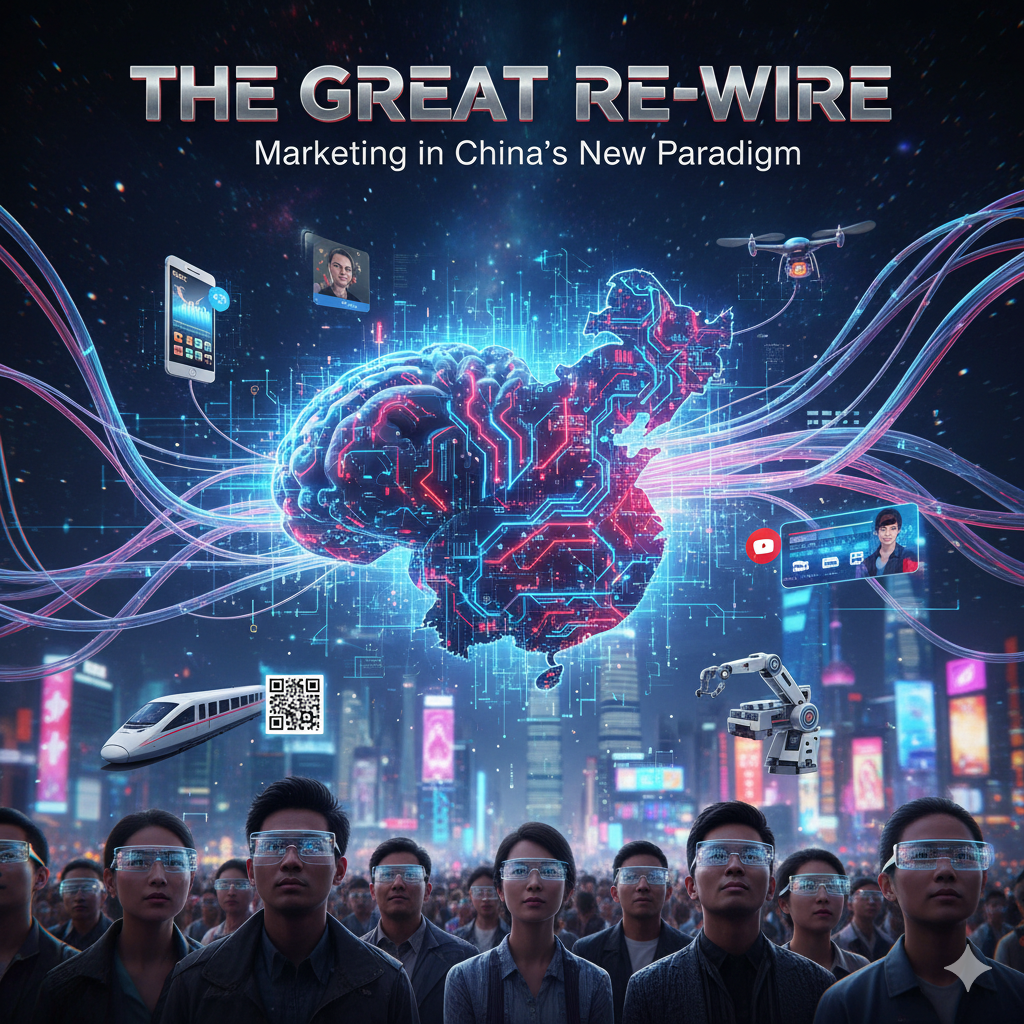
Marketing in China today operates in a parallel universe—one that is simultaneously the most advanced and the most challenging on the planet. The breakneck speed of digital innovation, coupled with profound shifts in consumer psychology and regulatory landscapes, has rendered traditional playbooks obsolete. To market in China in the 2020s is to navigate a complex ecosystem where data-driven hyper-personalization coexists with rising nationalism, where mega-platforms dictate trends while a new generation of consumers seeks authenticity above all. This is not merely a market; it is a dynamic, ever-evolving laboratory for the future of commerce.
The Engine Room: The Super-App Ecosystem and Social Commerce Dominance
The foundational reality of Chinese marketing is the near-total dominance of its integrated digital ecosystems, primarily the duopoly of Alibaba and Tencent (and increasingly, ByteDance). Unlike the West’s scattered landscape of websites and apps, China’s “Super-App” model creates closed-loop universes where discovery, evaluation, payment, and sharing happen seamlessly within a single platform.
- WeChat: The Operating System for Life: More than a messaging app, WeChat is a digital Swiss Army knife. Its 1.3 billion monthly active users live within its ecosystem. Marketing here is about building Private Domain Traffic (私域流量). Brands leverage Official Accounts for content, Mini-Programs for e-commerce and services, and Community (群) chats for direct customer relationship management. The goal is to move consumers from public platforms (like Douyin) into a brand’s private WeChat ecosystem, where retention, loyalty, and lifetime value can be cultivated directly, bypassing expensive repeated ad buys.
- Douyin/TikTok: The Engine of Discovery: If WeChat is for retention, Douyin is for explosive discovery. Its algorithmically powered short-video feed has revolutionized product discovery, giving birth to the phenomenon of “Spark Commerce.” A user watching a 15-second video of a sizzling wok or a clever gadget can, with two taps, purchase the item without ever leaving the app. Key Opinion Leaders (KOLs) and, more importantly, Key Opinion Consumers (KOCs)—everyday users with smaller, more trusted followings—drive purchasing decisions through authentic, relatable content. Livestreaming commerce, pioneered by giants like Viya and Austin Li, has matured into a multi-billion-dollar staple, blending entertainment, real-time interaction, and limited-time offers into a potent sales machine.
- Xiaohongshu (Little Red Book): The Trust Economy: This platform is the holy grail for brand building, particularly in beauty, fashion, and lifestyle. It functions as a hybrid of Instagram and a detailed review forum. Users, predominantly young, urban women, post in-depth “planting grass” (种草) reviews and “haul” videos. Marketing success here hinges not on hard sells, but on seeding products to credible KOCs and fostering authentic User-Generated Content (UGC). A negative trend on Xiaohongshu can doom a product, while genuine advocacy can launch it into the stratosphere.
The New Chinese Consumer: Sovereign, Nationalistic, and Segmentation-Driven
Understanding the consumer is no longer about demographics alone, but about psychographics and values in a post-pandemic, “common prosperity” era.
- The “Feeling Economy” and Emotional Resonance: The rising middle class, having satisfied basic material needs, now spends for emotional fulfillment, self-improvement, and social identity. Marketing narratives have shifted from showcasing product features to selling lifestyles, aspirations, and personal transformation. Success lies in crafting brand stories that connect on a deeper, values-based level—be it wellness, family, or intellectual curiosity.
- Guochao (国潮) – The Rise of “National Tide”: This is one of the most powerful forces in the market. Guochao represents the fusion of Chinese cultural heritage with modern aesthetics and quality. It reflects a deep-seated cultural confidence among young Chinese consumers who are proud to wear, use, and champion homegrown brands like Li-Ning, Perfect Diary, and Heytea. For foreign brands, this means the imperative to demonstrate deep cultural respect—not just superficial nods to the Lunar New Year—and to highlight how their brand contributes to, and innovates within, the Chinese context.
- Granular Segmentation: The monolithic “Chinese consumer” is a myth. Marketers must target specific, rapidly evolving cohorts:
- Gen-Z (后浪): Digital natives who value individuality, social responsibility, and authenticity. They are skeptical of traditional advertising and are drawn to interactive, co-creative, and meme-savvy campaigns.
- Silver-Haired (银发族): The burgeoning elderly population is tech-savvy, health-conscious, and have significant disposable income. They are active on platforms like Douyin and are a major force in travel, healthcare, and online grocery.
- The Pet Economy (它经济): With rising单身主义 (singlism) and later marriages, pets are family. Spending on premium pet food, insurance, smart accessories, and even pet photography is skyrocketing, creating a vast niche market.
The Regulatory Reckoning: Navigating the “New Normal” of Governance
The regulatory environment has undergone a seismic shift, fundamentally altering the rules of the game.
- Data Security and Privacy: The implementation of the Personal Information Protection Law (PIPL) and Data Security Law (DSL) has shattered the old model of unfettered data collection. Cross-border data transfer is heavily restricted. Marketers must now build first-party data strategies with explicit user consent, making the cultivation of Private Domain Traffic in WeChat not just advantageous, but essential for survival.
- Algorithm Transparency and Anti-Monopoly: Crackdowns on tech giants have forced platforms to make their recommendation algorithms more transparent and have broken down “walled gardens” to a degree. The infamous “二选一” (choose one of two) practice, where brands were forced to partner exclusively with Alibaba or Tencent, is banned. This allows for more diversified channel strategies but also increases complexity.
- Content and Celebrity Regulation: Strict controls on online content, coupled with a sweeping campaign against “irrational fan culture” and tax evasion by celebrities/KOLs, have made influencer marketing riskier. Brands must conduct extreme due diligence on partners and ensure all marketing content aligns with socialist core values, promoting frugality, modesty, and social harmony.
The Future Frontier: Integration, Responsibility, and Immersion
Looking ahead, three frontiers will define winners and losers:
- Total Integration of Online and Offline (OMO): The distinction between digital and physical is vanishing. Brands use online campaigns to drive offline traffic to experiential flagships, while offline events are designed explicitly for online amplification via QR codes and social check-ins. New Retail concepts, like Alibaba’s Freshippo stores, are the epitome of this, blending data-driven inventory, in-store dining, and 30-minute delivery.
- Sustainability and Social Responsibility as Brand Imperatives: “Common Prosperity” is not just a political slogan; it’s a business reality. Consumers, especially the young, expect brands to have a clear ESG (Environmental, Social, and Governance) stance. Marketing must communicate tangible commitments to environmental protection, charitable giving, and equitable development to build long-term trust.
- The Metaverse and Virtual Identity: While still nascent, Chinese platforms are aggressively exploring digital avatars, virtual spaces, and NFTs (called Digital Collectibles). Brands like Nike and Budweiser have launched virtual products and experiences on platforms like QQ Music and TMELAND. Marketing will increasingly involve crafting a brand’s presence in these virtual realms to engage digitally-native consumers.
Conclusion: The End of the “China Playbook”
The era of easy wins in China is over. Today’s landscape demands a Glocalized Agility: the deep, structural localization of strategy, team, and data, coupled with the agility to pivot at the speed of internet culture and regulatory change. Success belongs to those who move beyond transactions to build emotional communities, who respect the sovereignty and confidence of the Chinese consumer, and who operate with integrity within a robust regulatory framework. Marketing in China is no longer about selling to a market; it is about building a meaningful, resilient, and culturally resonant presence within a civilization-state undergoing a profound digital and ideological transformation. To win here is to understand that in China, commerce and culture are inextricably, and powerfully, linked.
