

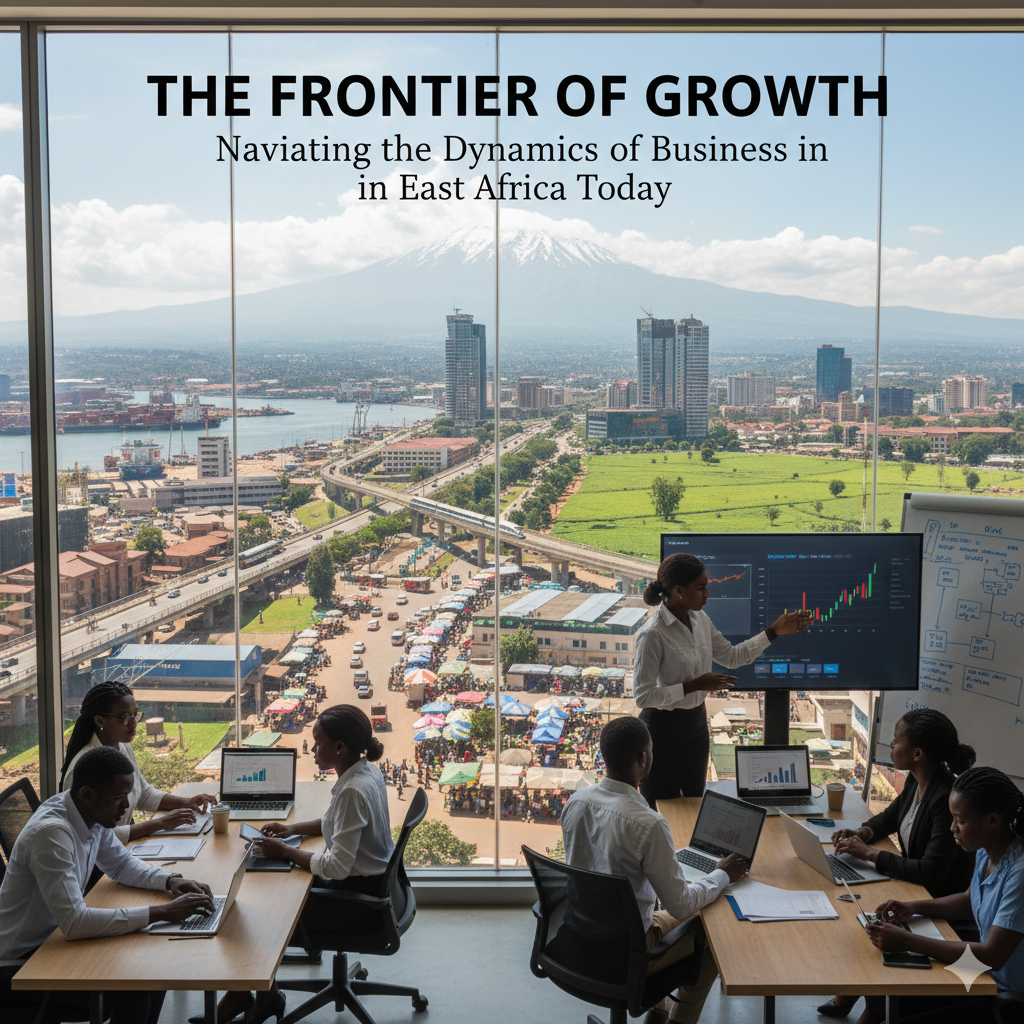
East Africa is no longer just a region of vast landscapes and rich cultures; it has firmly established itself as one of the world’s most compelling and complex business frontiers. From the tech hubs of Nairobi to the industrial corridors of Dar es Salaam and the integration ambitions of the East African Community (EAC), the business environment is a powerful narrative of ambition, innovation, and formidable challenge. The story of business in East Africa today is one of navigating a dual reality: unprecedented opportunity fueled by a young population and digital leapfrogging, juxtaposed against enduring structural barriers and geopolitical tensions. For the savvy investor and entrepreneur, understanding this duality is the key to unlocking the region’s immense potential.
The Engines of Opportunity: Why the World is Watching
Several powerful, interconnected trends are driving a surge of business activity and investment into the region.
- The Demographic Dividend and Urbanization: East Africa boasts one of the youngest and fastest-growing populations globally. This creates a vast, expanding consumer market hungry for goods, services, and connectivity. Rapid urbanization is concentrating this demand in cities like Nairobi, Kampala, and Kigali, fueling boom times for real estate, retail, fast-moving consumer goods (FMCG), and entertainment. This young population is also the source of a dynamic entrepreneurial spirit, making the region a hotbed for startup formation.
- The Digital Leapfrog and Fintech Revolution: East Africa is a global leader in mobile finance and digital innovation. Kenya’s M-Pesa, born in 2007, is the seminal case study, demonstrating how technology can bypass traditional infrastructure to create entirely new economic ecosystems. This foundation has spawned a world-class fintech sector, with companies like Chipper Cash and Wave facilitating cross-border payments and startups offering everything from digital insurance (Insurtech) to SME lending. E-commerce, though still nascent compared to other regions, is growing rapidly, enabled by improved logistics and payment solutions.
- Regional Integration and Infrastructure Push: The East African Community (EAC), now encompassing seven nations, is a powerful force for business. The protocol for a Common Market aims to allow the free movement of goods, capital, and labor—a tantalizing prospect for companies looking to scale. Major infrastructure projects, such as the Standard Gauge Railway (SGR) in Kenya and the Lamu Port-South Sudan-Ethiopia Transport (LAPSSET) corridor, aim to drastically reduce the cost of moving goods, opening up hinterlands and connecting landlocked nations to ports. This physical and policy integration is creating larger, more attractive market blocs for investors.
- Strategic Sectors Poised for Growth: Beyond tech, several traditional sectors are being transformed.
- Agribusiness: As detailed in our prior analysis, agri-tech is revolutionizing farming. Beyond production, massive opportunities exist in processing, storage, logistics, and export—moving from raw commodity sales to value-added products.
- Renewable Energy: With vast potential in geothermal (Kenya’s Rift Valley), hydro, solar, and wind, East Africa is a green energy powerhouse in the making. Independent power producers and mini-grid companies are finding lucrative opportunities to plug crippling energy deficits, a fundamental prerequisite for industrial growth.
- Manufacturing for Regional Consumption: The “Africa Continental Free Trade Area” (AfCFTA), coupled with EAC integration, is making local manufacturing for regional consumption more viable than ever. Companies are setting up plants to produce everything from pharmaceuticals and building materials to vehicles and textiles, aiming to displace expensive imports and create jobs.
The Formidable Hurdles: The Realities on the Ground
For all its promise, conducting business in East Africa requires resilience and a clear-eyed view of persistent obstacles.
- The Regulatory Maze and Governance: Perhaps the most consistent complaint from businesses is the complexity and unpredictability of the regulatory environment. Inconsistent policy implementation, bureaucratic red tape, and corruption at various levels increase the cost and risk of doing business. Sudden shifts in tax policy, import regulations, or licensing requirements can disrupt even the most solid business models. While Rwanda has gained acclaim for its efficiency and ease of doing business, this remains an exception rather than the norm in the region.
- Infrastructure Deficit: Despite headline-grabbing mega-projects, a fundamental infrastructure gap persists. Unreliable electricity supply outside major cities, expensive and slow internet connectivity in rural areas, and poor road networks drive up operational costs. Logistics remains a nightmare for many; moving a container from the port of Mombasa to Kigali can still be more expensive and time-consuming than shipping it from China to Mombasa. This “tyranny of distance” erodes competitiveness.
- Access to Finance and Currency Volatility: While fintech is improving access for individuals and micro-businesses, small and medium-sized enterprises (SMEs)—the backbone of the economy—still face a critical financing gap. Traditional banks view them as high-risk, demanding collateral they often lack and offering loans at prohibitively high interest rates. Furthermore, businesses operating across borders grapple with currency volatility and complex forex regulations, making financial planning a high-stakes gamble.
- Geopolitical Friction and Security: The expansion of the EAC has brought both opportunity and new complexity. Integrating nations with recent histories of conflict, like the Democratic Republic of Congo and South Sudan, introduces security concerns and political instability into the community’s core. Border disputes, such as that between Rwanda and the DRC, can halt trade. Non-tariff barriers—cumbersome customs procedures, roadblocks, and local protectionism—often negate the benefits of official trade agreements, stifling the free flow of goods.
The Emerging Business Landscape: New Models and Key Players
The business ecosystem is diversifying rapidly.
- The Rise of the African Multinational: Companies like Safaricom (Kenya), Equity Bank (Kenya), and the industrial conglomerate Madhvani Group (Uganda) are no longer local players but regional powerhouses, expanding aggressively across the EAC and setting the standard for corporate growth.
- Strategic Foreign Investment: Investment is shifting from a pure extractive focus (oil, gas, minerals) to a broader consumer and infrastructure play. Chinese firms dominate construction and infrastructure. European and American private equity and impact investment funds are pouring capital into tech, fintech, and renewable energy, seeking both financial return and social impact.
- The SME Hustle: Beneath the headlines, millions of SMEs operate with incredible ingenuity. From informal cross-border traders to formalizing family businesses, this sector is the true engine of employment and grassroots economic activity, though it operates with the least support.
Conclusion: A Calculated Frontier
Business in East Africa today is not for the faint of heart. It is a high-risk, high-reward environment that demands patience, local partnership, and a long-term perspective. Success requires more than a great product; it demands navigating byzantine regulations, building resilient supply chains to overcome infrastructure gaps, and understanding the nuanced cultural and political landscapes of each country.
Yet, the direction of travel is clear. The combination of demographic might, digital acceleration, and the slow but steady march toward regional integration creates an irreversible momentum. The businesses that will thrive are those that see beyond the immediate hurdles to the fundamental trends: serving a young, connected, and aspirational population; providing solutions to the region’s own problems in energy, logistics, and finance; and leveraging the EAC as a single, strategic market. In East Africa, the future of business is being written by those willing to build amidst the complexity, bet on the continent’s human capital, and harness the transformative power of its digital dawn. The frontier is open, but it rewards the prepared, the adaptable, and the resilient.
