

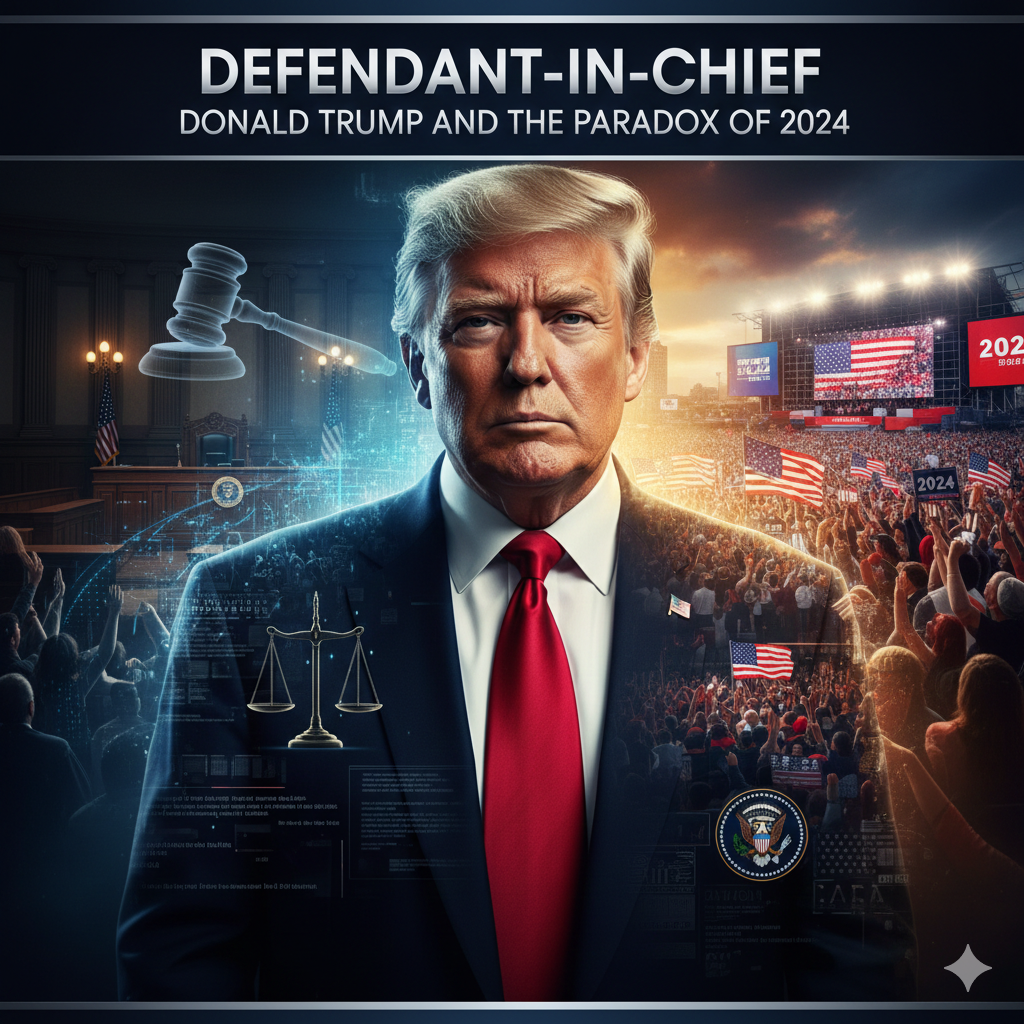
Donald J. Trump is no longer a political candidate or a sitting president. He is the singular, all-consuming force field of American life. In 2024, he exists in a unique state of being: a defendant in multiple criminal trials, the undisputed presumptive nominee of the Republican Party, and a cultural icon whose grip on a vast swath of the electorate is stronger than ever. Understanding Trump today is to understand a figure who has transcended politics to become the nation’s foremost source of polarization, its most potent media phenomenon, and the architect of a new, grievance-based conservative identity.
The Legal Front: Defendant-in-Chief
Trump’s daily reality is dominated by the courtroom. Facing 91 felony charges across four criminal cases—from allegedly concealing hush-money payments to a porn star, to mishandling classified documents, to conspiring to overturn the 2020 election—he has turned the judicial process into a platform. His strategy is not purely legal; it is political and narrative-driven. He frames each indictment as proof of a “weaponized” Department of Justice engaged in “election interference” at the behest of President Biden. This message, amplified relentlessly to his base, has been devastatingly effective. Rather than diminishing him, the charges have galvanized his supporters, solidified his lead in the GOP primary, and fueled record-breaking small-dollar fundraising. The courtroom has become his most powerful campaign stage.
The Political Reality: A Party Remade in His Image
The Republican Party of 2024 is Trump’s party in a way it never was in 2016 or 2020. His primary victories were not contests; they were affirmations. Rivals like Ron DeSantis and Nikki Haley were systematically dismantled, their supporters brought to heel. Loyalty to Trump and his narrative of the “stolen” 2020 election is now the ultimate litmus test. Critics within the party have been exiled, and an army of election-denying candidates he endorsed in 2022 now form the core of its congressional ranks. The GOP platform is his personality: a mix of populist economics, America-first isolationism, hardline immigration rhetoric, and a relentless focus on cultural grievances.
The Campaign Theme: Retribution and Restoration
Trump’s 2024 campaign message is darker and more explicit than in previous cycles. The theme is no longer just “Make America Great Again” but “I am your retribution.” He promises a sweeping, authoritarian-tinged day-one agenda: mass deportations, purging the “deep state” of disloyal civil servants, and investigating political opponents. He has labeled those convicted for the January 6th attack on the Capitol as “hostages” and “patriots,” promising pardons. This message of victimhood and vengeance resonates deeply with supporters who feel culturally and economically displaced, offering not just policy but catharsis and the promise of a restored social hierarchy.
The Financial Paradox: Legal Bills and a Media Windfall
Trump’s financial situation is a study in contrasts. He is hemorrhaging cash to pay for his mounting legal defenses, with estimates in the tens of millions per year. Yet, he has also engineered a staggering financial windfall. The merger of his social media platform, Truth Social, with a blank-check company has the potential to net him over $3 billion, providing a massive infusion of capital. This deal underscores his unique duality: a man leveraging his political movement to build a commercial empire that, in turn, funds his political and legal survival.
The Global Shadow: A World Bracing for Trump 2.0
Abroad, Trump is not just an American phenomenon but a global contingency plan. From Kyiv to Brussels to Taipei, allies and adversaries are gaming out the potential impact of a second Trump term. His rhetoric about ending the war in Ukraine “in 24 hours” (implying pressure on Kyiv to concede territory), his skepticism of NATO, and his admiration for autocrats like Vladimir Putin and Viktor Orbán signal a potential return to a transactional, alliance-shaking foreign policy. Global markets and diplomatic corridors are already vibrating with the uncertainty his potential return generates.
Conclusion: The Inescapable Vortex
Donald Trump today is an accelerant. He accelerates media cycles, political polarization, and legal precedent. He has created a self-sustaining ecosystem where attacks from institutions only prove his narrative of persecution to his followers, strengthening his bond with them. He has demonstrated that a significant portion of the American electorate prioritizes cultural affirmation and perceived strength over traditional norms of presidential conduct.
As the 2024 election approaches, the nation is not facing a typical political choice. It is conducting a national stress test on the resilience of its institutions, the nature of truth, and the very meaning of political leadership. Trump stands at the center of this storm, legally embattled but politically unconstrained, a former president who remains, inarguably, the most powerful and disruptive force in American life. The question is no longer whether he will dominate the conversation, but whether the country’s political structures can withstand the force of his continued presence.