

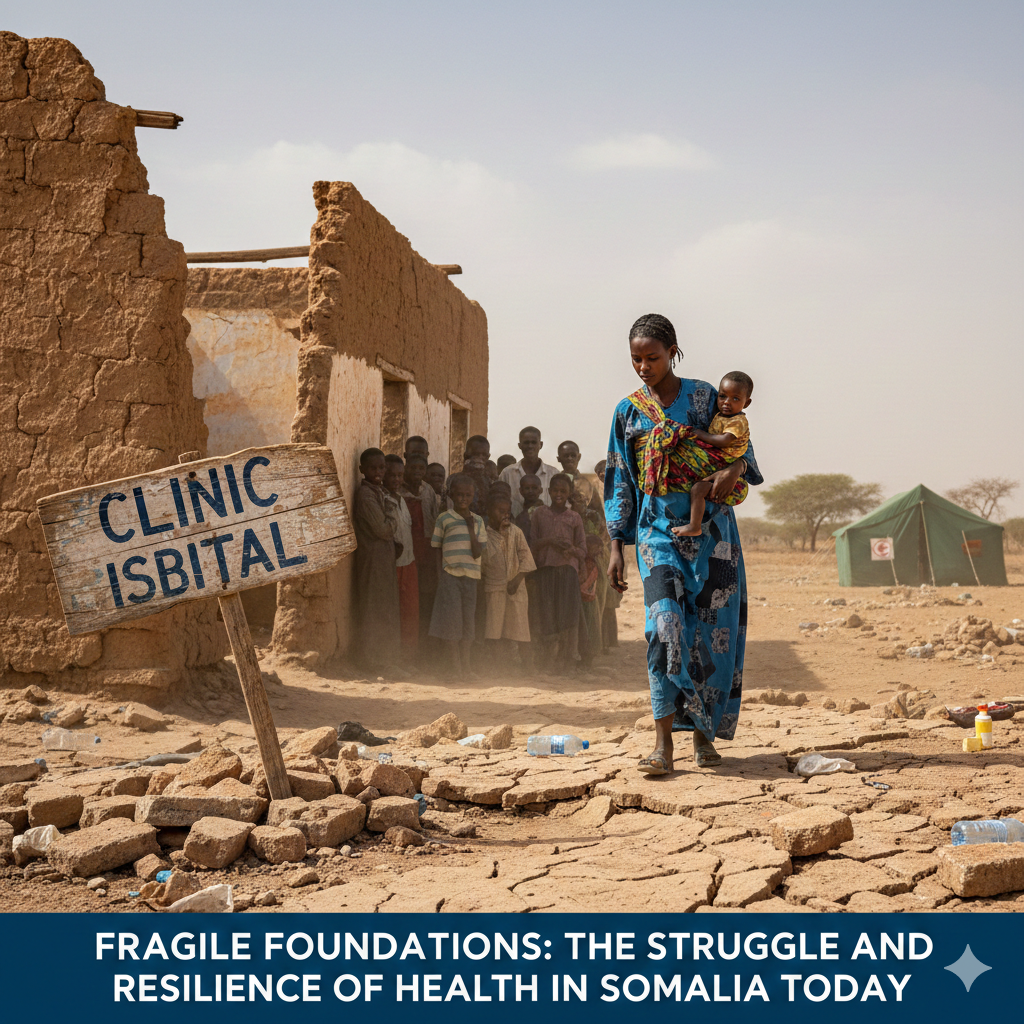
Part 1: Introduction – A System Built on Resilience
Health in Somalia today is a story of profound fragility, heroic resilience, and cautious hope. Operating in the shadow of three decades of conflict, climate shocks, and political instability, the healthcare system is a patchwork of overstretched public services, a dominant but fragmented private sector, and a massive, life-saving humanitarian response. Understanding health in Somalia requires navigating this complex ecosystem where crisis is the常态 (norm), and progress is measured in incremental gains against overwhelming odds.
Part 2: The Triple Burden: Disease in a Fragile State
Somalia faces a crushing convergence of health threats. Infectious diseases like cholera, measles, and malaria surge with seasonal rains and displacement. Malnutrition, especially among children under five and pregnant women, remains a silent emergency, weakening populations and driving mortality. Simultaneously, non-communicable diseases (NCDs) like diabetes and hypertension are rising in urban areas, creating a new, complex burden for a system barely equipped for basics. This triple burden stretches all resources to a breaking point.
Part 3: Maternal and Child Health: The Central Crisis
The statistics paint a dire picture of Somalia’s core health challenge. The country has one of the highest maternal mortality rates in the world. A Somali woman’s lifetime risk of dying in pregnancy or childbirth is staggering. Infant and under-five mortality rates are similarly catastrophic. The causes are systemic: a critical shortage of skilled birth attendants, limited access to emergency obstetric care, female genital mutilation (FGM), and the compounded effects of malnutrition and disease.
Part 4: The Infrastructure Void: From Rubble to Resilience
Decades of conflict have decimated physical infrastructure. What remains of a formal public health system is concentrated in major cities like Mogadishu, Hargeisa, and Garowe. Many hospitals and clinics were destroyed; those standing often lack reliable electricity, clean water, basic equipment, and essential medicines. The “system” is often a collection of standalone facilities supported by different NGOs and donors, with little functional coordination or referral pathways.
Part 5: The Frontline: Community Health Workers as the Lifeline
In the absence of formal clinics, the true backbone of Somali healthcare is the network of Community Health Workers (CHWs). These locally recruited, trained volunteers are the first and often only point of contact for millions. They conduct malnutrition screenings, provide basic antenatal care, treat simple childhood illnesses, and refer severe cases. Their work, supported by NGOs and UN agencies, is the critical bridge between isolated communities and any form of organized care.
Part 6: The Humanitarian Lifeline: W.H.O., UNICEF, and NGOs
The formal health sector would collapse without continuous international intervention. Agencies like the World Health Organization (WHO), UNICEF, and a myriad of international and local NGOs provide the bulk of services. They run stabilization centers for severe malnutrition, manage disease outbreak responses (like cholera treatment centers), support vaccination campaigns, and supply essential medicines. This creates a paradox of sustainability: the system is both dependent on and vulnerable to the fluctuations of humanitarian funding.
Part 7: The Private Sector: Accessibility at a Cost
For those who can pay, a vast, unregulated private sector fills the void. In every major town, private pharmacies, clinics, and hospitals operate. While they provide crucial access, quality is highly variable, costs are prohibitive for most, and there is little oversight on standards or pricing. This creates a two-tier system: life-saving humanitarian aid for the destitute, and expensive, uncertain private care for the marginally better-off.
Part 8: Mental Health: The Invisible Wound of Conflict
The psychological trauma of prolonged conflict, displacement, and loss is a pervasive but severely neglected crisis. The concept of mental health is stigmatized, and services are virtually nonexistent outside a few specialized NGO programs in urban centers. Conditions like depression, anxiety, and post-traumatic stress disorder are widespread, silently eroding community resilience and compounding physical health problems.
Part 9: The Climate Change Multiplier: Drought, Flood, and Disease
Climate change is not a future threat; it is a present-day epidemic driver. Recurrent, intensifying droughts lead to famine, displacement, and malnutrition. Conversely, extreme floods contaminate water sources, trigger cholera outbreaks, and destroy homes and crops. This climate-health nexus creates vicious cycles where environmental shocks directly precipitate health catastrophes, overwhelming an already broken system.
Part 10: Fragile Progress: Polio Eradication and Disease Surveillance
Amidst the crisis, there are extraordinary tales of success. Somalia has been at the forefront of complex polio eradication efforts, conducting impressive vaccination campaigns in insecure areas through negotiated access. Similarly, building a functional epidemic early warning and response system has been a priority. These efforts, led by WHO and partners, show that with dedicated resources and local partnership, targeted public health victories are possible even in the most challenging contexts.
Part 11: The Brain Drain and Workforce Crisis
Somalia suffers from a catastrophic shortage of trained health professionals. Decades of conflict led to a massive exodus of doctors and nurses. Medical education institutions are rebuilding but cannot produce enough graduates to meet the need. Those who do qualify often seek work abroad or with better-paying NGOs, leaving public facilities critically understaffed. Investing in medical education and creating incentives to retain talent is a monumental long-term challenge.
Part 12: The Path Forward: Building Blocks for Recovery
The future hinges on a difficult transition from perpetual humanitarian response to sustainable systemic development. Key priorities include: 1) Investing in the public sector to create a core of functional, staffed facilities. 2) Formalizing and regulating the private sector. 3) Developing a national health workforce strategy. 4) Integrating community health into a formal, government-paid system. 5) Championing “health as a bridge for peace” to foster collaboration across political divides.
Part 13: Conclusion: Resilience as the Only Constant
Health in Somalia today exists in a state of permanent emergency, mitigated by the relentless work of communities, Somali health workers, and international partners. The gaps are existential, and the road to a functioning, equitable system is long. Yet, the resilience of the Somali people and the proven success of targeted programs offer a fragile blueprint for hope. The goal is no longer just to save lives today, but to slowly, painstakingly, build the foundations so that Somalis can one day access not just crisis care, but the fundamental human right to health.
