

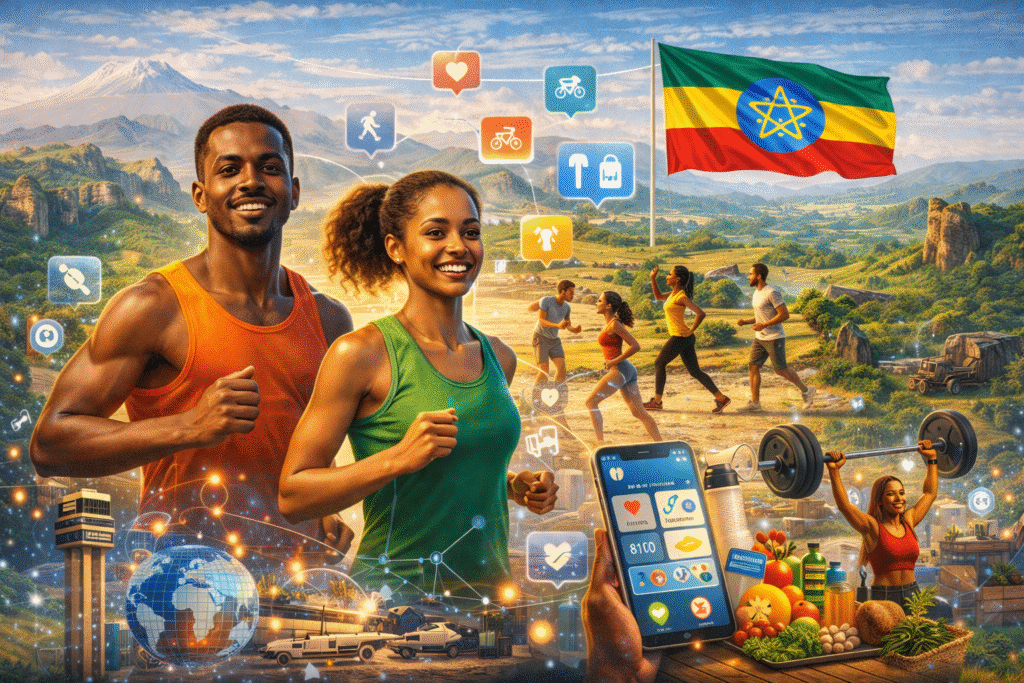
Part 1: Introduction – A Legacy in Motion
In Ethiopia today, exercise is more than a fitness trend—it is a cultural touchstone, an economic driver, and a powerful symbol of national identity. From the legendary dominance of its long-distance runners to the bustling public parks of Addis Ababa, a profound movement is underway, blending deep-rooted athletic traditions with a growing, modern wellness culture.
Part 2: The Running Ethos: From National Identity to Global Brand
Running is woven into Ethiopia’s national fabric. The legacy of icons like Abebe Bikila, Haile Gebrselassie, Kenenisa Bekele, and now athletes like Letesenbet Gidey, inspires a nation. This is not merely a sport; it is a source of immense national pride, a proven pathway out of poverty, and Ethiopia’s most recognizable global brand. The sight of athletes training in the high-altitude highlands remains a powerful national image.
Part 3: The Great Run: A Mass Movement of Wellness
The culmination of the running culture is the Great Ethiopian Run, Africa’s largest mass-participation 10km road race. Founded by Haile Gebrselassie, it has grown from a sporting event into a vibrant, colorful festival of national unity and public health. Its tens of thousands of participants—from elite athletes to families in costumes—epitomize the democratization of exercise in urban Ethiopia.
Part 4: Urban Fitness Boom: Gyms, Studios, and a New Middle Class
In Addis Ababa and other major cities, a modern fitness industry is booming, fueled by a growing, health-conscious urban middle class and expatriate community. Upscale gyms offering HIIT classes, yoga studios, and boxing clubs are becoming common. This trend represents a shift toward structured, indoor, and globally-influenced forms of exercise, complementing the outdoor running tradition.
Part 5: Public Spaces Reclaimed: Parks as Community Hubs
With a critical shortage of formal sports facilities, public parks have become vital community exercise hubs. Meskel Square in Addis Ababa transforms at dawn and dusk with hundreds engaging in calisthenics, group aerobics, running, and football. The development and maintenance of green spaces like Unity Park and Sheger Park are increasingly linked to public health and social cohesion.
Part 6: Football Frenzy: The Nation’s Unifying Passion
If running is the soul, football (soccer) is the heartbeat of Ethiopian popular sports culture. From the professional Premier League to countless informal matches on any available patch of land, it is the nation’s most widely played and passionately followed team sport. The success of the national team, the Walias, and clubs like Saint George S.C., can electrify the country and inspire youth participation.
Part 7: Women in Motion: Breaking Barriers on the Track and Beyond
Ethiopian women are world-beaters on the global athletics stage. Their dominance serves as a powerful, visible catalyst for shifting societal norms around women, strength, and public participation in sports. While cultural and practical barriers persist, more women and girls are visibly running, joining gyms, and participating in public exercise, inspired by their national heroes.
Part 8: The Altitude Advantage: Science of a Natural Gym
Ethiopia’s central highlands, often called the “rooftop of Africa,” provide a natural, performance-enhancing training ground. Towns like Bekoji and Sululta, perched over 2,500 meters above sea level, are world-famous as “champions’ factories.” The physiological adaptation to high altitude—increased red blood cell production—is a key “secret” behind the endurance prowess of its athletes, attracting international runners for training camps.
Part 9: Challenges of Access and Infrastructure
The exercise boom is unevenly distributed. Major challenges include a severe lack of public sports facilities, swimming pools, and safe, dedicated running paths outside of elite training centers. For the average citizen, especially outside urban cores, access remains limited. Economic constraints also place modern gym memberships out of reach for many, reinforcing a divide between informal/public and formal/private exercise.
Part 10: Gadaa System & Traditional Games: The Indigenous Fitness Roots
Long before modern gyms, indigenous systems promoted strength and agility. The Gadaa system of the Oromo people included rigorous physical training for young men. Traditional games like “Gugs” (a form of hockey), wrestling (“Qille”), and horseback riding are cultural forms of exercise that persist in rural areas, representing a deep, historical connection between physical prowess and community life.
Part 11: From Fitness to Wellness: The Holistic Shift
A broader concept of wellness is beginning to take hold alongside pure fitness. This is seen in the gradual growth of yoga and mindfulness practices, often linked to stress management in fast-growing cities. Nutrition is also becoming a greater focus, with discussions around traditional, nutrient-dense diets like those of runners (high in teff, vegetables, and lean proteins) gaining prominence.
Part 12: The Future: Systematizing a National Strength
The future of exercise in Ethiopia lies in harnessing its raw, cultural passion and building the supportive ecosystem. This requires investment in public recreation infrastructure nationwide, integrating physical education more robustly into schools, and developing sports science and coaching to nurture the next generation beyond just running. The goal is to systematize the legendary Ethiopian athleticism into a sustainable, inclusive culture of health for all its citizens.