

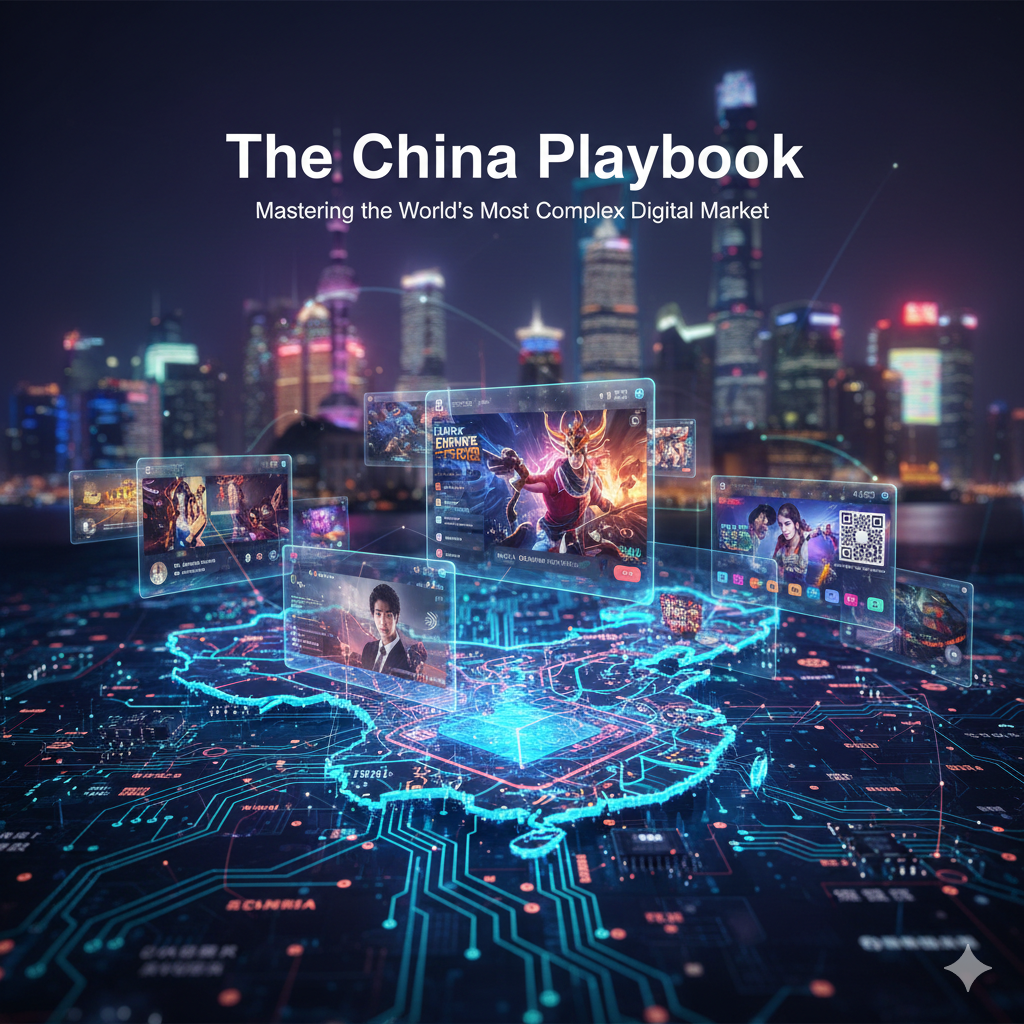
Part 1: Introduction – The World’s Most Dynamic, Daunting Arena
Marketing in China is no longer about simply “entering a market”—it’s about navigating a parallel digital universe with its own rules, giants, and velocity of change. Home to nearly 1.1 billion internet users, China represents a seismic opportunity defined by hyper-digital adoption, fierce competition, and a unique consumer culture that blends deep-rooted traditions with tech-savvy futurism. Success here requires abandoning Western playbooks and embracing a mindset of constant adaptation, localization, and respect for the ecosystem’s complexity.
Part 2: The Walled Garden Ecosystem: Living Within the Super Apps
Forget Google, Facebook, and Amazon. China’s digital landscape is a self-contained “walled garden” dominated by rival tech ecosystems, primarily Alibaba (e-commerce, logistics, finance) and Tencent (social, gaming, payments via WeChat). The king is WeChat (Weixin), a “super app” combining messaging, social media, payments, mini-programs, and services into one indispensable lifeline. Marketing strategies must be built within these platforms, leveraging their integrated tools for seamless social commerce, customer service, and loyalty building, all while data is held by the platform giants.
Part 3: Social Commerce 3.0: From Discovery to Purchase in One Scroll
China has perfected the fusion of social media and shopping. Platforms like Douyin (TikTok), Xiaohongshu (Little Red Book), and WeChat are not just for brand building—they are direct sales channels. Live-streaming e-commerce is the powerhouse, with key opinion leaders (KOLs) and key opinion consumers (KOCs) hosting marathon sales events that generate billions in minutes. Features like in-app purchases, shoppable short videos, and mini-program stores have erased the boundary between content and checkout, creating a frictionless, entertainment-driven purchase journey.
Part 4: KOLs, KOCs, and the Death of the Traditional Celebrity Endorsement
China’s influencer hierarchy is sophisticated. Key Opinion Leaders (KOLs) are top-tier influencers and celebrities with massive reach, used for brand launches and prestige. More critical today are Key Opinion Consumers (KOCs)—everyday users with smaller, highly engaged niche followings whose reviews and “real person experiences” are trusted more than traditional ads. The most powerful force is the live-streamer, like Austin Li or Viya, who act as hyper-credible, entertaining salespeople whose recommendation is the ultimate conversion tool.
Part 5: Content is King, but Context is Emperor: Douyin & Xiaohongshu
Each platform has a distinct cultural context that dictates content strategy. Douyin is for high-energy, creative, and viral short-form video; marketing here must be entertaining and trend-hopping. Xiaohongshu is a lifestyle platform built on authentic user-generated content (UGC) and product reviews; marketing here requires seeding products with real users and cultivating a reputation for quality and aspirational living. A misstep in tone or format on either platform reveals a brand’s “foreignness.”
Part 6: Data-Driven Personalization and the Privacy Paradox
Chinese consumers expect, and receive, hyper-personalized marketing, powered by the vast troves of data collected within the walled gardens. AI algorithms curate feeds, recommend products, and target ads with frightening accuracy. However, this exists alongside increasing government scrutiny of data security. New Personal Information Protection Laws (PIPL) impose strict rules, creating a paradox: marketers must deliver extreme personalization while navigating a tightening regulatory environment that limits data collection and cross-platform sharing.
Part 7: Guochao (国潮): The Rise of “China-Chic” and National Pride
A defining trend is “Guochao”—the explosive rise of domestic brands that successfully fuse Chinese cultural heritage with modern aesthetics and quality. From sportswear (Li-Ning) to cosmetics (Florasis), these brands leverage historical motifs, craftsmanship narratives, and patriotic sentiment. For foreign brands, this means the playbook has flipped: success is no longer about importing Western prestige but about demonstrating deep cultural respect, collaboration with Chinese creators, and often, “localizing for China” to an extreme degree.
Part 8: New Retail and O2O: Blurring the Physical-Digital Divide
Alibaba’s concept of “New Retail” has become reality, fully integrating online, offline, logistics, and data. Via apps, consumers can browse in a physical Hema supermarket, order for 30-minute delivery, or dine in-store with products they’ve scanned. Offline-to-Online (O2O) strategies like QR code-driven engagement, location-based coupons, and live-streaming from physical stores are standard. The store is no longer just a point of sale; it’s a brand experience center and a fulfillment node in a seamless omnichannel network.
Part 9: The Great Festival Calendar: Creating 11.11 and Beyond
China has mastered the art of commercial festivals. Singles’ Day (11.11) is the world’s largest shopping event, but the calendar is packed: 6.18, 8.8, Double 12. These are not just sales days; they are weeks-long, platform-driven extravaganzas with pre-sales, games, celebrity galas, and real-time leaderboards. Marketing strategies are built around these dates, requiring immense preparation, partnership with platforms, and blockbuster live-streaming events to capture consumer attention and wallet share.
Part 10: E-Commerce Giants: Navigating Taobao, Tmall, and JD
The e-commerce landscape is a battlefield. Taobao is a vast C2C marketplace akin to eBay, ideal for testing products and reaching price-sensitive users. Tmall is the B2C premium platform for established brands, requiring greater investment but offering brand control. JD.com dominates in electronics and appliances, prized for its owned, fast, and reliable logistics. A brand’s platform strategy must be deliberate, matching brand positioning with the right marketplace ecosystem and its associated tools for storefront design, customer management, and advertising.
Part 11: Regulatory Storms: Adapting to a Shifting Landscape
Marketing operates under the watchful eye of the state. Crackdowns can happen suddenly: on tech giants (anti-monopoly), data usage (PIPL), celebrity culture (“cleansing” the internet), live-streaming (tax evasion), and certain content (e.g., feminine, gaming). The Cyberspace Administration of China (CAC) sets strict rules. Brands must practice proactive compliance, avoid sensitive topics (politics, territorial integrity), and be prepared for platform rule changes overnight. Agility and a cautious, informed approach are non-negotiable.
Part 12: The Tiered City Strategy: One Country, Many Markets
China is not a monolith. Consumer behavior, income, and digital adoption vary dramatically across Tier 1 cities (Beijing, Shanghai), Tier 2/3 cities, and lower-tier markets. While luxury thrives in Tier 1, the next wave of growth is in sinking markets (下沉市场), where consumers have rising disposable income and different aspirational triggers. Marketing messages, channel strategies, and even product offerings must be tailored, requiring deep local insight and often, decentralized execution.
Part 13: Conclusion: The Only Constant is Change
Marketing in China is a high-stakes, high-reward game of perpetual motion. Winning requires more than budget; it demands cultural fluency, platform-native creativity, agility in the face of regulation, and a relentless focus on the integrated social-commerce journey. The brands that succeed are those that stop acting as foreign entrants and start operating as local players—embracing the speed, collaborating with the ecosystem, respecting the consumer’s sophistication, and understanding that in the Digital Dragon’s domain, you either adapt at its pace or become irrelevant.
