

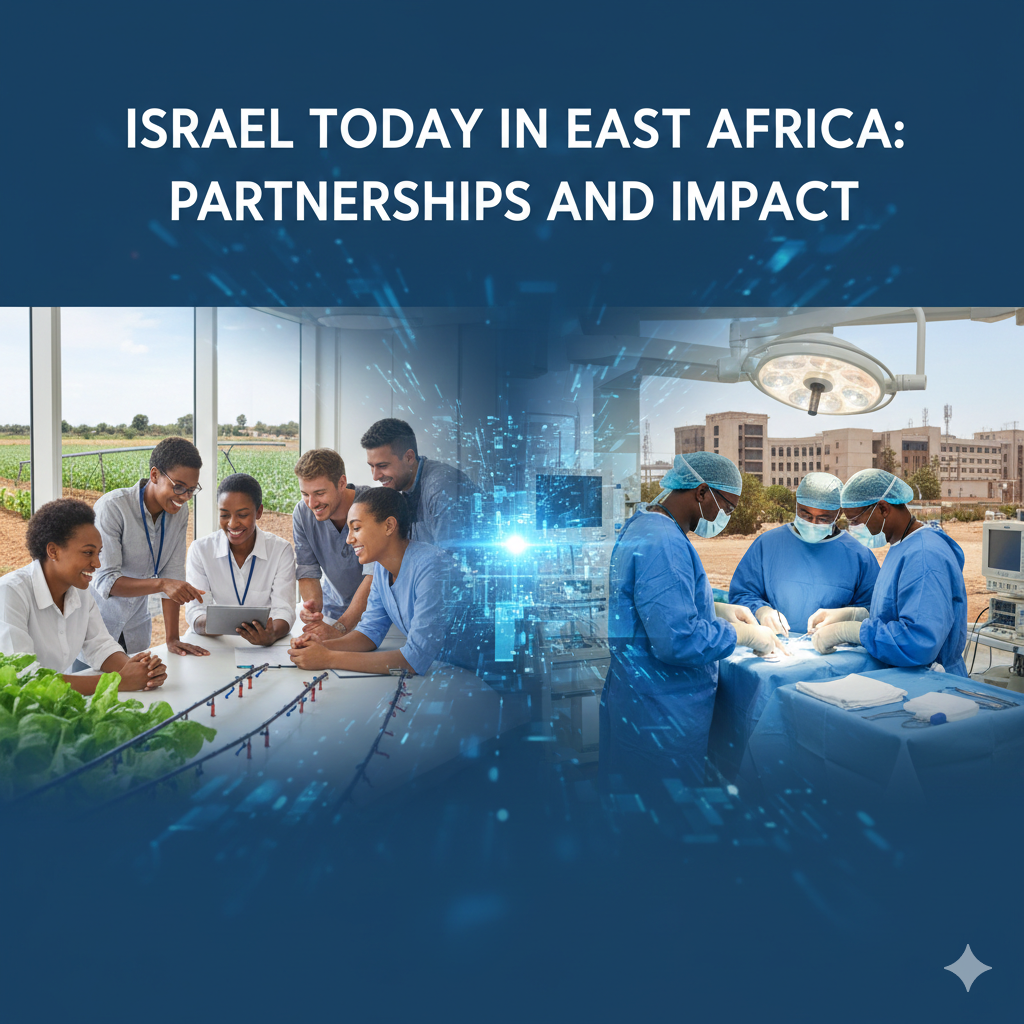
Israel Today in East Africa: Diplomacy, Trade, and Strategic Engagement
Israel’s engagement in East Africa has grown significantly over the past two decades, reflecting a combination of historical ties, strategic interests, economic partnerships, and humanitarian cooperation. From agriculture to technology, security, and development assistance, Israel has become an increasingly influential player in the region. This article examines Israel’s activities, partnerships, and impact in East Africa, as well as the opportunities and challenges that shape its engagement today.
1. Historical Background
Israel’s relationship with East Africa dates back to the 1950s and 1960s, when it established diplomatic ties with countries like Kenya, Ethiopia, and Uganda. Early collaboration focused on development assistance, technical training, and agricultural expertise. Over time, geopolitical changes, including the withdrawal of some African nations during the 1970s Arab-Israeli conflicts, affected these ties. In recent decades, however, Israel has revived and strengthened its relationships, driven by shared security concerns, trade opportunities, and regional diplomacy.
2. Diplomatic Relations and Strategic Partnerships
Today, Israel maintains formal diplomatic relations with most East African countries, including Ethiopia, Kenya, Uganda, Rwanda, and Tanzania. These partnerships facilitate political dialogue, trade agreements, and bilateral cooperation. High-level state visits, joint commissions, and regional summits highlight the growing political alignment between Israel and East African governments. Israel’s diplomacy in the region is often framed around security, technological collaboration, and humanitarian assistance, aligning with both its national interests and the development goals of partner countries.
3. Security Cooperation
Security and counterterrorism cooperation are central to Israel’s presence in East Africa. The region faces threats from extremist groups, cross-border crime, and piracy, especially in areas around Somalia, Kenya, and Ethiopia. Israel provides training, intelligence sharing, and technological support to local security forces. For instance, Israeli expertise in counterterrorism and border security has been shared with Kenyan and Ugandan forces, strengthening regional stability and protecting strategic trade routes.
4. Agriculture and Food Security
Agriculture remains a major focus of Israel’s engagement in East Africa. Israeli agricultural technology, including drip irrigation, greenhouse farming, and water management systems, has been implemented in countries like Ethiopia, Kenya, and Rwanda. These innovations help smallholder farmers increase productivity, improve food security, and adapt to climate change. Israel’s agricultural training programs, often conducted through institutions like Mashav (Israel’s Agency for International Development Cooperation), have trained thousands of East African agricultural professionals and extension workers.
5. Technological and Innovation Partnerships
Israel’s reputation as a “Startup Nation” has encouraged technology partnerships in East Africa. Israeli firms and research institutions collaborate with East African governments and universities in areas such as water management, renewable energy, medical technology, and digital solutions. Tech hubs in Kenya and Rwanda have benefited from Israeli mentorship programs and investment, fostering innovation and entrepreneurship across the region.
6. Humanitarian Assistance and Health Programs
Israel has a strong track record of humanitarian engagement in East Africa. Medical teams, disaster relief missions, and public health initiatives have been deployed to support local communities. For example, Israeli medical expertise has been used to combat infectious diseases, train healthcare workers, and improve hospital infrastructure in Ethiopia and Uganda. This assistance strengthens Israel’s soft power and builds goodwill in local communities.
7. Trade and Investment
Trade between Israel and East African countries has expanded significantly. Israel exports technology, machinery, and pharmaceuticals, while importing coffee, flowers, horticultural products, and other raw materials. Israeli investment in agriculture, technology, and infrastructure has helped create jobs and boost economic development in partner countries. Bilateral trade agreements and investment forums continue to strengthen economic ties.
8. Tourism and Cultural Exchange
Tourism and cultural exchange are also growing dimensions of Israel’s presence in East Africa. East African countries are promoting tourism for Israeli visitors, while Israel encourages educational and cultural programs highlighting shared history and people-to-people connections. Jewish communities in Ethiopia, such as the Beta Israel, provide historical and cultural links that further strengthen bilateral relations.
9. Education and Capacity Building
Education and human capital development are key areas of Israel’s engagement. Through scholarships, training programs, and technical courses, Israel has helped build professional capacity in sectors such as agriculture, healthcare, and technology. Programs run by Mashav and Israeli universities train East African professionals, enhancing local expertise and promoting sustainable development.
10. Environmental and Water Management Initiatives
Water scarcity and environmental degradation are critical issues in East Africa. Israel’s expertise in water conservation, desalination, and wastewater treatment has been applied in countries like Ethiopia, Kenya, and Rwanda. Projects focusing on irrigation, groundwater management, and climate-resilient agriculture have improved access to water for farming communities and urban populations alike.
11. Regional Geopolitical Considerations
Israel’s engagement in East Africa is influenced by broader geopolitical factors. The region’s proximity to the Red Sea, the Horn of Africa, and major maritime trade routes makes it strategically significant. Israel’s relationships with East African countries are also shaped by regional security dynamics, including the presence of extremist groups, maritime security, and partnerships with other global powers active in Africa.
12. Challenges to Engagement
Despite strong progress, Israel faces several challenges in East Africa. Political instability, internal conflicts, and fluctuating governance standards can complicate projects and partnerships. Additionally, historical sensitivities regarding Israel’s relations in the broader Middle East sometimes affect perceptions of its role in African countries. Overcoming logistical, bureaucratic, and regulatory hurdles is essential to sustaining effective engagement.
13. Opportunities for Expansion
The potential for Israel’s influence in East Africa remains substantial. Emerging markets, youth-driven entrepreneurship, and digitalization create new areas for collaboration. Expanding trade, supporting technology hubs, and scaling up renewable energy and agricultural initiatives offer opportunities for mutual growth. Israel’s expertise in innovation, security, and development positions it well to respond to East Africa’s evolving needs.
14. Future Outlook
Looking ahead, Israel is likely to deepen its engagement in East Africa across multiple sectors. Strategic partnerships, regional security cooperation, technological innovation, and sustainable development programs are expected to remain priorities. By balancing diplomatic, economic, and humanitarian efforts, Israel can strengthen its presence while contributing to East Africa’s stability, prosperity, and long-term development.
Conclusion
Israel today plays a multifaceted role in East Africa, combining diplomacy, security, technology, agriculture, health, and humanitarian assistance. Its presence reflects both historical ties and contemporary strategic interests. While challenges such as political instability, regulatory complexity, and regional sensitivities exist, opportunities abound in trade, innovation, and capacity building. As Israel continues to expand its partnerships and invest in sustainable development, it has the potential to significantly influence East Africa’s growth, stability, and regional integration, making its engagement increasingly relevant and impactful in the 21st century.