

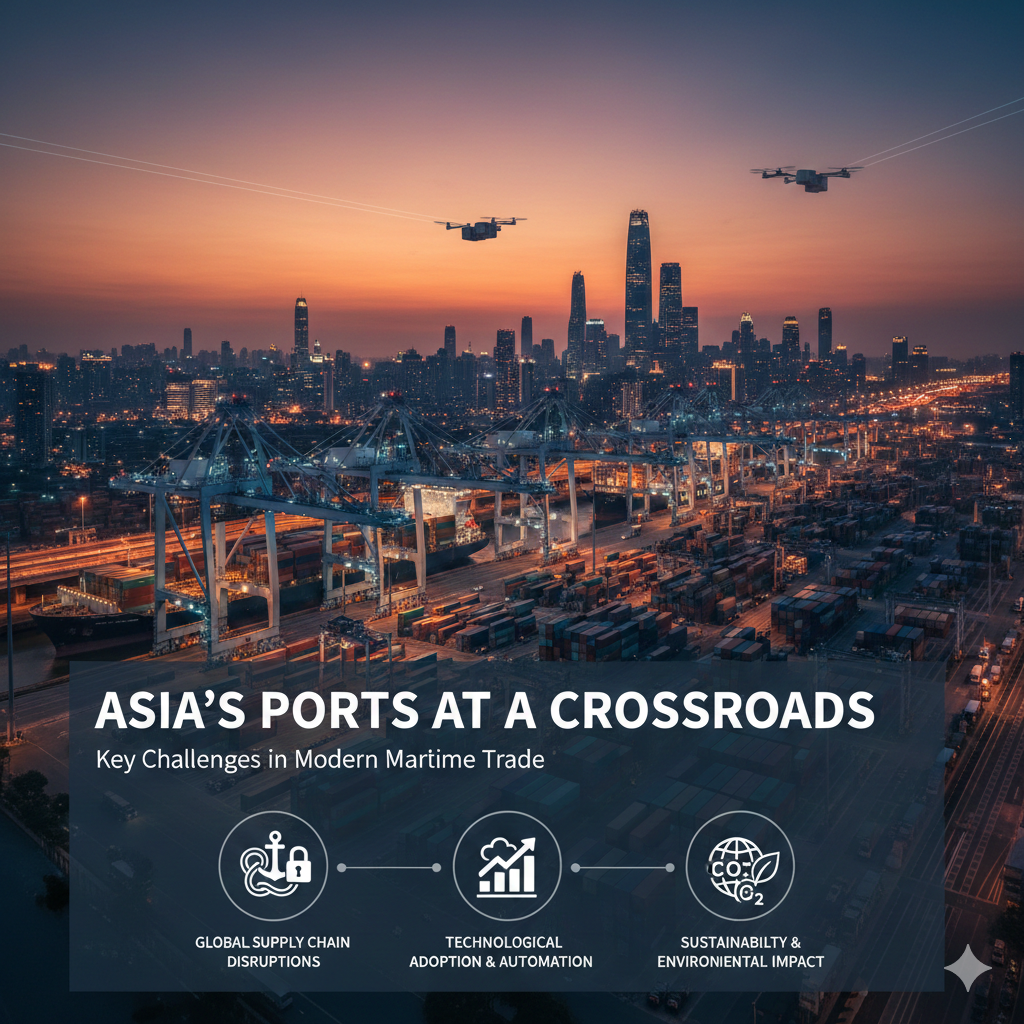
Ports play a vital role in Asia’s economic growth, as the continent is home to some of the world’s busiest trade routes and largest manufacturing hubs. Asian ports handle a significant share of global container traffic and support complex international supply chains linking Asia to Europe, Africa, and the Americas. Despite their importance and rapid development, many Asian ports today face serious challenges that threaten efficiency, sustainability, and competitiveness. These problems range from congestion and infrastructure strain to environmental pressures, geopolitical risks, and technological gaps.
1. Severe Port Congestion
One of the most pressing problems affecting Asian ports today is congestion. The surge in global trade, e-commerce, and containerized shipping has placed enormous pressure on major ports such as those in South Asia, Southeast Asia, and parts of East Asia. Limited berth availability, insufficient yard space, and slow cargo handling often lead to vessel queues and long waiting times. Congestion increases shipping costs, delays deliveries, and disrupts regional and global supply chains, especially for time-sensitive goods.
2. Capacity Strain from Mega-Ships
The growing use of ultra-large container vessels has created new challenges for Asian ports. Many ports struggle to accommodate these mega-ships due to inadequate channel depth, quay length, and crane reach. While some leading ports have upgraded their facilities, secondary and emerging ports remain constrained. This imbalance forces shipping lines to concentrate traffic at a few major hubs, increasing congestion and leaving smaller ports underutilized.
3. Infrastructure Inequality Across Regions
Asia displays a wide gap in port development. While ports in countries such as China, Singapore, South Korea, and Japan are highly modernized, many ports in South Asia, Central Asia, and parts of Southeast Asia suffer from outdated infrastructure. Poor dredging, limited cold storage, aging handling equipment, and insufficient maintenance reduce efficiency. This disparity weakens regional connectivity and limits the participation of less-developed economies in global trade.
4. Inefficient Customs and Administrative Processes
Despite progress in digitalization, many Asian ports still face bureaucratic delays in customs clearance and cargo documentation. Multiple government agencies, overlapping regulations, and inconsistent enforcement slow the movement of goods. In some countries, traders must submit the same information repeatedly to different authorities. These inefficiencies raise transaction costs and reduce the attractiveness of ports as transit and logistics hubs.
5. High Logistics and Handling Costs
Port-related charges in parts of Asia remain relatively high, particularly in developing economies. Terminal handling charges, demurrage fees, storage costs, and informal payments increase the cost of trade. For exporters of low-value or agricultural goods, these expenses significantly reduce profit margins. High costs also discourage small and medium-sized enterprises from participating fully in international trade.
6. Hinterland Connectivity Problems
Ports depend on efficient connections to inland transport networks, yet many Asian ports suffer from weak hinterland connectivity. Congested urban roads, inadequate railway links, and limited inland waterways slow cargo movement between ports and production or consumption centers. In rapidly growing cities, port trucks often compete with urban traffic, increasing delays and pollution. Poor connectivity reduces port efficiency and creates bottlenecks beyond the port gate.
7. Environmental and Sustainability Challenges
Environmental concerns are becoming increasingly serious for Asian ports. Air pollution from ships, trucks, and cargo-handling equipment affects nearby communities. Water pollution, waste disposal, and oil spills threaten marine ecosystems. Additionally, climate change poses major risks, including rising sea levels, coastal erosion, typhoons, and flooding. Many Asian ports lack sufficient investment in green technologies, shore power, and climate-resilient infrastructure, making long-term sustainability a growing concern.
8. Labor Issues and Workforce Challenges
Labor-related problems also affect port performance in Asia. In some ports, outdated labor practices, restrictive work rules, and resistance to automation reduce productivity. In other cases, labor shortages and skills gaps limit the adoption of advanced technologies. Strikes and labor disputes, though less frequent in some countries, can still disrupt operations and cause costly delays in regional supply chains.
9. Technological Gaps and Cybersecurity Risks
While leading Asian ports are global leaders in automation and smart-port systems, many others lag behind in adopting advanced technologies. Manual processes, weak data integration, and limited use of port community systems reduce efficiency and transparency. At the same time, increasing digitalization exposes ports to cybersecurity threats, including data breaches and system disruptions. Many port authorities lack adequate cybersecurity frameworks and skilled personnel to address these risks.
10. Geopolitical and Trade Uncertainty
Geopolitical tensions and trade disputes pose an additional challenge for Asian ports. Conflicts, sanctions, and changes in trade policies can quickly alter shipping routes and cargo volumes. Ports located along strategic maritime corridors face heightened security risks and uncertainty. Dependence on global markets makes Asian ports vulnerable to economic slowdowns and disruptions beyond their control, such as pandemics or regional conflicts.
Conclusion
Asian ports are central to global trade, but they face a wide range of interrelated challenges today. Congestion, infrastructure strain, administrative inefficiencies, high costs, environmental pressures, labor issues, technological gaps, and geopolitical risks all threaten port performance and resilience. Addressing these problems requires coordinated efforts by governments, port authorities, private investors, and regional organizations. Investments in modern infrastructure, digital systems, sustainable practices, and regional connectivity are essential. By tackling these challenges effectively, Asian ports can continue to support economic growth, trade integration, and supply chain stability in an increasingly complex global environment.