

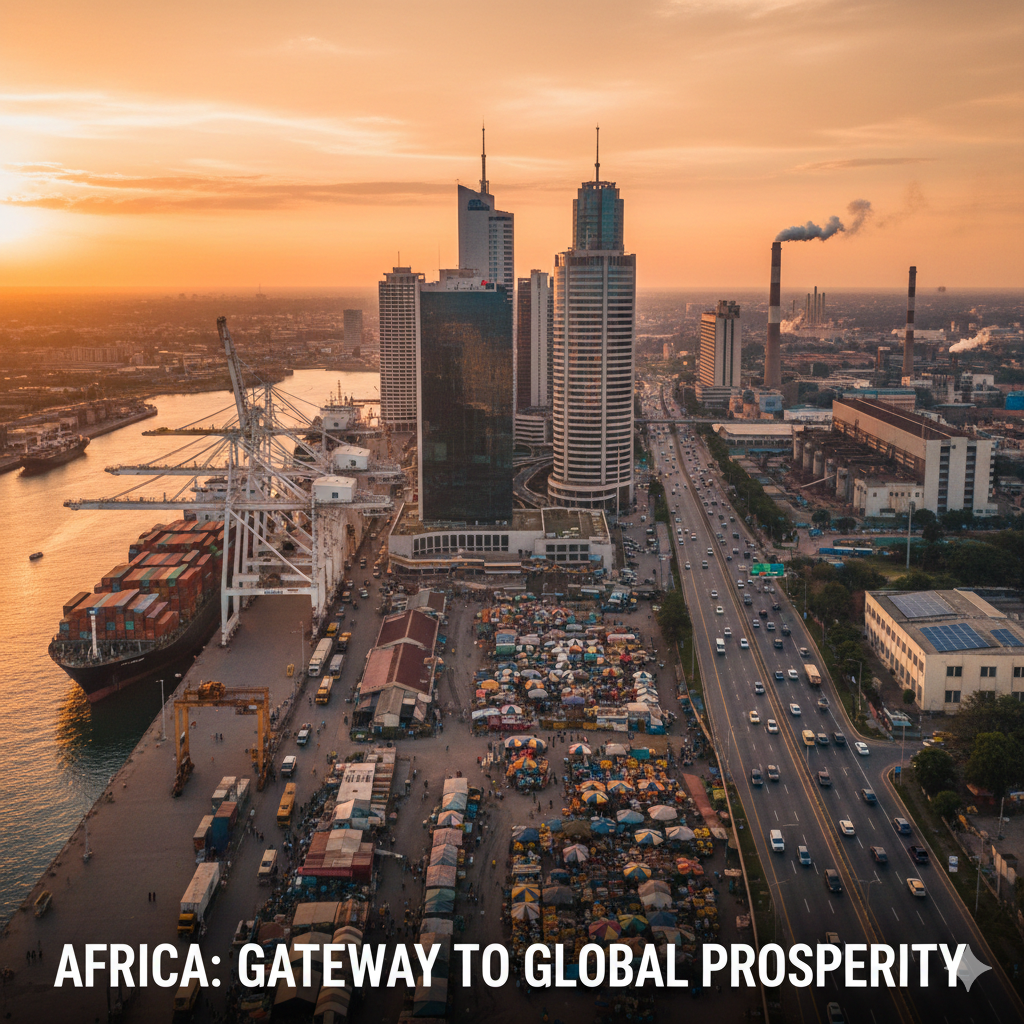
Business Today in Africa
Business in Africa today is experiencing a period of rapid transformation driven by economic reforms, technological innovation, population growth, and increased global engagement. Once viewed mainly as a source of raw materials, Africa is now emerging as a dynamic business environment with growing opportunities across sectors such as technology, agriculture, manufacturing, finance, and renewable energy. While challenges remain, the continent’s business landscape is evolving with optimism and resilience.
One of the most important factors shaping business in Africa today is demographic growth. Africa has the youngest population in the world, with millions of young people entering the workforce each year. This growing labor force and expanding consumer base are attracting local and international investors. Rising urbanization has led to increased demand for housing, transportation, retail, healthcare, and education, creating new markets for entrepreneurs and businesses.
Technology has become a major driver of business growth across the continent. Mobile technology, in particular, has revolutionized how businesses operate. Africa is a global leader in mobile money services, allowing millions of people to access financial services for the first time. Digital platforms are supporting e-commerce, online education, telemedicine, and remote work. Tech hubs in cities such as Lagos, Nairobi, Cape Town, and Accra have fostered startup ecosystems that encourage innovation and attract venture capital.
Agriculture remains the backbone of many African economies and continues to offer significant business opportunities. The sector employs a large portion of the population and contributes substantially to exports. Today, agribusiness is shifting from subsistence farming to value-added production, including food processing, packaging, and export-oriented farming. Investments in modern farming techniques, irrigation, and supply chains are helping to improve productivity and reduce food insecurity.
Manufacturing is also gaining importance as African countries aim to industrialize and reduce dependence on imports. Governments are promoting local production through industrial parks, special economic zones, and investment incentives. Sectors such as textiles, cement, consumer goods, and automotive assembly are expanding in countries like Ethiopia, Egypt, South Africa, and Morocco. Manufacturing growth is creating jobs and strengthening domestic industries.
Trade integration is another key development shaping business in Africa today. The African Continental Free Trade Area (AfCFTA) aims to create a single market across the continent, allowing goods and services to move more freely between countries. This initiative has the potential to boost intra-African trade, reduce costs for businesses, and encourage regional value chains. Although implementation is ongoing, AfCFTA represents a significant step toward economic integration and business expansion.
Foreign investment continues to play an important role in Africa’s business environment. Investors from Europe, Asia, the Middle East, and the Americas are increasingly looking to Africa for new opportunities. China has been particularly influential in infrastructure development, manufacturing, and trade, while Western countries and multilateral institutions remain active in finance, technology, and development projects. At the same time, African entrepreneurs and investors are becoming more prominent, contributing to homegrown business solutions.
Despite progress, businesses in Africa still face challenges. Infrastructure deficits, including unreliable electricity, limited transportation networks, and insufficient internet access, increase operating costs. Access to finance remains difficult for many small and medium-sized enterprises, which are the backbone of African economies. Regulatory barriers, corruption, and political instability in some regions also affect business confidence and investment.
Sustainability and green business are becoming increasingly important in Africa today. The continent is rich in renewable energy resources such as solar, wind, and hydropower. Businesses and governments are investing in clean energy projects to meet growing power demands while addressing climate change. Sustainable agriculture, eco-tourism, and environmentally responsible mining practices are gaining attention as Africa seeks balanced economic growth.
The informal sector remains a significant part of Africa’s business landscape. Millions of people earn livelihoods through small-scale trading, services, and craftsmanship. While the informal economy provides employment and income, it also highlights the need for policies that promote formalization, skills development, and access to financial services. Supporting small businesses is essential for inclusive growth and poverty reduction.
In recent years, women and youth entrepreneurs have played a growing role in Africa’s business transformation. Women-led enterprises are expanding across sectors, while youth-driven startups are introducing innovative solutions to local and global problems. Programs that support entrepreneurship through training, funding, and mentorship are helping unlock this potential.
In conclusion, business today in Africa is marked by growth, innovation, and opportunity alongside persistent challenges. The continent is no longer on the margins of the global economy but is increasingly shaping its own economic future. With continued investment in infrastructure, education, technology, and good governance, Africa has the potential to become one of the most vibrant business regions in the world. The success of businesses in Africa today will play a crucial role in driving sustainable development and improving the lives of millions of people across the continent.
