

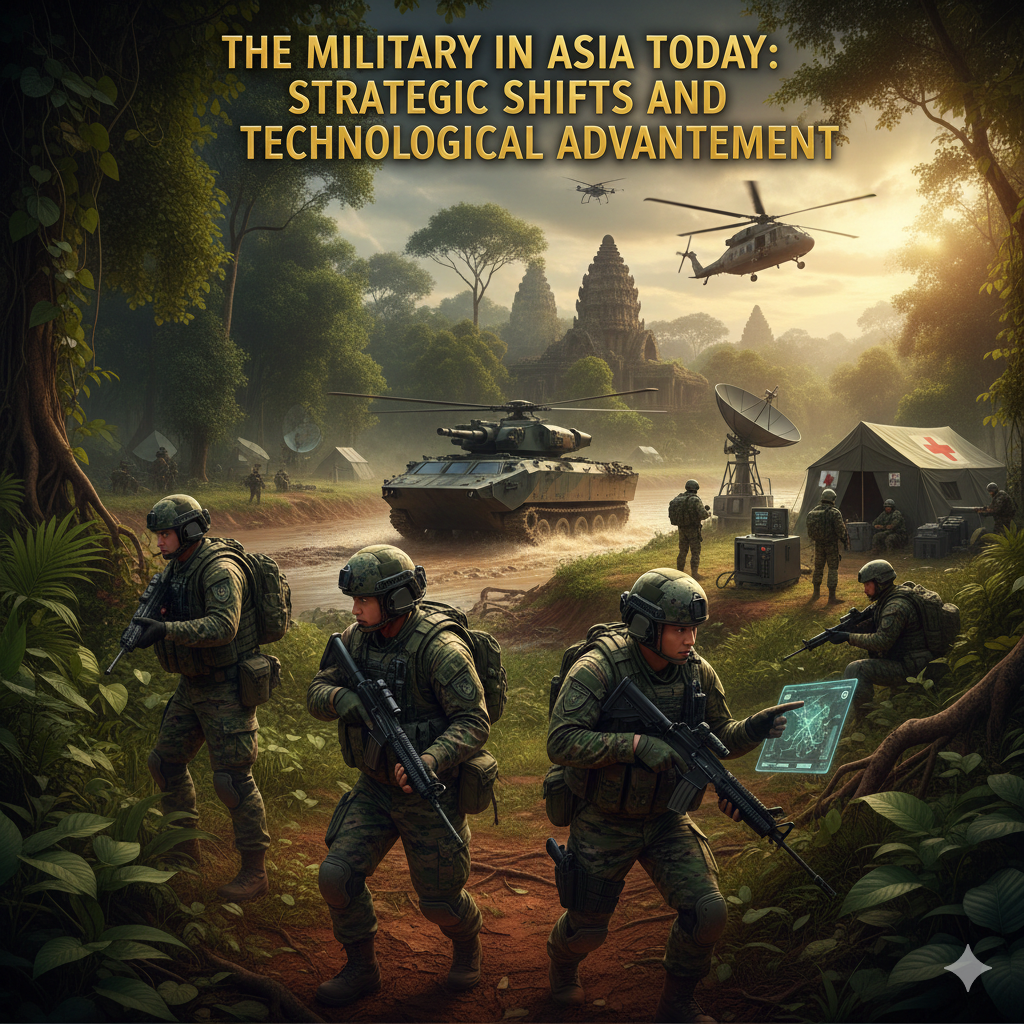
The Military in Asia Today
1. Introduction
Asia, the largest and most populous continent, is home to some of the world’s most powerful militaries. The region’s armed forces play a critical role in national defense, regional stability, and global geopolitics. From technologically advanced armies to smaller, developing forces, Asia’s military landscape is highly diverse.
2. Historical Background
Asia’s military history spans thousands of years, from ancient empires to colonial conflicts. Historical rivalries, foreign occupations, and independence movements have shaped the military structures of modern Asian countries, influencing doctrines, strategies, and military culture.
3. National Defense and Security
Asian militaries are tasked with safeguarding sovereignty and protecting borders. Countries like China, India, Japan, South Korea, and Pakistan maintain large standing armies and advanced defense systems to deter external aggression and safeguard national interests.
4. Regional Tensions
Asia faces multiple territorial and geopolitical disputes. Conflicts over the South China Sea, the India-Pakistan border, North Korea’s nuclear program, and Taiwan have heightened the importance of military preparedness. Armed forces serve as both deterrents and instruments of strategic influence in these disputes.
5. Technological Advancements
Asia has invested heavily in modernizing its militaries. Nations such as China, India, South Korea, and Japan are developing advanced technologies, including drones, missile defense systems, cyber warfare capabilities, and artificial intelligence applications in defense.
6. Nuclear Deterrence
Several Asian countries maintain nuclear arsenals, including China, India, Pakistan, and North Korea. Nuclear capabilities have become a central component of national defense strategies, shaping regional power dynamics and influencing diplomatic negotiations.
7. Counterterrorism and Internal Security
Asian militaries are actively engaged in counterterrorism operations. Countries like India, Indonesia, Pakistan, and the Philippines face threats from extremist groups, insurgencies, and separatist movements, requiring sustained military involvement to ensure internal stability.
8. Peacekeeping and International Roles
Asian militaries contribute significantly to global peacekeeping. Nations such as India, China, and Bangladesh participate in United Nations missions, providing troops, logistics, and medical support to conflict zones, thereby enhancing their international reputation.
9. Military Expenditure and Economic Impact
Asia accounts for a substantial share of global military spending. Defense budgets in countries like China, India, Japan, and South Korea have risen steadily, influencing economic priorities, industrial growth, and domestic policy. Military spending often drives technological innovation but can strain public resources.
10. Alliances and Partnerships
Asian militaries form strategic partnerships through bilateral and multilateral alliances. Organizations like ASEAN, AUKUS, and regional security agreements foster collaboration, joint exercises, and intelligence sharing, contributing to regional stability and deterrence.
11. Civil-Military Relations
Civilian oversight of the military varies across Asia. While democracies like Japan, South Korea, and India maintain strict civilian control, other countries have experienced military influence in politics, with coups or authoritarian regimes demonstrating the delicate balance between military power and governance.
12. Humanitarian Assistance and Disaster Response
Asian militaries play vital roles in humanitarian aid and disaster response. From earthquakes in Japan and Indonesia to floods in South Asia, armed forces provide logistics, rescue operations, and medical support, enhancing public trust and contributing to national resilience.
13. Emerging Threats and Challenges
Asia faces evolving security challenges, including cyber warfare, climate-related crises, terrorism, and regional rivalries. Militaries must adapt to these threats through modern strategies, joint operations, and investments in new defense technologies to maintain stability.
14. Conclusion
The military in Asia today is a powerful and multifaceted institution, balancing national defense, regional security, and international responsibilities. While strong militaries contribute to stability, unchecked military influence or aggressive posturing can heighten tensions. Effective civilian oversight, technological innovation, and regional cooperation are essential for ensuring that Asia’s armed forces promote peace and security in an increasingly complex geopolitical environment.
If you want, I can also:
- create a matching 14-section subtitle/title list for this article
- expand each part with examples by country, statistics, and case studies
- rewrite it in a simpler or student-friendly version
Do you want me to make the titles for the 14 parts next?
