

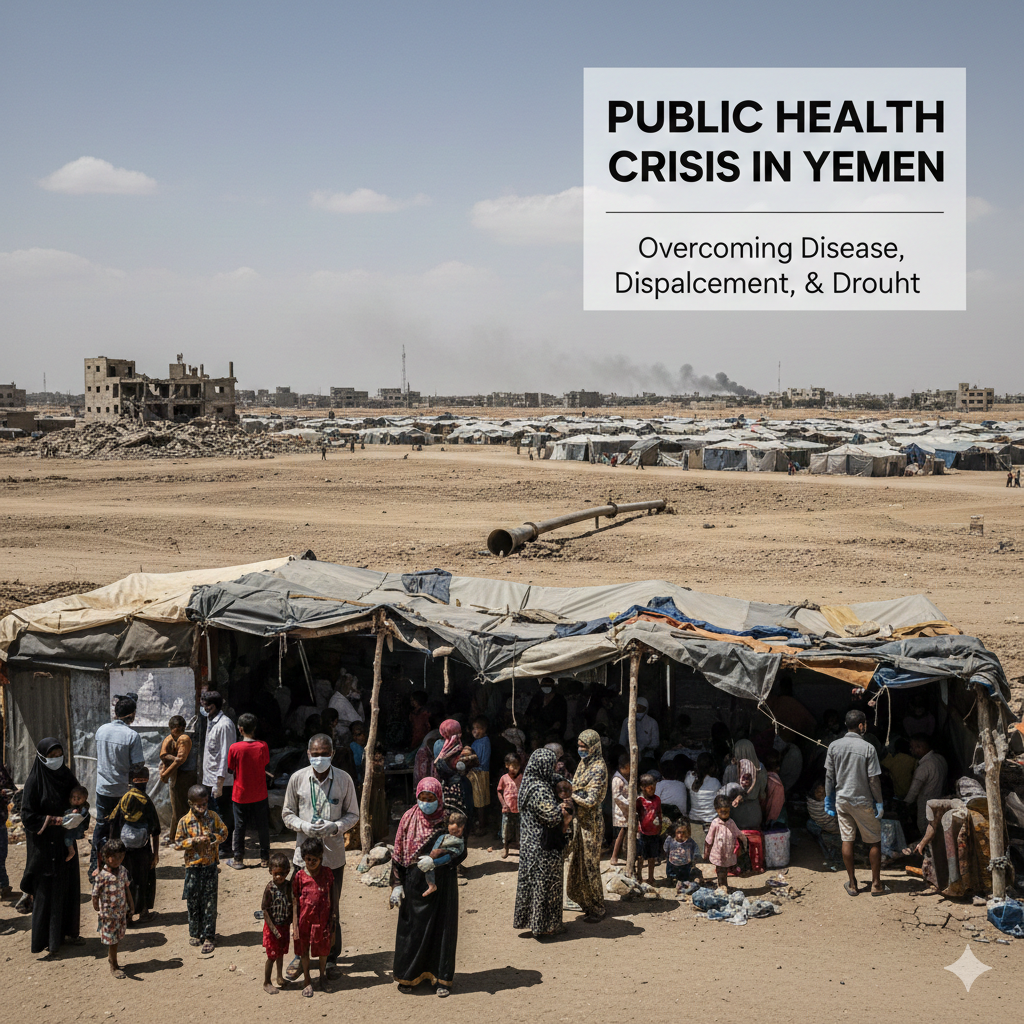
Health in Yemen today is shaped by one of the world’s most severe humanitarian crises. Years of conflict, economic collapse, and weakened public institutions have had a devastating impact on the country’s health system and the well-being of its people. While Yemen once had a slowly improving healthcare sector, ongoing war and instability have reversed much of that progress. Today, Yemen faces widespread disease outbreaks, malnutrition, shortages of medical supplies, and limited access to basic healthcare services.
Overview of Yemen’s Health System
Yemen’s health system is fragile and overstretched. Public health facilities once provided the majority of care, but many hospitals and clinics have been damaged, destroyed, or forced to close due to conflict and lack of funding. Remaining facilities operate with limited staff, equipment, electricity, and clean water. Access to healthcare is particularly difficult in rural and conflict-affected areas, where transportation and security challenges further restrict services.
Impact of Conflict on Health
The prolonged conflict has had a direct and indirect impact on health in Yemen. Airstrikes, violence, and displacement have caused injuries, deaths, and psychological trauma. At the same time, conflict has disrupted vaccination programs, maternal health services, and disease control efforts. Millions of people have been displaced from their homes, placing additional pressure on already limited health resources.
Communicable Diseases and Epidemics
Yemen has experienced repeated outbreaks of communicable diseases, including cholera, diphtheria, measles, dengue fever, and COVID-19. Poor sanitation, lack of clean water, and damaged sewage systems have contributed to the rapid spread of disease. Cholera outbreaks, in particular, have affected millions and remain a major public health threat.
Maternal and Child Health
Maternal and child health conditions in Yemen are among the worst in the region. Many women lack access to skilled birth attendants, antenatal care, and emergency obstetric services. High rates of maternal mortality are linked to malnutrition, anemia, and limited healthcare access. Children face high risks of preventable diseases, malnutrition, and lack of routine immunization.
Malnutrition and Food Insecurity
Malnutrition is one of Yemen’s most critical health challenges. Years of conflict have disrupted food production, income sources, and supply chains. Millions of Yemenis, especially children under five and pregnant women, suffer from acute malnutrition. Severe malnutrition weakens immune systems and increases vulnerability to disease, making it a leading cause of preventable deaths.
Non-Communicable Diseases and Mental Health
Non-communicable diseases such as diabetes, hypertension, and heart disease continue to affect Yemen’s population, but access to diagnosis and treatment is extremely limited. Mental health issues, including anxiety, depression, and post-traumatic stress disorder, have increased significantly due to prolonged exposure to violence, loss, and insecurity. Mental health services remain scarce and under-resourced.
Healthcare Workforce and Infrastructure
Yemen faces a severe shortage of healthcare workers. Many doctors and nurses have fled the country or stopped working due to unpaid salaries and unsafe conditions. Those who remain often work without adequate supplies or support. Infrastructure damage, unreliable electricity, and lack of essential medicines further limit the capacity of the health system.
Role of International Aid and NGOs
International organizations and non-governmental organizations play a vital role in Yemen’s health sector. Agencies such as the World Health Organization, UNICEF, and Médecins Sans Frontières provide essential services including vaccinations, nutrition programs, emergency care, and disease surveillance. However, funding shortages and security constraints continue to hinder humanitarian efforts.
Access to Clean Water and Sanitation
Limited access to clean water and sanitation directly affects health outcomes in Yemen. Many households rely on unsafe water sources, increasing the risk of waterborne diseases. Damage to water infrastructure and fuel shortages have reduced water availability, particularly in urban areas, worsening public health conditions.
Future Prospects and Conclusion
Health in Yemen today faces immense challenges, but continued humanitarian support and long-term political solutions offer hope. Strengthening the health system requires peace, investment in infrastructure, support for healthcare workers, and improved access to food and clean water. Addressing both immediate health needs and underlying social factors is essential to improving the health and survival of Yemen’s population in the years ahead.