

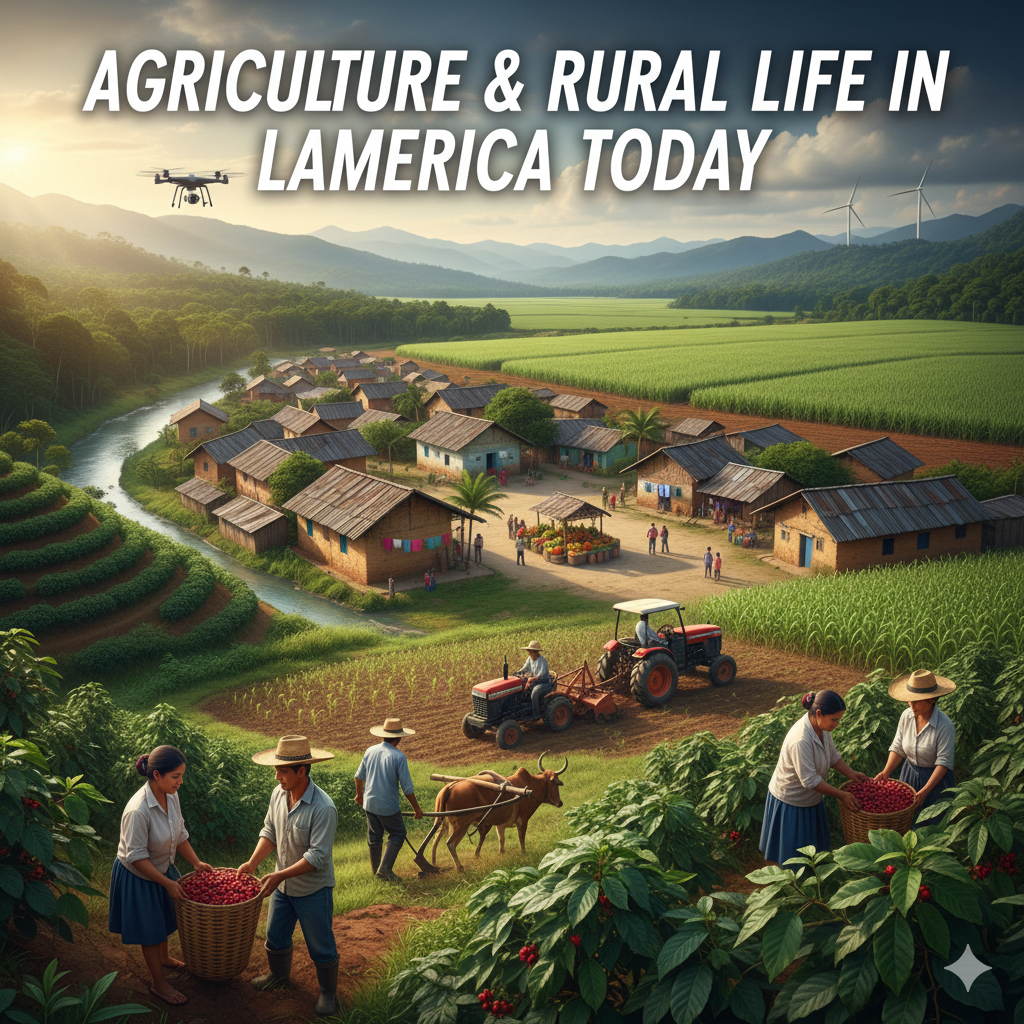
Farming is a cornerstone of economic activity and social life in Latin America. The region is one of the world’s leading producers and exporters of agricultural products, supplying food, raw materials, and commodities to global markets. From large commercial farms to small family holdings, agriculture in Latin America today reflects a mix of tradition, modernization, opportunity, and challenge. While the sector continues to drive economic growth, it also faces environmental, social, and structural issues that shape its future.
Importance of Agriculture in Latin America
Agriculture plays a vital role in the economies of many Latin American countries. It provides employment to millions of people, particularly in rural areas, and contributes significantly to national income and export earnings. Countries such as Brazil, Argentina, Mexico, Chile, and Colombia rely heavily on farming and agribusiness for economic stability. In addition, agriculture supports food security and rural development across the region.
Major Crops and Agricultural Diversity
Latin America benefits from diverse climates and fertile land, allowing the production of a wide range of crops. Major products include maize, rice, wheat, soybeans, sugarcane, coffee, cocoa, bananas, fruits, and vegetables. The region is also a global leader in the production of beef, poultry, and dairy products. Cash crops such as coffee and cocoa are especially important for export markets and rural livelihoods.
Smallholder Farming and Rural Communities
Smallholder farmers make up a large portion of the agricultural workforce in Latin America. These farmers often cultivate small plots of land using family labor and traditional methods. While smallholders play a key role in food production and local economies, they frequently face challenges such as limited access to land, credit, technology, and markets. Poverty and inequality remain persistent issues in many rural communities.
Large-Scale Commercial Farming and Agribusiness
Alongside small-scale farming, Latin America is known for large commercial farms and agribusiness operations. These farms use advanced machinery, improved seeds, and modern management systems to achieve high productivity. Large-scale agriculture is especially prominent in soybean, sugarcane, and livestock production. Although agribusiness contributes to export growth and job creation, it also raises concerns about land concentration and environmental impact.
Technology and Innovation in Agriculture
Technology has significantly transformed farming in Latin America. Mechanization, biotechnology, irrigation systems, and digital tools have increased efficiency and yields. Precision agriculture, satellite monitoring, and mobile-based advisory services help farmers make better decisions. However, access to technology remains uneven, with smaller and poorer farmers often lagging behind larger producers.
Climate Change and Environmental Issues
Climate change poses serious challenges to farming in Latin America. Droughts, floods, rising temperatures, and changing rainfall patterns threaten crop production and livestock health. Deforestation, soil degradation, and water scarcity further increase environmental risks. Sustainable farming practices such as agroforestry, conservation agriculture, and improved water management are increasingly promoted to protect natural resources.
Government Policies and Agricultural Support
Governments across Latin America support agriculture through subsidies, research programs, credit facilities, and infrastructure development. Agricultural extension services help farmers adopt improved techniques, while regional cooperation initiatives encourage trade and food security. However, policy effectiveness varies by country, and limited funding or political instability can reduce long-term impact.
Labor, Inequality, and Social Issues
Agricultural labor conditions remain a major concern in parts of Latin America. Seasonal employment, low wages, and limited access to social protection affect many farm workers. Women and Indigenous communities often face greater disadvantages. Addressing inequality and improving working conditions are essential for inclusive rural development.
International Trade and Global Markets
Latin America is a major participant in global agricultural trade. Its exports supply food and raw materials to North America, Europe, Asia, and Africa. Trade agreements and global demand strongly influence farming decisions. While global integration creates opportunities, it also exposes farmers to price volatility and international competition.
Future Prospects and Conclusion
Farming in Latin America today combines strong potential with complex challenges. The region’s rich natural resources, agricultural knowledge, and global market access position it well for future growth. To ensure sustainability, investment in technology, environmental protection, social inclusion, and smallholder support is crucial. By balancing productivity with sustainability and equity, agriculture can continue to drive development and improve livelihoods throughout Latin America.