

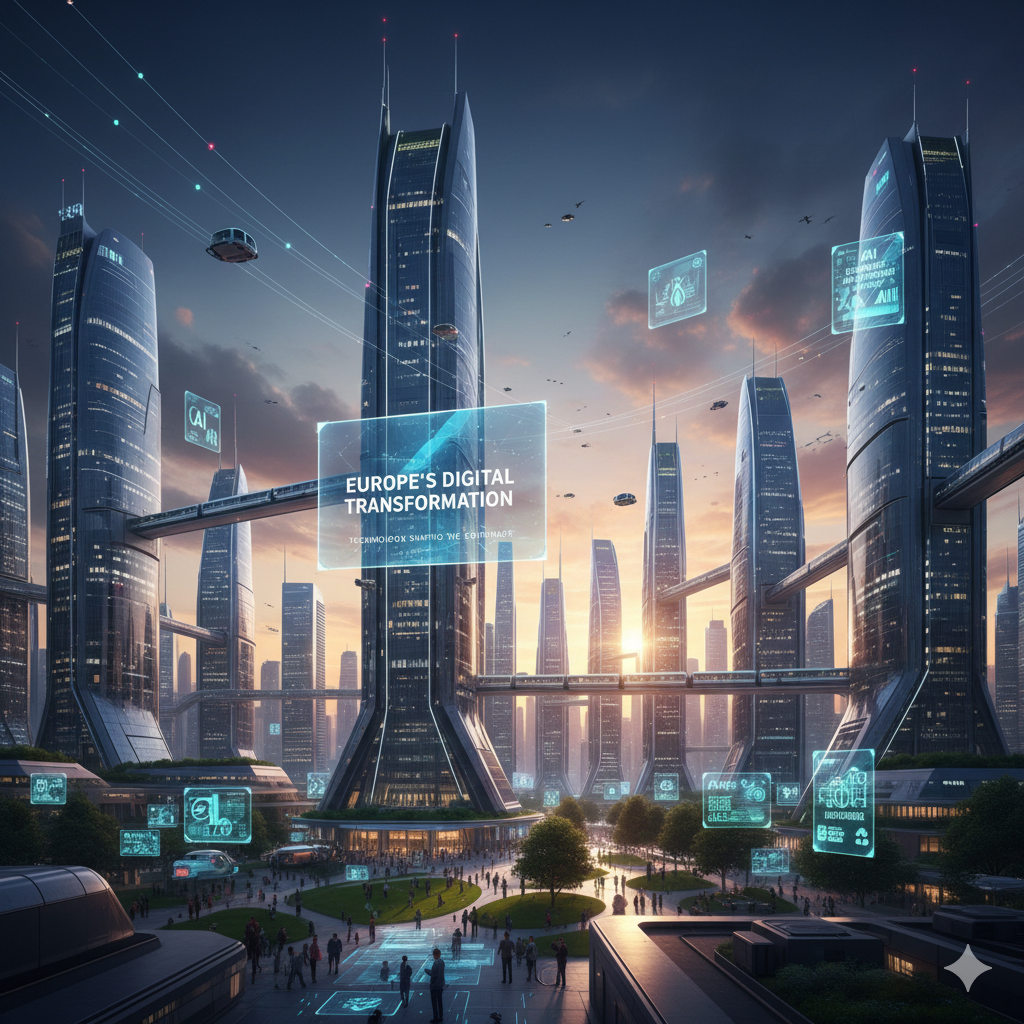
Technology in Europe Today: Innovation, Opportunities, and Challenges
Europe has long been a global hub of technological innovation. From industrial advancements to digital transformation, European countries have consistently contributed to the development of science, engineering, and digital technologies. Today, Europe’s technology landscape is shaped by rapid digitalization, artificial intelligence, renewable energy innovation, and strong research and development initiatives. However, the continent also faces challenges including regulatory hurdles, cybersecurity threats, talent shortages, and the need to maintain global competitiveness.
Overview of Europe’s Technology Landscape
Europe is home to a diverse technology ecosystem, encompassing advanced manufacturing, information and communication technology (ICT), renewable energy, biotechnology, and artificial intelligence (AI). The European Union (EU) plays a significant role in coordinating technological research and promoting innovation through programs such as Horizon Europe, which funds research in science, engineering, and sustainable technologies.
Major technology hubs include Berlin, Stockholm, London, Paris, Amsterdam, and Helsinki, which host a mix of multinational tech companies, innovative startups, and research institutions. These hubs attract significant investment and talent, fostering an environment conducive to technological growth.
Digital Transformation and Industry 4.0
One of the key drivers of technology in Europe today is digital transformation. Businesses and public institutions are increasingly adopting digital tools to improve efficiency, enhance customer experience, and innovate products and services.
Industry 4.0—an era of smart manufacturing combining automation, data analytics, and the Internet of Things (IoT)—is reshaping European industry. Countries such as Germany, France, and Italy are leading in smart factories, robotics, and AI-enabled manufacturing solutions. This transformation increases productivity, reduces operational costs, and positions Europe as a global leader in high-tech manufacturing.
Artificial Intelligence and Machine Learning
AI and machine learning are central to Europe’s technology agenda. European companies are investing in AI applications in sectors such as healthcare, finance, transportation, and cybersecurity. AI-powered tools improve medical diagnostics, optimize logistics networks, and enhance fraud detection in banking.
The EU has also introduced regulatory frameworks, such as the Artificial Intelligence Act, to ensure responsible AI development. While these regulations aim to protect privacy and ethics, they also present challenges for startups and companies that must comply with stringent standards while remaining competitive globally.
Renewable Energy and Green Technologies
Europe is at the forefront of renewable energy technology. Countries such as Denmark, Germany, and Spain are investing heavily in wind, solar, and hydrogen energy. Innovation in energy storage, smart grids, and electric mobility is enabling Europe to reduce carbon emissions and transition toward sustainable energy systems.
The European Green Deal has further accelerated investment in clean technology, creating opportunities for startups and established companies alike. However, scaling renewable technologies remains costly, and energy security challenges persist, especially in regions heavily reliant on imported fossil fuels.
Fintech and Digital Finance
Europe’s financial technology sector (fintech) is rapidly evolving, with London, Berlin, and Stockholm emerging as major fintech hubs. Digital banking, mobile payments, blockchain technology, and cryptocurrency adoption are transforming financial services.
Fintech innovations are improving financial inclusion, enabling small businesses to access loans and international transactions more easily. However, regulatory compliance, cybersecurity risks, and competition from global players such as the United States and China present ongoing challenges.
Telecommunications and 5G Expansion
Telecommunications technology, including 5G networks, is a major focus in Europe. Several EU countries are rolling out 5G infrastructure, enabling faster internet connectivity, advanced IoT applications, and real-time data processing.
5G supports innovation in healthcare (remote surgeries), transportation (autonomous vehicles), and industrial automation. Nevertheless, the deployment of 5G faces challenges such as infrastructure costs, public concerns about health and privacy, and geopolitical competition in equipment sourcing.
Cybersecurity Challenges
As Europe becomes increasingly digital, cybersecurity has emerged as a critical concern. Cyberattacks targeting government institutions, critical infrastructure, businesses, and individuals are increasing in sophistication and frequency.
The EU has introduced frameworks such as the NIS2 Directive to strengthen cybersecurity across member states. Despite these efforts, cybersecurity talent shortages and the complexity of threats remain major hurdles. Ensuring data protection, privacy, and system resilience is essential for sustaining digital trust.
Technology Startups and Innovation Hubs
Europe hosts a thriving startup ecosystem. Cities such as Berlin, Paris, Amsterdam, and Stockholm attract venture capital, incubators, and accelerators, fostering innovation in AI, biotech, fintech, and green technologies.
European startups often focus on sustainability, health technology, and digital services, reflecting the region’s priorities and societal needs. While investment opportunities are growing, startups face challenges such as limited access to early-stage funding compared to the United States and Asia, and competition from global tech giants.
Education and Talent Development
A major factor shaping Europe’s technology future is education and skills development. Universities, research institutions, and vocational programs train engineers, data scientists, and technology specialists.
However, Europe faces a talent gap, particularly in AI, data science, cybersecurity, and advanced manufacturing. Governments and private companies are investing in reskilling programs and STEM education initiatives to address workforce shortages and ensure competitiveness.
Challenges Facing Technology in Europe Today
Despite its strengths, Europe faces several challenges:
- Regulatory Complexity: EU-wide regulations and national policies can slow innovation and create compliance burdens for startups.
- Global Competition: The United States, China, and other regions dominate areas such as AI, semiconductors, and cloud computing.
- Infrastructure Gaps: Some rural areas still lack high-speed internet and reliable digital infrastructure.
- Cybersecurity Threats: Increasing attacks require constant vigilance and investment.
- High Operational Costs: Labor, energy, and technology costs can be higher than in other regions, affecting competitiveness.
Conclusion
Technology in Europe today is characterized by rapid innovation, strong research initiatives, and a growing focus on digital and green transformation. From AI and fintech to renewable energy and Industry 4.0, Europe continues to advance in sectors that shape the global economy.
However, challenges such as regulatory complexity, talent shortages, cybersecurity threats, and global competition must be addressed to sustain growth. By fostering innovation, investing in education and infrastructure, and balancing regulation with flexibility, Europe can maintain its technological leadership and drive sustainable development in the digital age.
Europe’s technology landscape represents a dynamic mix of opportunity and challenge, and its future will depend on the region’s ability to adapt, innovate, and collaborate both internally and globally.
