
The Future of You: Navigating the New Science of Sustainable Health
Health and Fitness Today: The Era of “Sustainable Vitality”
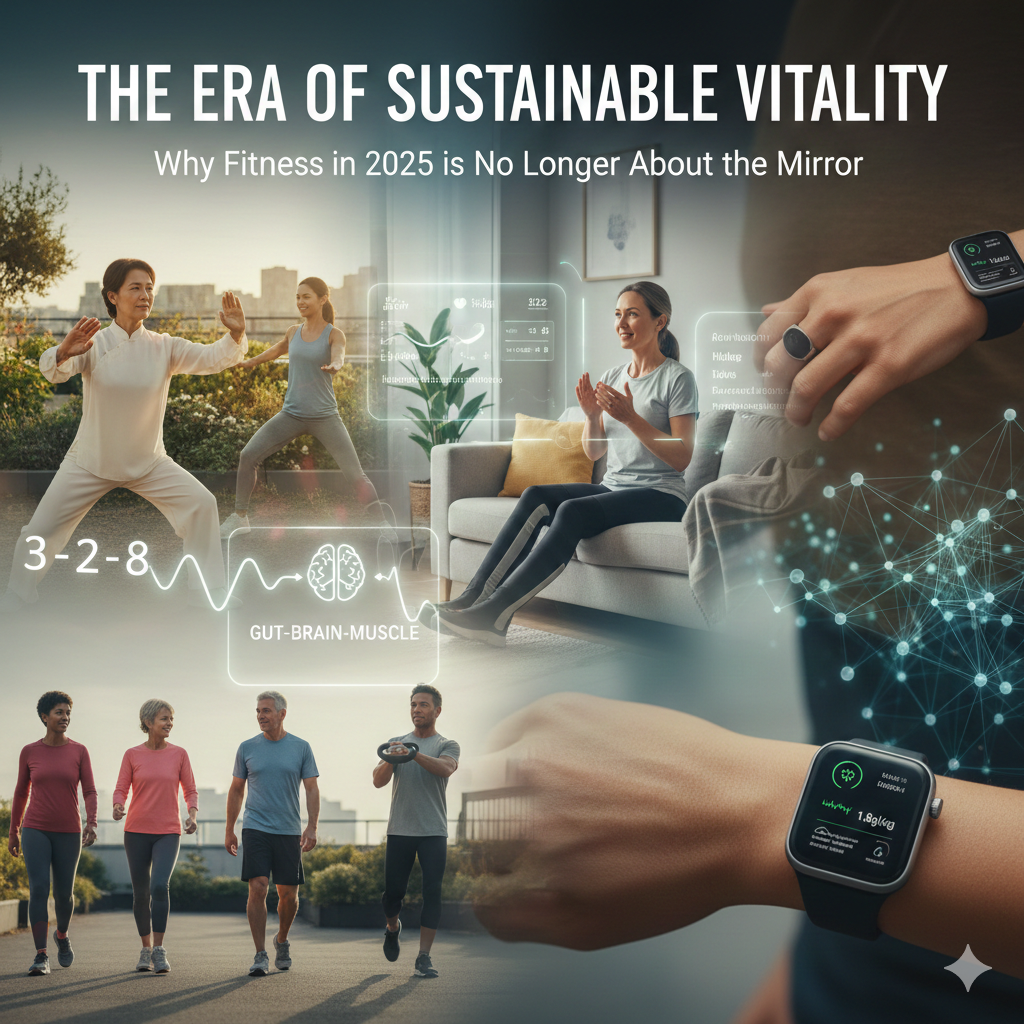
As we move through late 2025, the conversation around health and fitness has undergone a radical shift. The era of “no pain, no gain” and extreme 30-day transformations has been replaced by Sustainable Vitality. Today, the focus is less on how we look in the mirror and more on how our bodies function over the long term.
From the rise of “Japanese Walking” to the integration of AI-driven recovery, here is the state of health and fitness today.
- The Rise of “Slow Fitness” and Mindful Movement
One of the most surprising shifts this year is the rejection of high-intensity burnout in favor of intentional, lower-impact movement.
- Japanese Walking: This interval-based walking method—alternating three minutes of fast walking with three minutes of slow walking—has become the go-to cardio for 2025. It’s scientifically backed to improve blood pressure and aerobic capacity without the joint strain of running.
- The 3-2-8 Method: This balanced routine has dominated social circles: three days of strength training, two days of Pilates or mobility work, and a daily goal of 8,000 steps. It prioritizes consistency over intensity.
- Mindful Movement: Yoga and Tai Chi have seen a massive resurgence, not just as “stretching,” but as essential tools for nervous system regulation.
- Longevity is the New Luxury
We are no longer just training for the next beach season; we are training for our 80s and 90s. The “Longevity Movement” has brought professional-grade recovery and diagnostic tools into the average home.
- Zone 2 Training: Low-intensity, steady-state cardio (where you can still hold a conversation) is being hailed as the “holy grail” for mitochondrial health and fat metabolism.
- Functional Aging: Exercises like kettlebell swings and medicine ball throws are being used to maintain “power”—the ability to move quickly—which is the first thing we lose as we age.
- Advanced Recovery: Infrared saunas, cold plunges, and compression boots have moved from elite athlete facilities to local gyms and living rooms.
- Hyper-Personalization through AI and Wearables
The “one-size-fits-all” workout plan is officially dead. In 2025, your watch doesn’t just count steps; it acts as a real-time physiologist.
Technology 2025 Application
Smart Rings & Watches Using Heart Rate Variability (HRV) to tell you if you should train hard or take a rest day.
AI Coaching Apps that adjust your daily weight-lifting load based on how much sleep you got the night before.
Continuous Biometrics Wearables that track glucose levels and hydration in real-time to optimize mid-workout fueling. The Gut-Brain-Muscle Connection
Nutrition today is less about “dieting” and more about “fueling the microbiome.” We now understand that our gut health dictates our mood, our energy levels, and even how well our muscles recover.- Protein Loading: There is a massive emphasis on hitting high protein targets (often 1.2 to 2.0 grams per kilogram of body weight) to protect metabolic health.
- Personalized Probiotics: Consumers are increasingly using at-home kit tests to tailor their fiber and fermented food intake to their specific gut bacteria.
- Mental Health First: Exercise is now prescribed as a primary treatment for anxiety and stress, with “Green Exercise” (working out in nature/forest bathing) showing the highest efficacy.
The Bottom Line
Health in 2025 is about listening. Whether it’s listening to the data on your wrist or the signals from your own body, the goal is to create a lifestyle that feels as good as it looks. The “fittest” person today isn’t necessarily the one with the lowest body fat, but the one with the most energy, the best sleep, and the most resilient mind.
Would you like me to create a personalized 3-2-8 workout schedule or a guide to getting started with Zone 2 cardio?